Chicken Adobo — Filipino Braised Chicken
الطبق الوطني غير الرسمي للفلبين: دجاج مطهو ببطء في صلصة لامعة حامضة‑مالحة من الخل وصلصة الصويا والثوم وورق الغار وحبوب الفلفل، ثم غالبًا ما تُركَّز الصلصة حتى تلتصق القطع وتتكرمل. الأدوبو هو عبقرية الحفظ بالطهي — حاد النكهة، عميق، وبسيط للغاية، وكل عائلة تُقسم بتوازنها الخاص. ولا يزداد إلا لذةً في اليوم التالي.
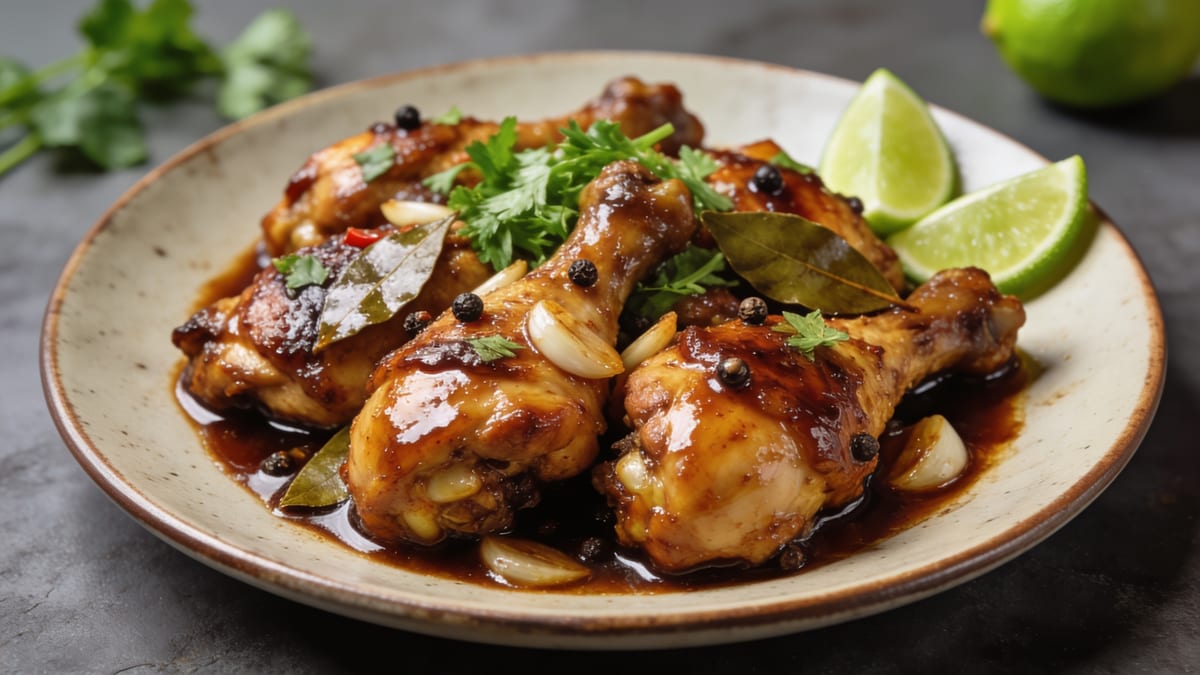
اجمع الدجاج مع صلصة الصويا والخل وكثير من الثوم المهروس وورق الغار وحبوب الفلفل الصحيحة واتركه ينقع قليلًا. ارفعه إلى الغليان — لا تُحرّك الخل النيء مبكرًا — ثم اخفض النار واتركه ينضج على نار هادئة، مغطى جزئيًا، حتى يطرى الدجاج، نحو 30 دقيقة. أخرج الدجاج وركّز الصلصة حتى تصبح لامعة (وحمّر الدجاج فيها للحصول على حواف مكرملة إن شئت)، ثم أعده إليها. تذوّق — يجب أن تكون حادة ومالحة وغنية النكهة. قدّمه فوق الأرز مع الكثير من الصلصة.
- الأساس ليس سوى الصويا والخل والثوم وورق الغار وحبوب الفلفل — لا داعي لتعقيد الأمور.
- دع الخل يغلي قبل التحريك، حتى يفقد حدّته النيئة وتلين الصلصة.
- ركّز الصلصة (وحمّر الدجاج فيها إن شئت) لقطع لامعة مكرملة؛ وهو ألذّ في اليوم التالي.
Equipment
- قدر أو مقلاة عميقة بغطاء
المكونات
الأدوبو
- 1 kg قطع دجاج (أفخاذ وسيقان)
- 120 ml صلصة صويا
- 120 ml خل قصب السكر أو خل أبيض
- رأس ثوم كامل، مهروس
- 4 ورقات غار؛ 1 ملعقة صغيرة حبوب فلفل أسود صحيحة
اختياري
- 1 ملعقة كبيرة سكر (للموازنة)، أو قليل من حليب جوز الهند
- زيت للتحمير؛ أرز مطهو على البخار للتقديم
الطريقة
- خطوة01
ضع الدجاج في قدر مع صلصة الصويا والخل والثوم المهروس وورق الغار وحبوب الفلفل. اتركه ينقع 15–30 دقيقة إن توفر لك الوقت (أو تابع مباشرة).
- خطوة02
ارفعه إلى الغليان دون تحريك (دع الخل يتخلص من حدّته النيئة)، ثم اخفض النار واتركه ينضج على نار هادئة، مغطى جزئيًا، حتى يطرى الدجاج، نحو 30 دقيقة.
- خطوة03
أخرج الدجاج. اترك الصلصة تغلي بهدوء لتتركز وتتكثف حتى تصبح لامعة. تذوّق ووازن — أضف قليلًا من السكر إن كانت حادة أكثر من اللازم.
- خطوة04
للحصول على حواف مكرملة، حمّر قطع الدجاج المصفاة في قليل من الزيت (أو في الصلصة أثناء تركيزها) حتى تلتصق وتتغلف بطبقة لامعة.
- خطوة05
أعد الدجاج إلى الصلصة ليتغلف بها. قدّمه ساخنًا فوق الأرز المطهو على البخار، مع سكب الصلصة الحامضة الغنية بالثوم بسخاء فوقه.
Make ahead
حضّره قبل يوم أو يومين — فالأدوبو مشهور بأن طعمه يزداد لذة بعد الراحة، إذ تتعمق نكهاته الحامضة المالحة الثومية. سخّنه بلطف، وإن شئت قرمش القطع في مقلاة قبل التقديم مباشرة. تقليديًا كان يُطهى بهذه الطريقة تحديدًا ليبقى صالحًا من دون تبريد.
Storage
الأدوبو هو الطبق الأصلي بين أطباق التحضير المسبق — فالخل يعمل كمادة حافظة، وهو يتحسن فعلًا على مدى 1–3 أيام مع تمازج النكهات. يُحفظ 3–4 أيام في الثلاجة ويُسخَّن من جديد بشكل رائع. كما يتجمد جيدًا. احفظ الدجاج في صلصته.
Variations
أدوبونغ بابوي
استخدم لحم الخنزير (غالبًا لحم البطن) بدلًا من الدجاج أو معه — فالأدوبو ينجح مع الاثنين.
أدوبو سا غاتا
أضف حليب جوز الهند قرب النهاية لنسخة جنوبية كريمية لطيفة النكهة.
اضبط التوازن
كل عائلة تختلف — مزيد من الخل لطعم أحدّ، ومزيد من الصويا لملوحة أعلى، وقليل من السكر لتدوير النكهة؛ وبعضهم يضيف البطاطس أو البيض المسلوق.
Serve with
Nutrition per serving
Nutrition values are estimates based on the metric measurements. Adjust as needed.
الأسئلة الشائعة
ما هو الأدوبو؟
الأدوبو طريقة طهي فلبينية (والطبق الناتج عنها) يُطهى فيها اللحم — غالبًا الدجاج أو لحم الخنزير — ببطء في الخل وصلصة الصويا والثوم وورق الغار وحبوب الفلفل. الكلمة مشتقة من الإسبانية بمعنى «التتبيلة»، لكن التقنية محلية الأصل؛ فالخل يمنح النكهة ويحفظ الطعام في آن واحد. وكثيرًا ما يوصف بأنه الطبق الوطني للفلبين.
لماذا لا يجب أن أحرّك الخل فور إضافته؟
نصيحة تقليدية: دع الخل يصل إلى الغليان قبل التحريك، حتى يتخلص من حموضته النيئة الحادة وتصبح الصلصة لطيفة ومستديرة النكهة. تحريكه باردًا من البداية قد يترك طعم خل نيء حادًا. وبعد أن يغلي وينضج على نار هادئة، تتعمق النكهة وتلين.
هل يمكنني تحضير الأدوبو مسبقًا؟
بالتأكيد — إنه من أفضل الأطباق للتحضير المسبق. فالخل يعمل كمادة حافظة طبيعية (وهذا هو الغرض التاريخي منه)، والنكهة تتحسن فعلًا خلال يوم أو يومين مع تمازجها. يُحفظ 3–4 أيام في الثلاجة، ويُسخَّن من جديد بشكل رائع، ويتجمد جيدًا. ويقول كثيرون إن أدوبو اليوم الثاني هو الأدوبو الأفضل.
أي نوع من الخل يجب أن أستخدم؟
خل قصب السكر الفلبيني (سوكانغ ماآسيم) هو التقليدي ويمنح الحموضة اللطيفة الصحيحة، لكن الخل الأبيض وخل الأرز وخل التفاح كلها تفي بالغرض. كلٌّ منها يعطي طابعًا مختلفًا قليلًا. أيًا كان اختيارك، دعه يغلي لترويض حدّته، وتذوّق في النهاية — يمكنك الموازنة بقليل من السكر عند الحاجة.
كيف أحصل على أدوبو مكرمل ومغلف بالصلصة؟
اطهُ الدجاج على نار هادئة حتى يطرى، ثم أخرجه وركّز الصلصة حتى تثخن وتلمع. وللحصول على الحواف المكرملة المرغوبة، حمّر قطع الدجاج المصفاة في قليل من الزيت (أو في الصلصة أثناء تركيزها) حتى تلتصق وتتغلف، ثم أعدها إلى الصلصة وقلّبها. هذا الأسلوب «الجاف» يحظى بشعبية كبيرة إلى جانب النسخة الغنية بالصلصة.
Cooked this? Rate it.
Real ratings from real cooks. We only show a score once enough of you have weighed in — no fabricated stars.