الفاصوليا السوداء مع الأرز
Cuban-style black beans and rice: creamy, garlicky beans simmered with a slow-cooked onion and green pepper sofrito, spooned over fluffy long-grain white rice. Using undrained canned beans plus a splash of vinegar and a pinch of sugar builds the glossy, deeply savory pot liquor Cuban cooks prize, without hours of simmering. Mashing a few spoonfuls of beans at the end thickens the sauce so it clings to every grain.
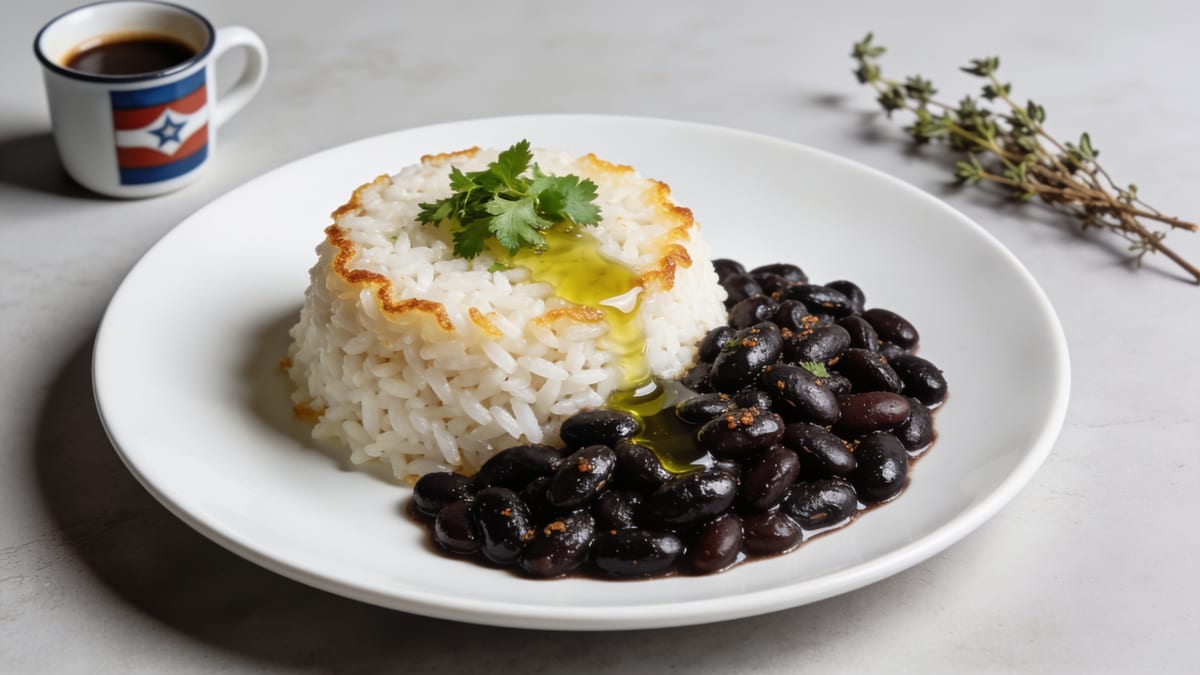
Rinse 400 g (2 cups) long-grain rice, then simmer it with 720 ml (3 cups) water, 1 tbsp olive oil, and 1 tsp salt, covered, 15 minutes; rest off heat 5 minutes. Meanwhile, sweat 1 diced onion and 1 diced green bell pepper in 45 ml (3 tbsp) olive oil for 6-8 minutes, bloom 4 minced garlic cloves with 2 tsp cumin and 1 tsp oregano for 1 minute, then add two undrained 15 oz cans of black beans, 240 ml (1 cup) vegetable broth, and a bay leaf. Simmer 15 minutes, mash a few spoonfuls of beans against the pot, stir in 1 tbsp red wine vinegar and 1 tsp sugar, simmer 5 more minutes until glossy, season, and serve over the fluffed rice with lime.
- Do not drain the beans — the starchy canning liquid is what makes the sauce creamy and full-bodied.
- Cook the sofrito until the onion and pepper are completely soft before adding beans; underdone sofrito tastes raw and sharp.
- Mash about 120 ml (1/2 cup) of beans against the side of the pot at the end to thicken the pot liquor so it coats the rice.
Equipment
- Large saucepan or Dutch oven (about 3 qt / 3 L) for the beans
- Medium saucepan with a tight-fitting lid for the rice
- Fine-mesh sieve for rinsing the rice
- Chef's knife and cutting board
- Wooden spoon
- Potato masher or sturdy fork
المكونات
Cuban-style black beans
- 45 ml olive oil
- yellow onion, medium, finely diced
- green bell pepper, finely diced
- garlic cloves, minced
- 4 g ground cumin
- 1 g dried oregano
- 850 g canned black beans, preferably reduced-sodium; do not drain
- 240 ml vegetable broth, or water
- bay leaf
- 15 ml red wine vinegar
- 4 g sugar
- 3 g fine salt, plus more to taste
- 1 g black pepper, freshly ground
Fluffy white rice
- 400 g long-grain white rice, rinsed until the water runs nearly clear
- 720 ml water
- 15 ml olive oil
- 6 g fine salt
To serve
- 40 g red onion, finely diced, optional
- 8 g fresh cilantro, chopped, optional
- lime, cut into wedges
الطريقة
- خطوة01
Finely dice the onion and green bell pepper and mince the garlic. Keeping the dice small matters here: the vegetables should nearly melt into the beans rather than stand out in chunks. Rinse the rice in a fine-mesh sieve under cold water until the water runs nearly clear.
- خطوة02
In a medium saucepan, combine the rinsed rice, 720 ml (3 cups) water, 1 tbsp olive oil, and 1 tsp salt. Bring to a boil over high heat, then stir once, cover with a tight lid, and reduce the heat to the lowest setting. Cook for 15 minutes without lifting the lid, then pull the pot off the heat and let it stand, still covered, while you finish the beans.
- خطوة03
While the rice cooks, heat 45 ml (3 tbsp) olive oil in a large saucepan or Dutch oven over medium heat. Add the onion, bell pepper, and a pinch of salt and cook, stirring often, for 6-8 minutes, until completely soft and translucent but not browned. This slow sweat is the flavor base of the whole pot, so do not rush it.
- خطوة04
Stir in the garlic, cumin, and oregano and cook for about 1 minute, just until fragrant. Blooming the spices in the hot oil wakes them up and keeps the finished beans from tasting dusty or raw.
- خطوة05
Pour in both cans of black beans with all their liquid, then add the broth, bay leaf, 1/2 tsp salt, and the black pepper. Bring to a gentle simmer, partially cover, and cook for 15 minutes, stirring occasionally, so the beans absorb the sofrito and the liquid starts to reduce.
- خطوة06
Mash about 120 ml (1/2 cup) of the beans against the side of the pot with a potato masher or fork, then stir in the red wine vinegar and sugar. Simmer uncovered for 5 more minutes, until the pot liquor is glossy and thick enough to coat a spoon. Discard the bay leaf and taste; adjust with more salt, pepper, or a few extra drops of vinegar.
- خطوة07
Fluff the rested rice with a fork and divide it among bowls. Ladle the beans and their sauce generously over the top, then finish with diced red onion, cilantro, and a squeeze of lime. Serve hot.
Make ahead
The beans actually improve after a night in the fridge as the sofrito and cumin settle in, so make them up to 3 days ahead and reheat gently with a splash of broth or water. Cook the rice fresh if you can; otherwise reheat refrigerated rice covered with a sprinkle of water until steaming. You can also dice the onion, pepper, and garlic a day ahead and store them together in the fridge.
Storage
Cool leftovers within an hour, then refrigerate the beans and rice in separate airtight containers for up to 4 days. Reheat in a saucepan or microwave with a splash of water to loosen the beans and re-steam the rice. The beans freeze well for up to 3 months; cooked rice can be frozen flat in zip-top bags for up to 2 months.
Variations
From dried beans
Soak 250 g (about 1 1/4 cups) dried black beans overnight, then simmer them in fresh water with a bay leaf and half an onion for 60-90 minutes until tender. Use the beans plus about 480 ml (2 cups) of their inky cooking liquid in place of the canned beans and broth; the flavor is noticeably deeper.
Congrí-style one pot
For rice and beans cooked together, sauté the sofrito in a Dutch oven, add the rinsed raw rice and stir to coat, then add the beans plus enough broth to total about 780 ml (3 1/4 cups) liquid. Cover and simmer on low for 20 minutes, then rest 10 minutes off heat before fluffing.
Smoky pork version
Not keeping it vegan? Render 100 g (about 4 slices) chopped bacon or 150 g diced smoked ham in the pot before adding the sofrito vegetables, and skip 1 tbsp of the olive oil. For smoke without meat, stir in 1 tsp smoked paprika with the cumin instead.
Serve with
Nutrition per serving
Nutrition values are estimates based on the metric measurements. Adjust as needed.
الأسئلة الشائعة
Should I drain the canned beans for black beans and rice?
No. The starchy canning liquid is doing real work in this recipe: it thickens the pot liquor and gives the beans that creamy, stew-like body Cuban frijoles negros are known for. If you drain the cans, you will need to simmer much longer to get the same texture. Just choose reduced-sodium beans so you stay in control of the salt.
Can I make black beans and rice with dried beans instead of canned?
Absolutely, and many cooks prefer it. Soak 250 g (1 1/4 cups) dried black beans overnight, simmer until tender (60-90 minutes), and use the beans plus about 2 cups of their cooking liquid in place of the cans and broth. Everything else in the recipe stays the same, and the black, silky cooking liquid gives the dish an even deeper color and flavor.
Is black beans and rice a complete meal on its own?
Yes. Beans and rice together supply complementary proteins, so a bowl delivers all the essential amino acids along with plenty of fiber and slow-burning carbs. Each serving of this version has around 18 g of protein. Add fried plantains or a simple salad if you want more on the plate, or top with a fried egg or roast pork for extra protein.
Why are my beans watery, and how do I thicken them?
Two usual causes: draining the cans (see above) or not reducing long enough. The fix is built into the method — mash about half a cup of beans against the side of the pot and simmer uncovered for the last 5 minutes. The crushed beans release starch that turns the liquid glossy and spoon-coating. If it is still thin, keep simmering uncovered a few more minutes.
What is the difference between this dish and moros y cristianos or congrí?
This recipe cooks the black beans and rice separately, so you get saucy beans ladled over fluffy white rice — the everyday Cuban serving style. Moros y cristianos (often called congrí in eastern Cuba) cooks the raw rice directly in the seasoned bean liquid in one pot, so every grain comes out tinted and savory. See the congrí-style variation above if you want to try it.
Cooked this? Rate it.
Real ratings from real cooks. We only show a score once enough of you have weighed in — no fabricated stars.