بولينتا كريمية
دقيق ذرة خشن يُطهى على نار هادئة ببطء، ثم يُخفق مع الزبدة والبارميجانو حتى ينساب كالحرير الدافئ. هذه هي النسخة الإيطالية الشمالية التي تستحق كل تلك التحريك: نكهة ذرة حلوة، وبريق لامع، وقوام كافٍ ليحتضن طبخة مطهوة على مهل أو يحمل بركة من زيت زيتون جيد.
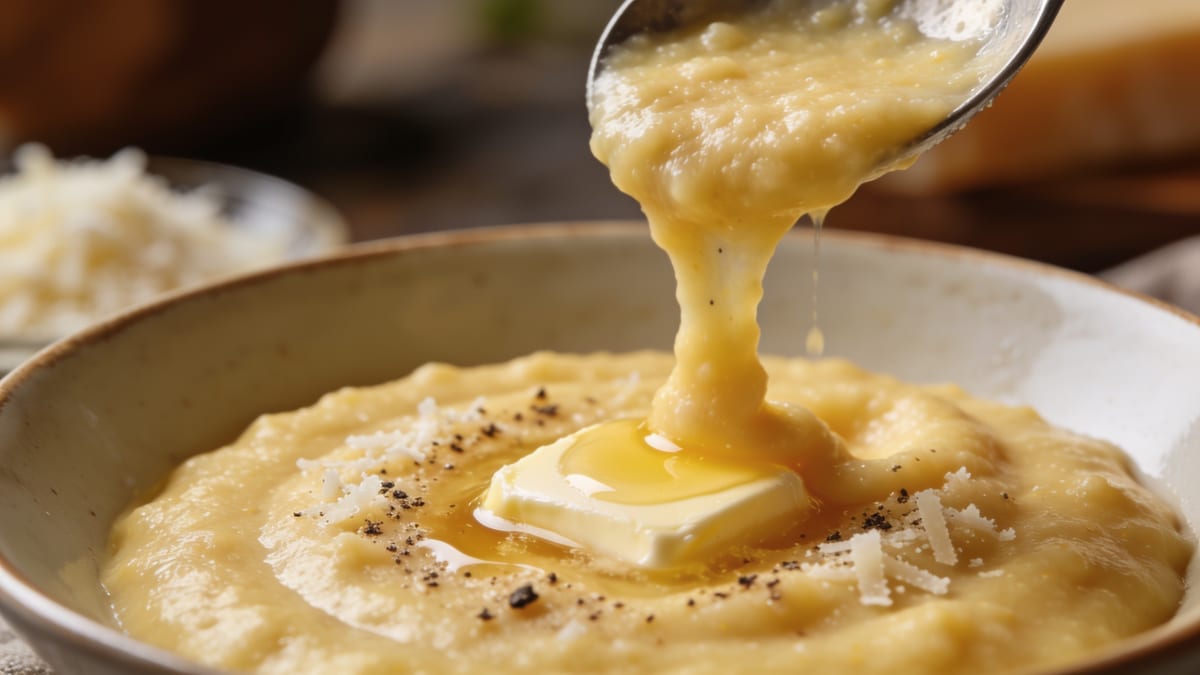
اغلي الماء المملّح (مع رشة حليب للغنى) حتى حافة الغليان، ثم أمطري دقيق الذرة الخشن مع الخفق القوي لمنع التكتل. اخفضي النار إلى منخفضة واطهيه من 40 إلى 45 دقيقة، مع التحريك كل بضع دقائق وإضافة ماء ساخن إن تماسك بسرعة، حتى تصبح الحبة طرية وغير محببة. بعيداً عن النار، اخفقي معه الزبدة الباردة والبارميجانو المبشور حتى يلمع، ثم تذوّقي للملح وقدّميه فوراً وهو قابل للسكب.
- النسبة هي كل شيء: جزء واحد من دقيق الذرة الخشن إلى نحو 5 أجزاء سائل بالحجم لنتيجة طرية تُغرف بالملعقة.
- اخفقي وأنت تسكبين دقيق الذرة في خيط رفيع، ثم انتقلي إلى الملعقة بمجرد أن يتماسك، لإيقاف التكتل قبل أن يبدأ.
- أنهي الطبق بعيداً عن النار بالزبدة والجبن (المانتيكاتورا) للبريق والقوام، لا أثناء الطهي.
Equipment
- قدر ثقيل القاع أو قدر هولندي (3 كوارت / 3 لتر)
- مضرب بالوني
- ملعقة خشبية طويلة
- غلاية أو قدر إضافي من الماء الساخن
- مبشرة ناعمة أو مايكروبلين
المكونات
للبولنتا
- 180 g دقيق ذرة خشن مطحون بالحجر (بولنتا), ليس سريع التحضير ولا دقيق ذرة ناعماً؛ طحنة برماتا مثالية
- 750 ml ماء, يُبقى قريباً من الغليان
- 250 ml حليب كامل الدسم, للغنى؛ استبدليه بالماء لقاعدة أخف
- 6 g ملح بحري ناعم, مع مزيد حسب الذوق في النهاية
للتزيين النهائي (المانتيكاتورا)
- 40 g زبدة غير مملحة، باردة، مكعّبات, الزبدة الباردة تستحلب لبريق أكثر
- 50 g بارميجانو-ريجيانو، مبشور ناعماً, مبشور طازجاً؛ جبن غرانا بادانو يعمل أيضاً
- فلفل أسود مطحون طازجاً, حسب الذوق
- زيت زيتون بكر ممتاز, اختياري، للتزيين على المائدة
الطريقة
- خطوة01
اجمعي الماء والحليب والملح في قدر ثقيل القاع على نار متوسطة إلى عالية. اغليها حتى حافة الغليان فقط، حين يترجرج السطح وتنكسر فقاعات صغيرة عند الحواف، ثم اخفضي إلى نار متوسطة. تمليح السائل الآن يُنكّه الذرة من الداخل؛ وإضافة الملح في النهاية فقط لا يعطي المذاق نفسه أبداً.
- خطوة02
مع الخفق المستمر والقوي، اسكبي دقيق الذرة في السائل في خيط بطيء ثابت، لا أسرع من شريط رفيع. هذه هي اللحظة الوحيدة التي تتكوّن فيها التكتلات أو لا. واصلي الخفق دقيقة كاملة بعد إضافة كل الدقيق؛ سيتماسك الخليط بسرعة ويبدأ في الطقطقة.
- خطوة03
اخفضي النار إلى منخفضة، حتى لا تطفو سوى فقاعات كسولة متفرقة، تنفجر ببطء كالحمم. البولنتا المطهوة على نار عالية جداً تحترق في القاع وتبقى محببة. انتقلي من المضرب إلى ملعقة خشبية طويلة الآن بعد أن اكتسبت قواماً.
- خطوة04
اطهيها من 40 إلى 45 دقيقة، مع التحريك جيداً كل 4 إلى 5 دقائق وكشط القاع والزوايا في كل مرة كي لا يعلق شيء. إذا تماسكت إلى عجينة قبل أن تطرى الحبة، اخفقي معها ماءً ساخناً بمقدار 60 ml (1/4 كوب) في كل مرة. تنضج حين يكون طعمها طرياً حلواً بلا تحبب طباشيري، وتنفصل البولنتا بنظافة عن جوانب القدر أثناء التحريك.
- خطوة05
استهدفي قواماً يسقط ببطء عن الملعقة ويستقر عائداً إلى سطح ناعم، مثل البطاطس المهروسة السائلة. تذكّري أنها تتماسك مع التبريد، لذا أبقيها أطرى قليلاً مما تريدين تقديمه. أضيفي ماءً ساخناً للتخفيف إن لزم.
- خطوة06
ارفعي القدر عن النار. اخفقي معها مكعبات الزبدة الباردة حتى تذوب وتلمع، ثم البارميجانو المبشور حتى يذوب تماماً وتصبح البولنتا حريرية ولامعة. تبّليها بالفلفل الأسود وتذوّقي للملح؛ فالجبن يضيف ملوحة، لذا عدّلي أخيراً.
- خطوة07
اغرفيها في أطباق دافئة وهي قابلة للسكب وأنهيها بخيط من زيت الزيتون البكر الممتاز ومزيد من الفلفل أو الجبن المبشور. البولنتا لا تنتظر أحداً؛ تتماسك بسرعة، فقدّميها فوراً أو احفظيها مغطاة على أخفض حرارة، مع تخفيفها بالماء الساخن حسب الحاجة.
Make ahead
اطهي البولنتا قبل يومين واحفظيها في الثلاجة. لتقديمها طرية، أعيدي تسخينها مع سائل مضاف كما سبق وأعيدي تزيينها بقطعة صغيرة من الزبدة وجبن طازج. لحفظها في اليوم نفسه، أبقيها دافئة في وعاء مغطى موضوع فوق قدر من الماء بالكاد يغلي (حمام مائي) حتى ساعة، مع تحريك ماء ساخن كل 15 إلى 20 دقيقة لإبقائها طرية.
Storage
احفظي البولنتا المبردة في وعاء محكم الإغلاق في الثلاجة حتى 4 أيام؛ ستتماسك وتصبح قابلة للتقطيع. أعيدي تسخينها برفق في قدر مع رشة سخية من الحليب أو الماء، مع الخفق على نار منخفضة حتى تصبح كريمية من جديد، من 5 إلى 8 دقائق. البواقي المتماسكة يمكن تقطيعها مربعات وقليها في المقلاة أو شويها حتى تقرمش.
Variations
نباتية / خالية من الألبان
اطهيها بالماء كله أو بحليب نباتي غير محلى. أنهيها بثلاث ملاعق كبيرة من زيت الزيتون الجيد بدلاً من الزبدة و2 إلى 3 ملاعق كبيرة من الخميرة الغذائية للعمق المالح بدلاً من البارميجانو. تبّليها بجرأة؛ فأنت تفقدين الملح الذي كان الجبن سيضيفه.
بولنتا الغورغونزولا
استبدلي نصف البارميجانو بـ 60 g من جبن الغورغونزولا دولتشي المفتّت، مخفوقاً بعيداً عن النار حتى يذوب في خطوط. غنية ونفّاذة تحت طبخة لحم بقري أو فطر مطهوة على مهل.
ثوم محمّص وأعشاب
قلّبي فيها الفصوص المهروسة من رأس ثوم محمّص وحفنة من إكليل الجبل أو الزعتر المفروم خلال آخر خمس دقائق من الطهي للحصول على نسخة عطرة ريفية.
Serve with
Nutrition per serving
Nutrition values are estimates based on the metric measurements. Adjust as needed.
الأسئلة الشائعة
كيف تطهو البولنتا بلا تكتل؟
سرّ كيفية طهي البولنتا بنعومة هو السكب: أوصلي السائل إلى غليان هادئ، ثم أمطري دقيق الذرة في خيط رفيع ثابت مع الخفق القوي طوال الوقت. تتكوّن التكتلات حين يصطدم دقيق الذرة بالسائل ككتلة، فلا تسكبيه دفعة واحدة أبداً. واصلي الخفق دقيقة بعد إضافته كله، ثم انتقلي إلى الملعقة.
ما نسبة دقيق الذرة إلى الماء للبولنتا الكريمية؟
للبولنتا الطرية التي تُغرف بالملعقة، استخدمي تقريباً جزءاً واحداً من دقيق الذرة الخشن إلى 5 أجزاء سائل بالحجم (هنا كوب دقيق ذرة إلى 4 أكواب سائل، جزء منه حليب للغنى). لبولنتا أكثر تماسكاً يمكنك تقطيعها وشويها، اخفضي إلى نحو 1:4. أبقي ماءً ساخناً قريباً للتخفيف أثناء الطهي.
هل يمكنني استخدام بولنتا فورية أو سريعة التحضير؟
نعم، وتجهز في نحو 5 دقائق، لكن قوامها أطرى ونكهة الذرة أضعف من البولنتا الخشنة المطهوة ببطء. اتبعي نسبة السائل على العبوة، ثم لا تزال أنهيها بعيداً عن النار بالزبدة والبارميجانو للبريق والقوام. للحصول على أفضل النتائج، دقيق الذرة الخشن التقليدي المطحون بالحجر يكافئ على تحريك الأربعين دقيقة.
لماذا البولنتا عندي محببة؟
البولنتا المحببة غير ناضجة. تحتاج حبيبات النشا إلى وقت وحرارة لطيفة كي ترتوي وتطرى تماماً، لذا اطهي دقيق الذرة الخشن 40 إلى 45 دقيقة كاملة على غليان هادئ، مع التذوّق قرب النهاية. إذا تماسكت قبل أن تطرى الحبة، اخفقي معها مزيداً من الماء الساخن بدلاً من التوقّف مبكراً.
هل يجب أن أحرّك البولنتا باستمرار؟
لا، التحريك المستمر خرافة بالنسبة لقدر ثقيل القاع على نار منخفضة. التحريك الجيد كل 4 إلى 5 دقائق، مع كشط القاع والزوايا، يكفي لمنع الاحتراق. الأهم هو غليان منخفض حقاً ووقت طهي إجمالي كافٍ.
Cooked this? Rate it.
Real ratings from real cooks. We only show a score once enough of you have weighed in — no fabricated stars.