Beef Tips and Gravy
Beef tips and gravy is old-school American comfort food: bite-size chunks of chuck roast seared hard, then simmered low and slow in a savory onion-and-broth gravy until they collapse at the touch of a fork. The long braise melts the chuck's connective tissue into the sauce, so the gravy turns silky and deeply beefy without any packet mixes. Ladle it over mashed potatoes or egg noodles and dinner takes care of itself.
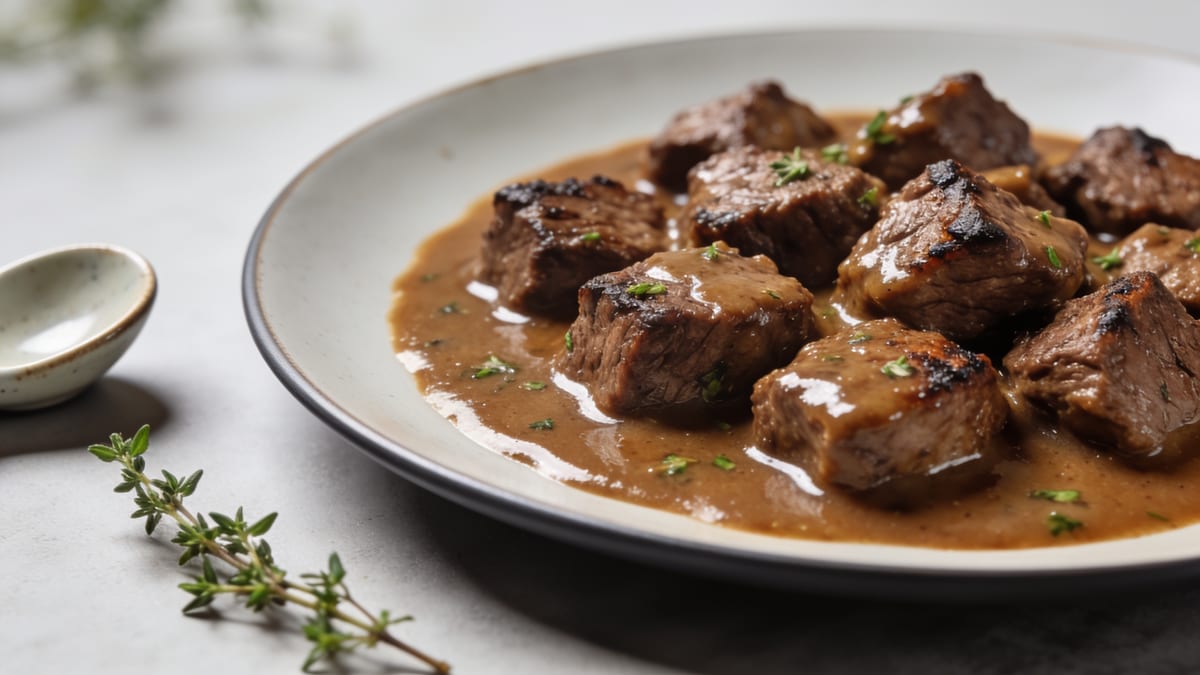
Cut 900 g (2 lb) of chuck roast into 2.5 cm (1-inch) cubes, season with salt and pepper, and toss with a little flour. Sear the cubes in batches in a hot Dutch oven with oil until deeply browned, then set aside. Soften a diced onion in the same pot, stir in garlic and tomato paste, and deglaze with 720 ml (3 cups) of beef broth, scraping up every browned bit. Add Worcestershire, soy sauce, thyme, and a bay leaf, return the beef, and simmer partially covered on low for 75-90 minutes until fork-tender. Stir in a cornstarch slurry, simmer 2-3 minutes until the gravy coats a spoon, finish with a knob of butter, and serve over mashed potatoes.
- Sear in batches over medium-high heat — crowding the pot steams the beef and you lose the browned fond that gives the gravy its flavor.
- Do not rush the simmer: chuck goes from chewy to fork-tender only after 75-90 minutes at a gentle bubble, so test a piece before thickening.
- Thicken at the very end with a cornstarch slurry and finish with cold butter for a glossy gravy that never tastes floury.
Equipment
- Large Dutch oven or heavy-bottomed pot with lid
- Chef's knife and cutting board
- Tongs
- Measuring cups and spoons
- Small bowl and whisk for the slurry
- Wooden spoon or silicone spatula
Ingredients
Beef
- 900 g boneless beef chuck roast, cut into 2.5 cm (1-inch) cubes, large fat pockets trimmed
- 6 g kosher salt, plus more to taste
- 1 g freshly ground black pepper
- 30 g all-purpose flour, for dredging the beef
- 30 ml neutral oil, vegetable or canola
Gravy
- yellow onion, diced
- garlic cloves, minced
- 16 g tomato paste
- 720 ml low-sodium beef broth
- 15 ml Worcestershire sauce, contains anchovies
- 15 ml soy sauce, use tamari for gluten-free
- 1 g dried thyme
- bay leaf
- 16 g cornstarch, for the slurry
- 60 ml cold water, whisked with the cornstarch
- 15 g unsalted butter, cold, for finishing
- 8 g fresh parsley, chopped, optional, for serving
Method
- STEP01
Pat the chuck roast dry with paper towels, trim any large pockets of fat, and cut it into 2.5 cm (1-inch) cubes. Season all over with the salt and pepper, then toss with the flour in a large bowl until every piece is lightly coated. Shake off the excess — you want a thin film, not a crust.
- STEP02
Heat the oil in a large Dutch oven over medium-high heat until shimmering. Add half the beef in a single layer with space between the pieces and sear undisturbed for about 2 minutes per side, until deeply browned on two sides. Transfer to a plate and repeat with the remaining beef, adding a splash more oil if the pot looks dry.
- STEP03
Reduce the heat to medium. Add the diced onion to the drippings and cook, stirring, for about 4 minutes until softened and picking up color from the fond. Stir in the garlic and tomato paste and cook for 1 minute more, until the paste darkens slightly and smells sweet.
- STEP04
Pour in the beef broth and scrape the bottom of the pot with a wooden spoon to release every browned bit. Stir in the Worcestershire, soy sauce, thyme, and bay leaf, then return the beef and any accumulated juices. Bring to a gentle simmer, partially cover, and reduce the heat to low. Simmer for 75-90 minutes, stirring occasionally, until a piece of beef breaks apart easily when pressed with a fork.
- STEP05
Fish out the bay leaf. Whisk the cornstarch and cold water in a small bowl until smooth, then stir the slurry into the simmering pot. Cook for 2-3 minutes, stirring, until the gravy turns glossy and thickly coats the back of a spoon. If it gets tighter than you like, loosen it with a splash of broth.
- STEP06
Pull the pot off the heat and stir in the cold butter until it melts into the gravy. Taste and adjust with salt, pepper, or an extra dash of Worcestershire — the gravy should taste boldly savory, since the potatoes or noodles underneath will mellow it.
- STEP07
Spoon the beef tips and gravy over mashed potatoes, buttered egg noodles, or steamed rice. Scatter chopped parsley on top and serve hot.
Make ahead
This dish genuinely improves overnight as the gravy settles into the beef, so it is a great candidate for cooking a day ahead: make the recipe through the final step, cool, and refrigerate, then reheat slowly with a little extra broth. You can also cube and season the beef up to 24 hours in advance and keep it covered in the fridge — just hold off on the flour dredge until right before searing.
Storage
Cool completely, then refrigerate in an airtight container for up to 4 days. The gravy will thicken as it chills; reheat gently on the stovetop over low heat with a splash of beef broth or water to loosen it. For longer storage, freeze in portioned containers for up to 3 months and thaw overnight in the refrigerator before reheating.
Variations
Mushroom and onion beef tips
Add 225 g (8 oz) of quartered cremini mushrooms with the onion and cook until their moisture evaporates and they brown. The mushrooms deepen the gravy and stretch the dish by an extra serving; a splash of dry red wine to deglaze before the broth pushes it further toward a bourguignon feel.
Gluten-free beef tips
Skip the flour dredge entirely (sear the seasoned beef bare — it browns just as well) and swap the soy sauce for tamari or coconut aminos. The gravy is already thickened with cornstarch, so no other changes are needed.
Slow cooker version
Sear the beef and sauté the aromatics on the stovetop as written, then transfer everything except the slurry and butter to a slow cooker. Cook on LOW for 7-8 hours, stir in the cornstarch slurry, and cook on HIGH for 15-20 minutes until thickened before finishing with butter.
Serve with
Nutrition per serving
Nutrition values are estimates based on the metric measurements. Adjust as needed.
Frequently asked
What cut of meat is best for beef tips?
Despite the name, beef tips are not one specific cut — the term just means bite-size chunks of beef. For a braised gravy version like this one, boneless chuck roast is the best choice because its connective tissue melts into gelatin during the long simmer, making both the meat and the gravy richer. Sirloin tips work too, but they are leaner and better suited to quick-seared versions that skip the long braise.
Why are my beef tips tough?
Almost always because the simmer was too short or too hard. Chuck passes through a tough, chewy stage before its collagen breaks down, which takes 75-90 minutes at a gentle bubble. If the beef feels rubbery, it is undercooked, not overcooked — keep simmering and test a piece every 15 minutes. A rolling boil also squeezes the meat dry, so keep the heat low.
Can I make beef tips and gravy in a slow cooker?
Yes, and it is very forgiving. Sear the beef and sauté the onion and garlic first so you do not lose the browned flavor, then combine everything except the cornstarch slurry and butter in the slow cooker and cook on LOW for 7-8 hours. Stir in the slurry at the end and run the cooker on HIGH for 15-20 minutes to thicken before finishing with butter.
How do I make this recipe gluten-free?
Two small swaps: skip the flour dredge (the beef browns fine without it, since cornstarch does the thickening later) and use tamari or coconut aminos instead of soy sauce. Also check your beef broth label, as a few brands add wheat-based flavorings. Everything else in the recipe is naturally gluten-free.
Are beef tips the same as stew meat?
They are close cousins. Packaged 'stew meat' is usually a mix of trimmings from different cuts, which means the pieces cook at different rates — some turn tender while others stay chewy. Cutting your own cubes from a single chuck roast gives beef tips that cook evenly and lets you control the size, so it is worth the extra five minutes of knife work.
Cooked this? Rate it.
Real ratings from real cooks. We only show a score once enough of you have weighed in — no fabricated stars.