Caldo de Res (Mexican Beef Soup)
Caldo de res is the big, restorative Mexican beef soup built on bone-in shank simmered until the marrow enriches the broth and the meat pulls apart, with corn on the cob, chayote, carrots, potatoes, zucchini, and cabbage added in stages so each lands perfectly tender. Starting the shank in cold water and holding the pot at a bare simmer keeps the broth clear and deeply beefy instead of greasy or cloudy. A last-minute shower of raw onion, cilantro, and lime wakes the whole bowl up.
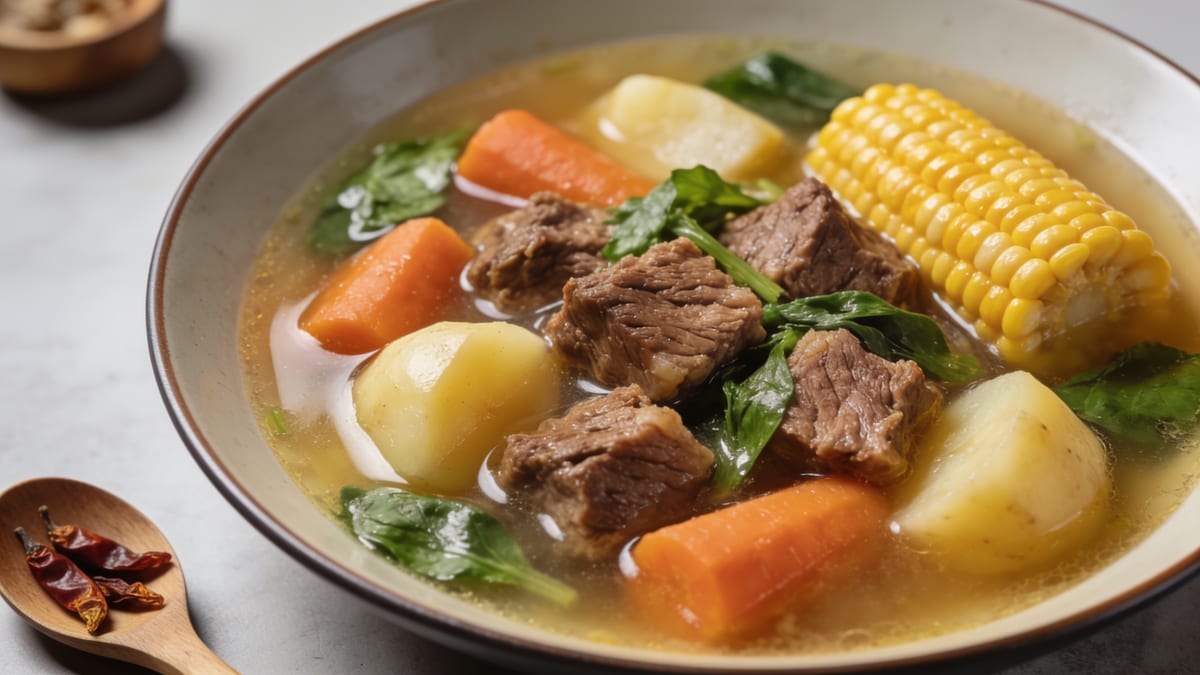
Cover 1.4 kg (3 lb) bone-in beef shank slices with 3.8 L (16 cups) cold water, bring to a boil, and skim the foam for several minutes. Add quartered onion, smashed garlic, quartered Roma tomatoes, bay leaves, peppercorns, and salt, then drop the heat to a bare simmer and cook, partially covered, about 90 minutes until the beef is nearly fork-tender. Add vegetables in waves by cooking time: corn rounds and carrot chunks first (15 minutes), then chayote and potatoes (15 minutes), then zucchini and cabbage wedges (10 minutes). Pull the pot off the heat, drop in cilantro sprigs, rest 5 minutes, season the broth with salt, and serve each bowl with a piece of shank, some of every vegetable, diced onion, chopped cilantro, a big squeeze of lime, and warm corn tortillas — spoon in rice if you like.
- Start the shank in cold water and skim aggressively during the first boil — that, plus a bare simmer afterward, is what keeps the broth clear instead of murky and greasy.
- Stage the vegetables by density (corn and carrots first, zucchini and cabbage last) so nothing turns to mush while the potatoes finish.
- Under-salt the pot early and season fully only at the end; the broth reduces as it simmers, and lime juice at the table sharpens everything.
Equipment
- 10- to 12-quart stockpot or large Dutch oven
- Fine-mesh skimmer or large shallow spoon
- Ladle
- Chef's knife
- Cutting board
- Tongs
Ingredients
Broth
- 1.4 kg bone-in beef shank slices (chamorro), cut about 4 cm / 1 1/2 in thick, marrow bones intact
- 3.8 L cold water, plus more if needed to keep beef covered
- white onion, quartered through the root
- garlic cloves, smashed and peeled
- Roma tomatoes, quartered
- bay leaves
- 3 g whole black peppercorns
- 18 g fine sea salt, plus more to taste at the end
Vegetables
- corn on the cob, husked, each cut crosswise into 3 rounds
- 300 g carrots, peeled, cut into 5 cm / 2 in chunks
- 400 g chayote squash, peeled, seeded, cut into thick wedges
- 450 g Yukon Gold or white potatoes, peeled and quartered
- 350 g zucchini or Mexican calabacitas, cut into thick half-moons
- 400 g green cabbage, cut through the core into 4 wedges
- cilantro sprigs, tied with kitchen twine for easy removal
To serve
- 75 g white onion, finely diced
- 15 g chopped fresh cilantro
- limes, cut into wedges
- corn tortillas, warmed
- serrano chiles, minced, optional, for heat at the table
- 370 g cooked white rice, optional, for spooning into bowls
Method
- STEP01
Put the beef shank slices in a 10- to 12-quart stockpot and cover with 3.8 L (16 cups) cold water. Set over high heat and bring just to a boil, uncovered. As gray foam rises during the first several minutes of boiling, skim it off with a fine-mesh skimmer or shallow spoon and discard it. Starting from cold and skimming well now is what gives you a clean, clear broth later.
- STEP02
Add the quartered onion, garlic, tomatoes, bay leaves, peppercorns, and 1 tablespoon (18 g) salt. Reduce the heat until the surface barely trembles — an occasional lazy bubble, never a rolling boil. Partially cover and simmer for about 90 minutes, skimming fat once or twice, until a fork slides into the shank meat with only slight resistance. Top up with hot water if the beef ever pokes above the surface.
- STEP03
Fish out and discard the bay leaves and any spent onion and tomato pieces that have fallen apart (they have given the broth everything they have). Add the corn rounds and carrot chunks, keeping the heat at a gentle simmer.
- STEP04
Add the chayote wedges and quartered potatoes. Continue simmering gently, uncovered, until the potatoes are about halfway cooked — a knife should meet resistance at the center.
- STEP05
Lay the zucchini and cabbage wedges on top of the soup, pushing them down so they are mostly submerged. Simmer until every vegetable is tender but still holding its shape and the potatoes are creamy at the center.
- STEP06
Turn off the heat, drop in the tied cilantro sprigs, and let the pot rest for 5 minutes. Remove the cilantro bundle, then taste the broth and season with more salt, a teaspoon at a time — it usually needs another 1 to 2 teaspoons. It should taste clearly beefy and just salty enough that a squeeze of lime will make it pop.
- STEP07
Use tongs and a ladle to give each wide bowl a piece of shank (nudge the marrow out of the bone into the broth — it is the best part), one piece of every vegetable, and plenty of broth. If using rice, spoon a scoop into each bowl first. Pass diced onion, chopped cilantro, lime wedges, minced serranos, and warm tortillas at the table so everyone dresses their own bowl.
Make ahead
This soup is a great two-day project. Make the broth and beef through the 90-minute simmer up to 2 days ahead, then chill the pot; the fat hardens on top for easy removal and the flavor deepens overnight. On serving day, lift off the fat cap, bring the broth back to a simmer, and cook the vegetables in stages as written — about 45 minutes from fridge to table.
Storage
Cool the soup uncovered until steam subsides, then refrigerate in airtight containers for up to 4 days; the fat will set into a cap you can lift off before reheating. Reheat gently on the stovetop until the beef is warmed through. The broth and beef freeze beautifully for up to 3 months, but potatoes and zucchini turn grainy and soft in the freezer — if you plan to freeze, pull the vegetables out and freeze only broth, beef, corn, and carrots, then simmer fresh quick-cooking vegetables when you reheat.
Variations
Cocido-style with chickpeas and green beans
In much of northern Mexico this pot leans toward cocido: add 250 g (1 1/2 cups) cooked or canned chickpeas and a handful of trimmed green beans along with the chayote and potatoes. The chickpeas soak up broth and make the soup even heartier.
Smoky-spicy chipotle broth
Blend the simmered tomatoes with 1 to 2 canned chipotles in adobo and 250 ml (1 cup) of the hot broth, then stir the puree back into the pot before adding the vegetables. You get a russet-tinted, gently smoky caldo without overwhelming the beef.
Caldo de pollo (lighter poultry swap)
Swap the shank for 1.4 kg (3 lb) bone-in chicken thighs and drumsticks and cut the initial simmer to 35 to 40 minutes before staging the same vegetables. The result is a lighter, faster soup that is naturally lower in fat and still gluten-free.
Serve with
Nutrition per serving
Nutrition values are estimates based on the metric measurements. Adjust as needed.
Frequently asked
What is the best cut of beef for caldo de res?
Bone-in beef shank (chamorro) is the classic choice and hard to beat: the shank's connective tissue melts into body for the broth, the marrow bone adds richness, and the meat shreds into silky strands after a long simmer. If your market does not carry sliced shank, use English-cut short ribs, oxtail, or 1.4 kg (3 lb) of chuck roast plus a couple of marrow bones so the broth still gets that gelatin and depth.
Why is my caldo de res broth cloudy, and how do I keep it clear?
Cloudiness comes from proteins and emulsified fat churned into the liquid by hard boiling. Three habits prevent it: start the beef in cold water so proteins rise slowly as foam, skim that foam thoroughly during the first boil, and hold the pot at a bare simmer afterward. A vigorous rolling boil at any point will emulsify the fat and turn the broth murky and greasy-tasting.
Can I make caldo de res in a pressure cooker or Instant Pot?
Yes. Pressure-cook the shank with the aromatics, salt, and 2.5 L (10 cups) water for 40 minutes on high with a 15-minute natural release, then switch to the saute setting and simmer the vegetables in stages just as the stovetop version does — corn and carrots first, zucchini and cabbage last. Do not pressure-cook the vegetables with the beef or they will disintegrate.
What can I use instead of chayote?
Chayote brings a mild, juicy crispness, but it is not essential. The easiest swaps are an extra zucchini, a few chunks of yellow summer squash, or more waxy potato. Peeled wedges of kohlrabi are a sleeper substitute — they hold their shape and have a similar clean, faintly sweet flavor.
Is caldo de res the same thing as cocido?
Mostly, yes — in many Mexican households and regions the two names describe the same big pot of bone-in beef and vegetables, with caldo de res more common in some areas and cocido (or puchero) in others. Cocido versions often add chickpeas, green beans, or plantain, but the technique — long-simmered shank broth with vegetables added in stages — is the same.
Cooked this? Rate it.
Real ratings from real cooks. We only show a score once enough of you have weighed in — no fabricated stars.