Chop Suey
Chop suey is the great Chinese-American clean-out-the-crisper stir-fry: velveted chicken and a rainbow of crisp vegetables bound in a glossy, savory oyster-sauce gravy. The trick is cooking in stages over high heat — chicken first, then hard vegetables, then tender ones — so every piece keeps its snap instead of steaming into mush. A quick cornstarch slurry at the end turns the pan juices into that signature silky sauce that clings to every bite of rice.
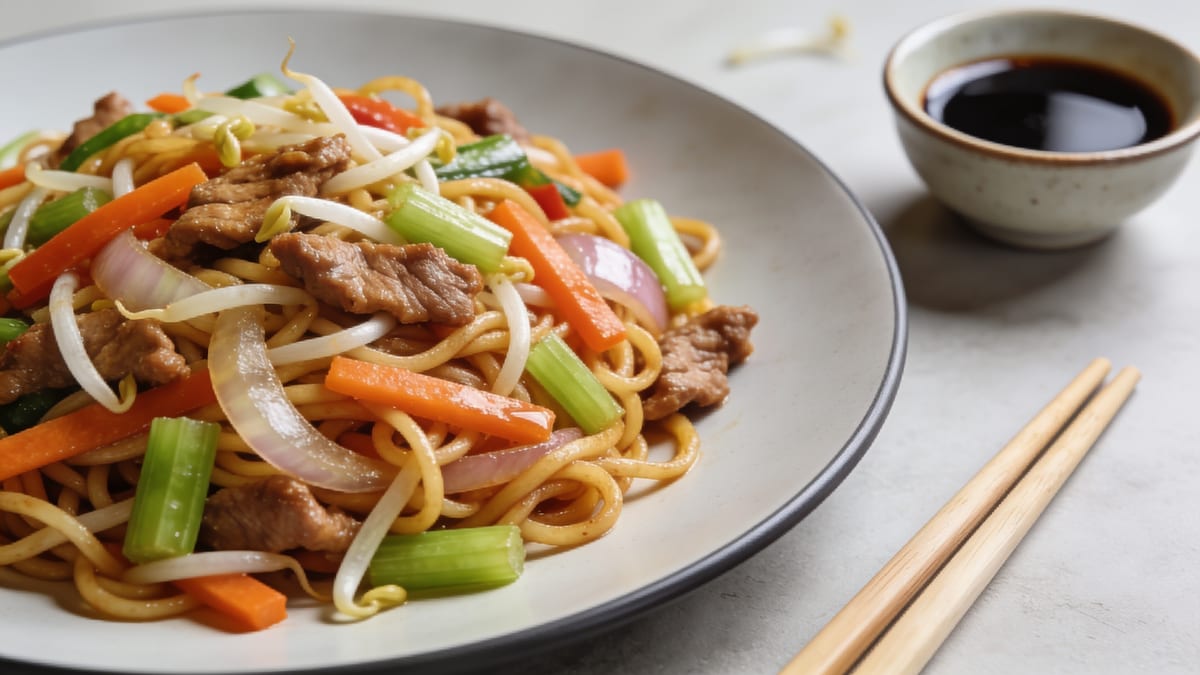
Slice 450 g chicken breast thin, toss with 1 tbsp soy sauce, 1 tbsp Shaoxing wine, 2 tsp cornstarch, and 1 tsp oil; rest 10 minutes while you whisk the sauce (240 ml chicken stock, 3 tbsp oyster sauce, 1 tbsp soy sauce, 1 tsp sugar, 1 tsp sesame oil, 1/4 tsp white pepper) and a separate slurry of 1 tbsp cornstarch in 2 tbsp water. Sear the chicken in a smoking-hot wok with 1 tbsp oil until just cooked, about 3 minutes, and remove. Add another 1 tbsp oil and stir-fry garlic, ginger, onion, celery, and carrot for 3 minutes, then cabbage, mushrooms, and water chestnuts for 2 minutes. Pour in the sauce, bring to a boil, stir in the slurry until glossy, then return the chicken and fold in bean sprouts and snow peas for a final minute. Serve immediately over steamed rice.
- Cook in batches: sear the chicken alone first, then build the vegetables from hardest to most tender so nothing overcooks or steams.
- Re-stir the cornstarch slurry right before adding it and pour it into boiling liquid — that is what gives chop suey its glossy, non-gloppy gravy.
- Add bean sprouts and snow peas in the last 60 seconds; their crunch against the silky sauce is the whole point of the dish.
Equipment
- Wok or 12-inch (30 cm) heavy skillet
- Chef's knife and cutting board
- Wok spatula or wooden spoon
- Small mixing bowls (for marinade, sauce, and slurry)
- Measuring cups and spoons
- Plate for holding the seared chicken
Ingredients
Chicken and marinade
- 450 g boneless, skinless chicken breast, sliced against the grain into thin, 5 mm (1/4 in) strips
- 15 ml soy sauce
- 15 ml Shaoxing wine, or dry sherry; omit if needed
- 6 g cornstarch
- 5 ml neutral oil
Sauce and slurry
- 240 ml chicken stock, low-sodium preferred
- 45 ml oyster sauce
- 15 ml soy sauce
- 4 g granulated sugar
- 5 ml toasted sesame oil
- 0.5 g ground white pepper
- 8 g cornstarch, for the slurry
- 30 ml cold water, for the slurry
Vegetables and aromatics
- 30 ml neutral oil, divided
- garlic cloves, minced
- 10 g fresh ginger, minced
- medium yellow onion, cut into 2.5 cm (1 in) wedges, layers separated
- celery stalks, sliced on the bias, 1 cm (1/2 in) thick
- medium carrot, sliced into thin coins on the bias
- 200 g napa or green cabbage, cut into 4 cm (1 1/2 in) squares
- 150 g button or cremini mushrooms, sliced 5 mm (1/4 in) thick
- 140 g canned sliced water chestnuts, drained
- 100 g snow peas, strings removed
- 150 g mung bean sprouts, rinsed and well drained
Method
- STEP01
Toss the sliced chicken with the soy sauce, Shaoxing wine, cornstarch, and 1 teaspoon of oil until every piece is coated in a thin paste. Set aside for 10 minutes at room temperature while you prep everything else — this quick velvet keeps the lean breast meat tender and helps the sauce cling later.
- STEP02
In one bowl, whisk together the stock, oyster sauce, soy sauce, sugar, sesame oil, and white pepper. In a second small bowl, stir the cornstarch into the cold water until smooth. Keep both next to the stove — once the wok is hot, chop suey moves fast and there is no time to measure.
- STEP03
Set a wok or large heavy skillet over high heat until a drop of water evaporates on contact. Swirl in 1 tablespoon of the neutral oil, then spread the chicken in a single layer. Let it sit undisturbed for 1 minute to pick up color, then stir-fry until just cooked through, 2 minutes more. Transfer to a plate — it will finish in the sauce.
- STEP04
Return the wok to high heat and add the remaining 1 tablespoon of oil. Add the garlic and ginger and stir for 15 seconds until fragrant, then add the onion, celery, and carrot. Stir-fry until the onion edges start to brown but the vegetables are still crisp, about 3 minutes.
- STEP05
Add the cabbage, mushrooms, and water chestnuts. Toss constantly until the cabbage wilts at the edges but keeps some bite, about 2 minutes. If the pan looks dry, add a splash of the sauce mixture rather than more oil.
- STEP06
Pour in the sauce and bring it to a full boil, scraping up any browned bits. Give the slurry a fresh stir (the starch settles), then drizzle it in while tossing. Boil for 30 to 60 seconds until the liquid turns from cloudy to glossy and coats the back of a spoon — cornstarch only reaches full thickness at a boil.
- STEP07
Return the chicken and any juices to the wok, then fold in the snow peas and bean sprouts. Toss for about 1 minute — just long enough to heat the chicken through while the sprouts stay crunchy. Taste, adjust with a dash of soy sauce or white pepper, and serve immediately over hot steamed rice.
Make ahead
All the knife work can happen up to a day ahead: store cut vegetables in zip-top bags in the fridge (keep bean sprouts separate and very dry), marinate the chicken up to 8 hours, and mix the sauce in a jar. With everything staged, the actual stir-frying takes about 12 minutes, so cook it just before serving — chop suey is at its best straight from the wok.
Storage
Cool leftovers within an hour and refrigerate in an airtight container for up to 3 days. Reheat in a hot skillet with a splash of stock or water to loosen the sauce; the microwave works but softens the vegetables further. Freezing is not recommended — the cornstarch sauce weeps and the sprouts and cabbage turn limp when thawed.
Variations
Vegan tofu chop suey
Swap the chicken for 400 g (14 oz) extra-firm tofu, pressed, cubed, and pan-fried until golden before you start the vegetables. Use vegetable stock and replace the oyster sauce with vegetarian mushroom stir-fry sauce. Use tamari instead of soy sauce and it becomes gluten-free as well.
Pork or beef chop suey
Use 450 g (1 lb) thinly sliced pork shoulder or flank steak in place of the chicken, marinated the same way. Beef benefits from an extra 1/2 teaspoon of baking soda in the marinade for 15 minutes (rinse before cooking) to keep it tender over high heat.
Shrimp chop suey
Substitute 450 g (1 lb) peeled large shrimp; skip the marinade and simply toss them with a pinch of salt and 1 teaspoon cornstarch. Sear just 90 seconds per side in step 3 — they finish cooking when returned to the sauce.
Serve with
Nutrition per serving
Nutrition values are estimates based on the metric measurements. Adjust as needed.
Frequently asked
What is the difference between chop suey and chow mein?
The base is nearly identical — stir-fried meat and vegetables in a savory gravy — but chow mein is built around noodles, either tossed through the stir-fry or served crisp underneath it. Chop suey has no noodles in the dish itself; it is a saucy stir-fry ladled over steamed rice (chop suey over crispy noodles is usually menu-labeled 'chow mein' in the US).
Is chop suey a real Chinese dish?
It is a real Chinese-American dish. The name comes from Cantonese 'tsap seui,' meaning 'mixed odds and ends,' and it was popularized by Cantonese immigrant cooks in 19th-century America who adapted home-style stir-fries to local ingredients. You will rarely find it on menus in China, but it is a genuine piece of Chinese diaspora cooking with over a century of history.
What vegetables can I use in chop suey?
Almost anything — the dish was invented to use up odds and ends. The classic mix is onion, celery, bean sprouts, and water chestnuts for crunch, but bok choy, broccoli, bell peppers, bamboo shoots, baby corn, and green beans all work. The one rule: add hard vegetables first and delicate ones last so everything lands crisp-tender at the same moment.
Why did my chop suey sauce turn out watery or gloppy?
Watery sauce usually means the slurry went into liquid that was not boiling — cornstarch only reaches full thickening power at a boil — or that wet vegetables (especially rinsed sprouts) diluted it. Gloppy sauce means too much slurry or too long a boil after thickening. Drizzle the slurry in gradually while the sauce bubbles and stop as soon as it turns glossy and coats a spoon.
Can I make chop suey without oyster sauce?
Yes. Substitute an equal amount of vegetarian mushroom stir-fry sauce for a nearly identical savory depth, or use 2 extra tablespoons of soy sauce plus 1/2 teaspoon of sugar in a pinch. Hoisin works too but pushes the dish sweeter, so start with half the amount and taste.
Cooked this? Rate it.
Real ratings from real cooks. We only show a score once enough of you have weighed in — no fabricated stars.