Crab Legs with Garlic Butter Sauce
Sweet, briny snow or king crab legs steamed just until piping hot, then dunked in a warm garlic butter brightened with lemon, Old Bay, and parsley. Because nearly all crab legs are sold pre-cooked, a short steam is all it takes — the gentle, moist heat warms the meat through without drying it out or turning it rubbery. It feels like a seafood-house splurge, yet the whole thing is on the table in about 25 minutes.
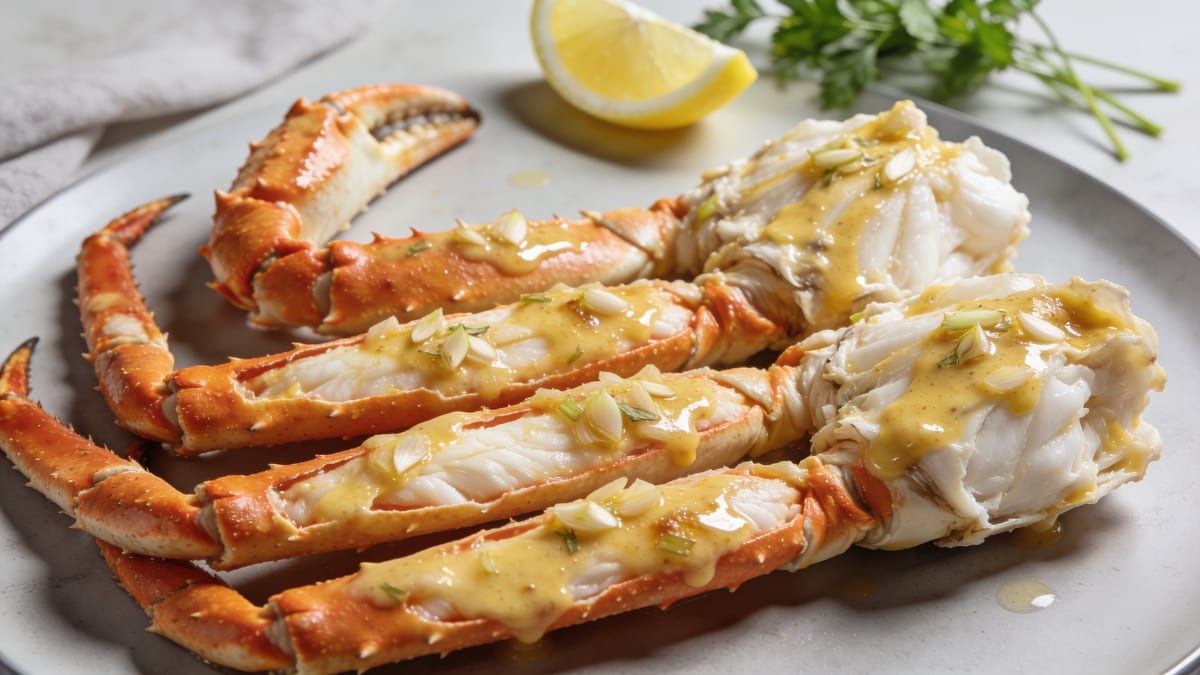
Thaw 1.8 kg (4 lb) of pre-cooked snow or king crab legs overnight in the fridge, then steam them over 2.5 cm (1 inch) of boiling water, covered, for 5 to 7 minutes — just long enough to heat the meat through without drying it out. While the pot comes to a boil, melt 170 g (12 tbsp) of unsalted butter over medium-low heat, sweat 5 minced garlic cloves for 2 to 3 minutes until fragrant but not browned, then stir in Old Bay, a pinch of red pepper flakes, fresh lemon juice, and chopped parsley off the heat. Snip each shell lengthwise with kitchen shears, pile the legs on a platter, and serve with bowls of the warm garlic butter and lemon wedges for dipping.
- Almost all crab legs are sold already cooked, so you are only reheating — pull them at 5 to 7 minutes of steaming, before the meat tightens and turns rubbery.
- Keep the garlic butter over gentle heat; browned or scorched garlic tastes bitter and steamrolls the crab's delicate sweetness.
- Cut a line down each shell with kitchen shears before serving so everyone can lift the meat out in whole, satisfying pieces.
Equipment
- Large stockpot with a tight-fitting lid
- Steamer basket or elevated rack
- Small saucepan
- Kitchen shears
- Long tongs
- Small bowls for dipping butter
Ingredients
Crab legs
- 1.8 kg snow crab leg clusters or king crab legs, thawed, sold pre-cooked and frozen; thaw overnight in the fridge
- 480 ml water, for steaming, enough for about 2.5 cm / 1 inch in the pot
- lemon, cut into wedges, for serving
Garlic butter sauce
- 170 g unsalted butter
- garlic cloves, finely minced
- 30 ml fresh lemon juice, from about 1 lemon
- 3 g Old Bay seasoning
- 8 g chopped fresh flat-leaf parsley
- 0.5 g red pepper flakes, optional
Method
- STEP01
The night before, set the frozen crab legs on a rimmed sheet pan and thaw them in the refrigerator. (Short on time? Seal them in a zip-top bag and submerge in cold water for 30 to 45 minutes.) Pat the legs dry and, if any clusters are too long for your pot, bend them at the joints or snip them apart with kitchen shears.
- STEP02
Pour about 2.5 cm (1 inch) of water into a large stockpot and set a steamer basket or rack inside so it sits above the waterline. Cover and bring to a rolling boil over high heat.
- STEP03
While the water heats, melt the butter in a small saucepan over medium-low heat. Add the minced garlic and cook, stirring often, for 2 to 3 minutes, until soft and fragrant but with no color — browned garlic turns bitter. Stir in the Old Bay and red pepper flakes, then pull the pan off the heat and add the lemon juice and parsley. Cover to keep warm.
- STEP04
Arrange the crab legs in the basket, stacking loosely so steam can circulate (work in two batches if your pot is crowded). Cover and steam for 5 to 7 minutes, until the shells are hot to the touch, the meat is heated through, and the kitchen smells sweet and briny. Do not go longer — the meat is already cooked and only needs reheating.
- STEP05
Transfer the legs to a platter with tongs. Using kitchen shears, cut a line down the length of each shell on the flatter underside. This one move does most of the work at the table — the meat lifts out in whole pieces instead of shreds.
- STEP06
Give the garlic butter a quick stir and divide it among small bowls, one per person. Pile the crab legs on the platter with lemon wedges and serve immediately, dipping each bite of meat into the warm butter.
Make ahead
The garlic butter can be made up to 3 days ahead: cook it through the garlic-and-spice stage, refrigerate, then re-melt over low heat and add the lemon juice and parsley just before serving so they stay bright. Thaw the crab legs in the fridge up to a day in advance, but steam them only when you are ready to eat — they lose moisture quickly once reheated.
Storage
Pick any leftover meat from the shells and refrigerate it in an airtight container for up to 2 days; whole legs take up space and dry out faster. Reheat leftover legs gently in the steamer for 3 to 4 minutes, or fold picked meat into pasta or scrambled eggs straight from the fridge. Leftover garlic butter keeps, covered, in the refrigerator for up to 1 week — re-melt it over low heat.
Variations
Cajun boil style
Swap the Old Bay for 2 tsp Cajun seasoning and increase the red pepper flakes to 1/2 tsp. Stir 1 tsp honey and an extra squeeze of lemon into the finished butter for that sweet-heat sauce popular at Southern seafood boils, and toss the steamed legs directly in it instead of dipping.
Oven-baked in foil
No steamer? Heat the oven to 190 C (375 F). Lay the thawed legs on a large sheet of foil, spoon over a third of the garlic butter, seal into a tight packet, and bake for 12 to 15 minutes. The butter bastes the crab as it heats, and cleanup is one crumpled sheet of foil.
Dairy-free garlic sauce
Replace the butter with 120 ml (1/2 cup) extra-virgin olive oil or a plant-based butter. Warm the garlic in the oil over low heat for 3 to 4 minutes, then finish with the lemon, Old Bay, and parsley as written. The sauce is thinner but clings to the sweet crab meat just as well.
Serve with
Nutrition per serving
Nutrition values are estimates based on the metric measurements. Adjust as needed.
Frequently asked
Should I use snow crab or king crab legs?
Both work in this crab leg recipe with no changes to timing worth worrying about. Snow crab is more affordable, comes in clusters, and has sweet, delicate meat in thinner shells that are easy to crack by hand. King crab legs are much larger and meatier with thick, spiky shells, so you will lean harder on the kitchen shears — figure one large king leg per person versus one to two snow crab clusters.
Do crab legs come already cooked?
Almost always, yes. Crab is cooked and flash-frozen right on the boat or at the dock to preserve it, so the legs at the seafood counter are pre-cooked even if they look raw-frozen. That is why this method is a quick 5 to 7 minute steam rather than a long boil — you are reheating, not cooking. Overdoing it is the number one way crab turns dry and rubbery.
Do I have to thaw the legs before steaming?
Thawing first gives you the most even results and keeps the timing predictable. If you must cook from frozen, add 3 to 4 minutes to the steam time and check that the meat at the thickest joint is hot all the way through. Avoid thawing at room temperature or in warm water, which can leave the outer meat mushy.
Can I boil the crab legs instead of steaming?
You can — simmer them in generously salted water for about 4 to 5 minutes — but steaming is the better default for a crab leg recipe like this one. Boiling waterlogs the meat and rinses away some of the sweet, briny flavor, while steam heats the legs through and leaves that flavor concentrated in the shell.
How do I know when the crab legs are done?
Look for shells that are hot to the touch and a strong, sweet, briny aroma coming off the pot — that usually lands right at 5 to 7 minutes for thawed legs. If you want certainty, pull a leg, snip it open, and check that the meat at the thickest part is steaming hot. Since the crab is pre-cooked, there is no food-safety target to hit; you are simply warming it through.
Cooked this? Rate it.
Real ratings from real cooks. We only show a score once enough of you have weighed in — no fabricated stars.