Dal Tadka — Tempered Yellow Lentils
The everyday Indian comfort bowl: yellow lentils simmered soft and creamy, then finished with a tadka — hot ghee bloomed with cumin, garlic, dried chili, and asafoetida, poured over sizzling at the end. Vegetarian, cheap, deeply satisfying.
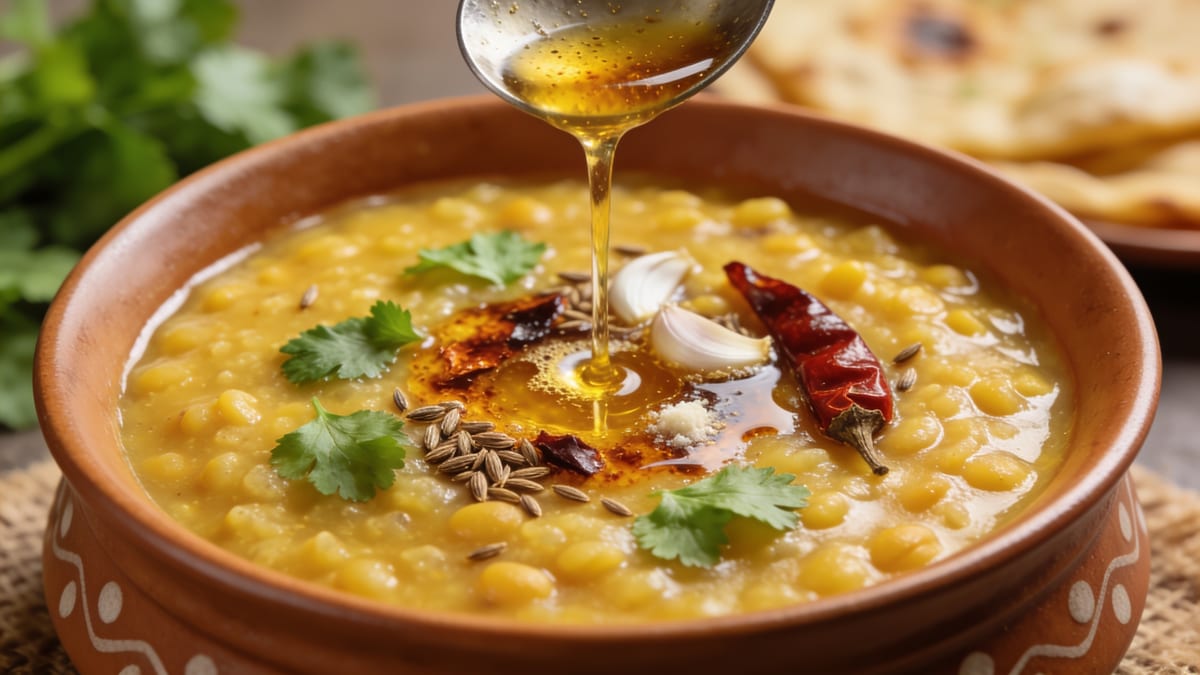
Simmer toor/masoor dal with turmeric until soft and creamy, then whisk smooth. In a separate small pan, make the tadka: heat ghee, sizzle cumin seeds, garlic, dried red chili, and a pinch of asafoetida until fragrant, then pour the hot tempering over the dal. Finish with cilantro and lemon.
- The tadka — hot fat bloomed with spices poured over at the end — is what makes it dal tadka. Don't skip it.
- Whisk the cooked dal until creamy; some like it smooth, some rustic. Either way, it shouldn't be watery.
- Asafoetida (hing) and cumin in ghee is the defining aroma. A tiny pinch of hing goes a long way.
Equipment
- Pot or pressure cooker
- Small tadka pan (or any small pan)
- Whisk
Ingredients
Dal
- 200 g toor dal (or masoor/yellow lentils), rinsed
- 750 ml water, plus more as needed
- 3 g ground turmeric
- 5 g salt, to taste
- 1 tomato, chopped (optional)
Tadka (tempering)
- 45 g ghee, or oil for vegan
- 5 g cumin seeds
- 4 garlic cloves, sliced
- 2 dried red chilies
- 1 pinch asafoetida (hing)
- 3 g Kashmiri chili powder, for color
- Few curry leaves (optional)
To finish
- Handful cilantro, chopped
- Squeeze of lemon
Method
- STEP01
Rinse the dal well. Simmer with the water, turmeric, and tomato (if using) until completely soft — 30 minutes in a pot, or 3–4 whistles in a pressure cooker. Add water as needed.
- STEP02
Whisk the cooked dal until creamy (smooth or rustic, your choice). Season with salt. Loosen with hot water to a pourable, soupy-but-not-watery consistency. Keep warm.
- STEP03
Heat the ghee in a small pan until shimmering. Add the cumin seeds and let them crackle. Add the garlic and dried chilies and fry until the garlic is golden — don't burn it.
- STEP04
Off the heat (so the spices don't scorch), stir in the asafoetida, Kashmiri chili powder, and curry leaves. It will sizzle and turn fragrant and red.
- STEP05
Immediately pour the hot tadka over the warm dal — it should sizzle dramatically. Stir most of it in, leaving a little on top for show.
- STEP06
Stir in the cilantro and a squeeze of lemon. Serve hot with rice or roti.
Make ahead
Cook the dal base ahead — it keeps and reheats well. Make the tadka fresh just before serving for the brightest aroma; it takes 2 minutes.
Storage
4 days refrigerated; it thickens, so loosen with water when reheating. Freezes 3 months. Re-temper with a fresh little tadka to revive it if you like.
Variations
Dal fry
Sauté onion, tomato, and ginger-garlic into the tadka and simmer it into the dal for a richer 'dal fry'.
Vegan
Use oil or vegan butter instead of ghee — everything else is naturally plant-based.
Tarka dal with spinach (dal palak)
Stir a couple of handfuls of chopped spinach into the dal in the last 5 minutes.
Serve with
Nutrition per serving
Nutrition values are estimates based on the metric measurements. Adjust as needed.
Frequently asked
What is a tadka?
Tadka (also tarka or chhonk) is the technique of blooming whole spices and aromatics in hot fat, then pouring that flavored fat over a dish at the end. The hot ghee extracts and carries the flavor of the cumin, garlic, and chili in a way that adding them earlier can't. It's the heart of dal tadka.
Which lentils should I use?
Toor dal (split pigeon peas) is classic; masoor dal (red lentils) cooks faster and is a fine everyday choice; moong dal is lighter. Any of them, or a mix, works. Rinse well and cook until completely soft.
What is asafoetida (hing)?
A pungent dried resin that, cooked in hot fat, mellows into a savory, oniony-garlicky aroma. A tiny pinch is transformative in dal. It's also why dal is so digestible. Most hing is cut with wheat flour, so check the label if you're gluten-free.
Why is my dal watery / too thick?
Dal thickens as it sits and as it cools. Aim for a pourable, lightly soupy consistency when serving, and just add hot water to loosen or simmer to thicken. There's no fixed ratio — adjust to how you like to eat it (with rice it can be looser; with roti, thicker).
Can I make it vegan?
Yes — use oil or a vegan butter for the tadka instead of ghee. Everything else is plant-based. You'll lose a little of the nutty ghee aroma, so a pinch more cumin helps.
Cooked this? Rate it.
Real ratings from real cooks. We only show a score once enough of you have weighed in — no fabricated stars.