Feijoada — Brazilian Black Bean & Pork Stew
Brazil's national dish: black beans slow-cooked with an array of smoked and salted pork until thick and glossy, served with rice, sautéed collards, orange, and toasted farofa. A weekend feast that feeds a crowd.
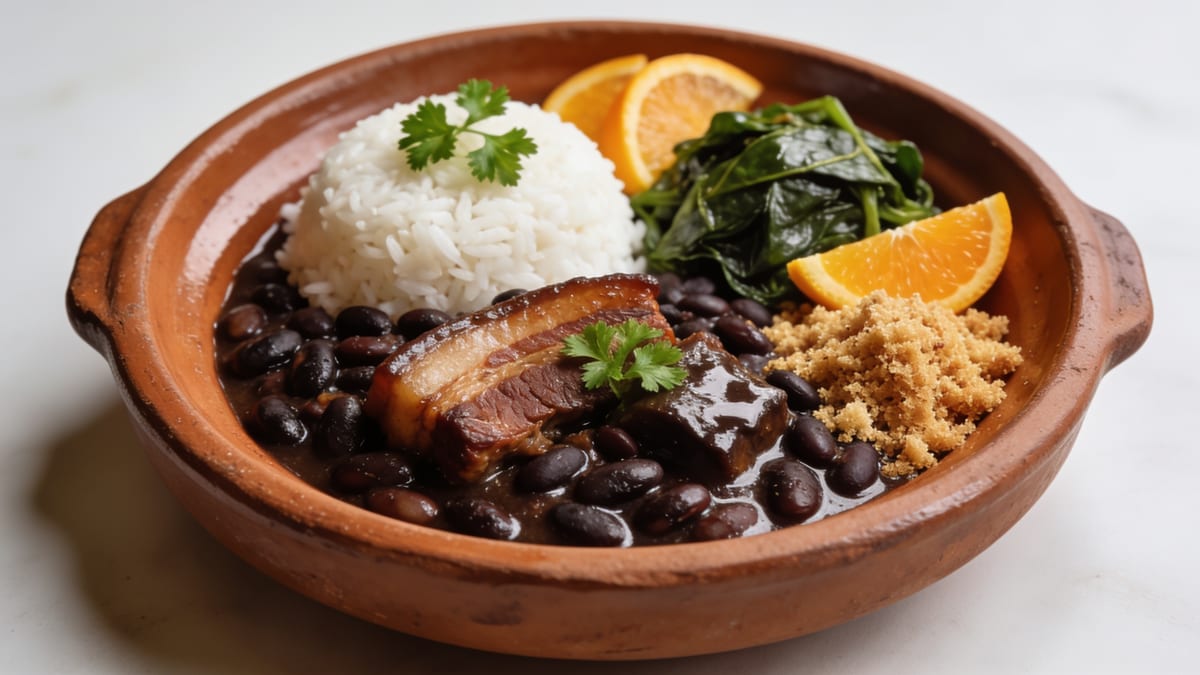
Soak black beans overnight. Brown an assortment of pork (smoked sausage, ribs, shoulder, and cured cuts), then simmer everything with the beans, onion, garlic, and bay leaves for 2–3 hours until the beans are creamy and the broth thick. Serve with white rice, garlicky collard greens, orange slices, and farofa.
- A mix of fresh, smoked, and cured pork is what gives feijoada its depth — variety matters more than any single cut.
- Slow simmer until the beans break down enough to thicken the broth into a glossy, creamy stew.
- The accompaniments aren't optional: rice, collards, orange, and farofa balance the rich beans.
Equipment
- Large heavy pot or Dutch oven
- Frying pan (for collards and farofa)
Ingredients
The stew
- 500 g dried black beans, soaked overnight
- 300 g smoked pork sausage (linguiça/paio), sliced
- 400 g pork ribs or shoulder, in chunks
- 200 g smoked bacon or cured pork, diced
- 2 onions, diced
- 6 garlic cloves, minced
- 3 bay leaves
- Salt and pepper
To serve
- Cooked white rice
- Collard greens (couve), finely shredded and sautéed in garlic
- Orange, sliced
- Farofa (toasted cassava flour)
Method
- STEP01
In a large pot, brown the sausage, ribs, and bacon in batches until deeply colored. This fond is the flavor base. Remove and set aside.
- STEP02
In the rendered fat, soften the onions until golden, then add the garlic for 1 minute.
- STEP03
Return the meats, add the drained beans, bay leaves, and enough water to cover by 5 cm. Bring to a boil, then simmer gently, partly covered, 2–2.5 hours, until the beans are tender and creamy.
- STEP04
Mash a ladle of beans against the side and stir back in to thicken the broth into a glossy stew. Season with salt and pepper. Simmer 15 more minutes.
- STEP05
Sauté the shredded collards in garlic and oil until just wilted and bright. Slice the oranges. Toast or warm the farofa.
- STEP06
Serve the feijoada in bowls with white rice, garlicky collards, orange slices, and a sprinkle of farofa — each diner builds their plate.
Make ahead
Make it a day ahead on purpose — the flavors deepen overnight and it's a traditional make-ahead for gatherings. Reheat gently and make the fresh sides day-of.
Storage
Feijoada is famously better the next day — 5 days refrigerated, and it freezes 3 months. The beans thicken further; loosen with water when reheating.
Variations
Feijoada completa
The full feast adds more cuts — pig's ears, trotters, and tail (orelha, pé, rabo) — for the traditional all-day version.
Lighter
Use just smoked sausage and pork shoulder, skipping the cured offcuts, for a simpler weeknight pot.
Vegetarian feijoada
Black beans with smoked paprika, mushrooms, and a smoked-tofu or plant sausage for the smoky depth.
Serve with
Nutrition per serving
Nutrition values are estimates based on the metric measurements. Adjust as needed.
Frequently asked
What pork cuts go in feijoada?
A mix — that's the point. Smoked sausage (linguiça or paio), fresh pork (ribs or shoulder), and cured or smoked cuts (bacon, and traditionally ears, trotters, and tail). The variety of fresh, smoked, and cured meats builds the layered, smoky depth.
Why serve it with orange?
The bright, slightly tart orange slices cut through the rich, fatty beans and aid digestion — a traditional and genuinely useful pairing. The collards, rice, and farofa likewise balance the heaviness.
What is farofa?
Toasted cassava (manioc) flour, often cooked with butter, onion, or bacon. It's sprinkled over the feijoada for a nutty, crunchy contrast that soaks up the bean broth. It's a defining accompaniment.
Do I have to soak the beans?
Overnight soaking shortens the cooking time and helps the beans cook evenly and creamy. If you forget, you can simmer them longer from dry, or use a pressure cooker.
Can I make it ahead?
Absolutely — it's traditionally made the day before a gathering. The flavors meld and deepen overnight, and it reheats beautifully. Just make the fresh sides (collards, farofa, orange) on the day.
Cooked this? Rate it.
Real ratings from real cooks. We only show a score once enough of you have weighed in — no fabricated stars.