Southern Fried Apples
Southern fried apples are tender apple wedges cooked in a skillet with browned butter, brown sugar, and warm spices until they collapse just slightly into their own cinnamon syrup. Searing the fruit in hot butter before the sugar goes in caramelizes the edges and keeps the slices intact, so you get soft, glazed apples instead of applesauce. They land somewhere between a side dish and a dessert — classic alongside biscuits, pork chops, or a big country breakfast.
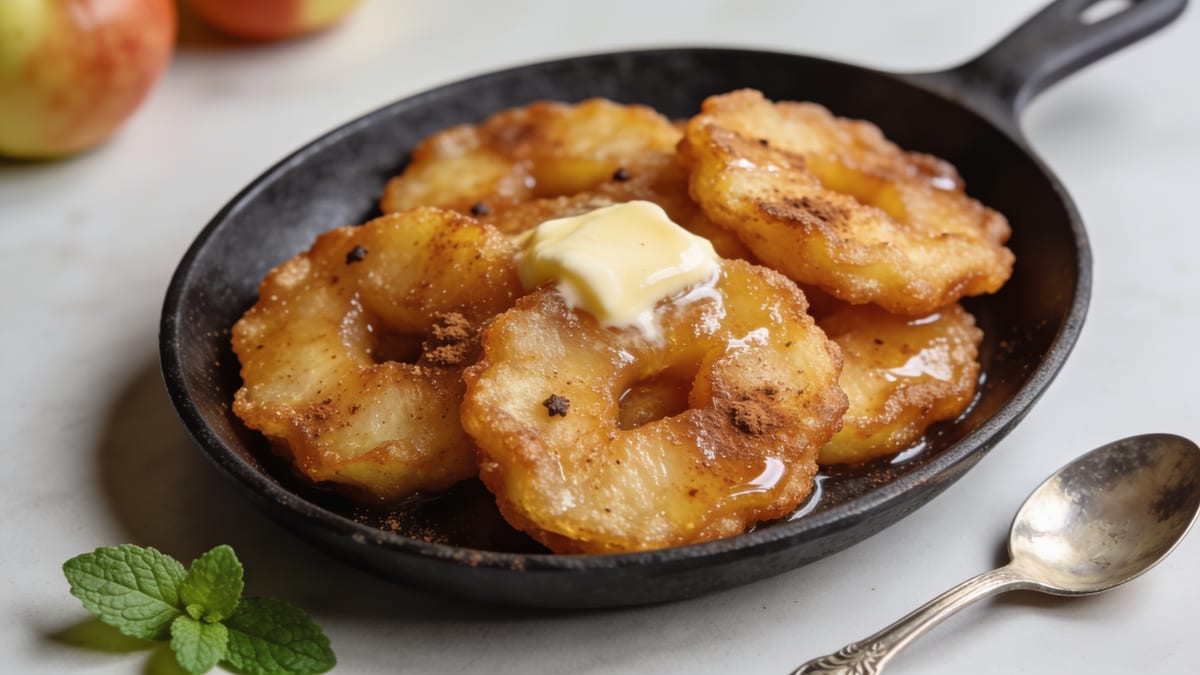
Peel 6 firm apples (Granny Smith, Honeycrisp, or a mix), cut them into 1 cm (3/8 in) wedges, and toss with 1 tablespoon lemon juice. Melt 4 tablespoons butter in a large cast-iron skillet over medium heat until the foam subsides, then add the apples and sear, tossing only occasionally, for about 5 minutes until the edges pick up color. Sprinkle on 1/3 cup packed brown sugar, 1 teaspoon cinnamon, 1/4 teaspoon each nutmeg and salt, splash in 2 tablespoons apple cider, cover, and cook 5-6 minutes until just fork-tender. Uncover, stir in 2 more tablespoons cider whisked with 1 teaspoon cornstarch, and simmer 2-3 minutes until the sauce turns glossy and coats the fruit. Off the heat, stir in 1/2 teaspoon vanilla and rest 5 minutes before serving warm.
- Sear the apples in butter BEFORE adding sugar — sugar draws out juice immediately, and wet apples steam instead of browning.
- Cut even 1 cm (3/8 in) wedges from firm-tart apples; thin slices or soft varieties like Red Delicious break down into mush.
- Pull the pan off the heat when the apples are just fork-tender — they keep softening in the hot syrup as they rest.
Equipment
- 25-30 cm (10-12 in) cast-iron or heavy stainless skillet with a lid
- Vegetable peeler
- Chef's knife and cutting board
- Large mixing bowl
- Wooden spoon or silicone spatula
- Small bowl or cup for the cornstarch slurry
Ingredients
Apples
- firm medium apples, about 1.1 kg / 2.5 lb total; Granny Smith, Honeycrisp, or half of each
- 15 ml fresh lemon juice, keeps the slices from browning and balances the sugar
Butter-brown sugar glaze
- 60 g unsalted butter
- 70 g light brown sugar, packed, use dark brown sugar for a deeper molasses note
- 2 g ground cinnamon
- 0.5 g ground nutmeg, freshly grated if possible
- 1.5 g fine sea salt
- 60 ml apple cider or unfiltered apple juice, divided; water works in a pinch
- 3 g cornstarch, optional, for a thicker, syrupy glaze
- 2.5 ml vanilla extract
Method
- STEP01
Peel the apples, quarter them, cut out the cores, and slice each quarter into 1 cm (3/8 in) wedges — you want them thick enough to hold their shape. Toss the wedges in a large bowl with the lemon juice so they stay pale while you work.
- STEP02
Set a 25-30 cm (10-12 in) cast-iron or heavy skillet over medium heat and add the butter. Let it melt, foam, and cook just until the foam settles and it smells lightly nutty, about 2 minutes. Don't let the milk solids go past golden.
- STEP03
Add the apples and spread them into a rough single layer. Cook undisturbed for 2 minutes, then toss and cook 3 minutes more, stirring only once or twice, until the edges are turning golden. Browning first — before any sugar hits the pan — is what keeps the wedges intact.
- STEP04
Sprinkle the brown sugar, cinnamon, nutmeg, and salt over the apples and toss to coat. Pour in half the cider (2 tablespoons / 30 ml), cover the skillet, and cook for 5-6 minutes, stirring once, until the apples are just fork-tender with a little resistance at the center.
- STEP05
Stir the cornstarch into the remaining 2 tablespoons (30 ml) cider until smooth. Uncover the skillet, pour in the slurry, and simmer for 2-3 minutes, gently folding, until the juices turn into a glossy syrup that clings to the fruit. Skipping the cornstarch just gives you a looser, spoonable sauce.
- STEP06
Pull the skillet off the heat and stir in the vanilla. Let the apples rest for 5 minutes — the syrup thickens as it cools and the apples finish softening in the residual heat.
- STEP07
Spoon the apples and every bit of the cinnamon syrup into a serving dish. Serve warm alongside biscuits, pork, or breakfast plates, or over ice cream for dessert.
Make ahead
These hold up beautifully made up to 2 days ahead — the flavor actually deepens overnight. Rewarm in a skillet over low heat with 1-2 tablespoons of apple cider, stirring gently until the glaze turns glossy again. If prepping components only, you can slice the apples up to a day ahead and hold them in the fridge tossed with the lemon juice.
Storage
Cool completely, then refrigerate in an airtight container for up to 4 days. Reheat gently in a covered skillet over low heat with a splash of cider or water to loosen the syrup, or microwave in 30-second bursts. They also freeze well for up to 3 months; thaw overnight in the fridge before reheating.
Variations
Vegan / dairy-free
Swap the butter for an equal amount of plant-based butter or refined coconut oil. Plant butter browns much like dairy butter; with coconut oil, add a small pinch of extra salt to make up for the flavor butter usually brings.
Bourbon-maple
Replace the brown sugar with 60 ml (1/4 cup) maple syrup and add 1 tablespoon bourbon along with the cider. Simmer uncovered an extra minute or two to cook off the alcohol and tighten the glaze.
Savory supper apples
Cut the brown sugar to 2 tablespoons, drop the vanilla, and add a pinch of black pepper and a teaspoon of fresh thyme at the end. Cooked this way they make a sharp, barely-sweet partner for pork chops, sausages, or roast chicken.
Serve with
Nutrition per serving
Nutrition values are estimates based on the metric measurements. Adjust as needed.
Frequently asked
What are the best apples for fried apples?
Firm, tart-leaning varieties hold their shape best. Granny Smith gives you the classic tang, Honeycrisp and Pink Lady stay firm while adding sweetness, and a half-and-half mix gives the best of both. Skip soft varieties like Red Delicious or McIntosh — they collapse into sauce before the glaze forms.
Are fried apples actually deep-fried?
No — despite the name, fried apples are pan-fried in a skillet with butter, not submerged in oil. The 'fried' comes from the old Southern habit of cooking fruit in a cast-iron pan, often in whatever fat was on hand. The butter sear is what gives them golden edges and separates them from stewed or baked apples.
Why did my fried apples turn out watery or mushy?
Usually one of three things: the sugar went in too early (it pulls juice out of the fruit before the slices can brown), the slices were cut too thin, or they cooked past fork-tender. Sear the apples in plain butter first, cut 1 cm (3/8 in) wedges, and pull the pan when a fork slides in with slight resistance. The optional cornstarch slurry also helps tighten any extra juice into a glaze.
Do I have to peel the apples?
Peeling is traditional and gives the silkiest texture, since the skins turn chewy and separate from the flesh as it softens. That said, leaving the peel on works fine if you prefer it — you keep a bit more fiber and color. If you skip peeling, use thin-skinned varieties like Honeycrisp and slice a touch thinner.
Can I double this fried apples recipe?
Yes, but cook in two batches or use two skillets. Crowding one pan traps steam, so the apples boil in their own juice instead of searing. If you must use one large pan, sear the apples in two rounds, then return everything to the skillet together for the sugar, cider, and glaze steps.
Cooked this? Rate it.
Real ratings from real cooks. We only show a score once enough of you have weighed in — no fabricated stars.