Potato Gnocchi — Pillowy Italian Dumplings
Soft, pillowy potato dumplings from northern Italy: just floury potatoes, a little flour and egg, worked gently into a dough, rolled, cut and ridged. The secret is a light hand — too much flour or working makes them heavy. Boiled until they bob to the surface and tossed with tomato-basil sauce or sage butter, they're tender, comforting and quick to cook.
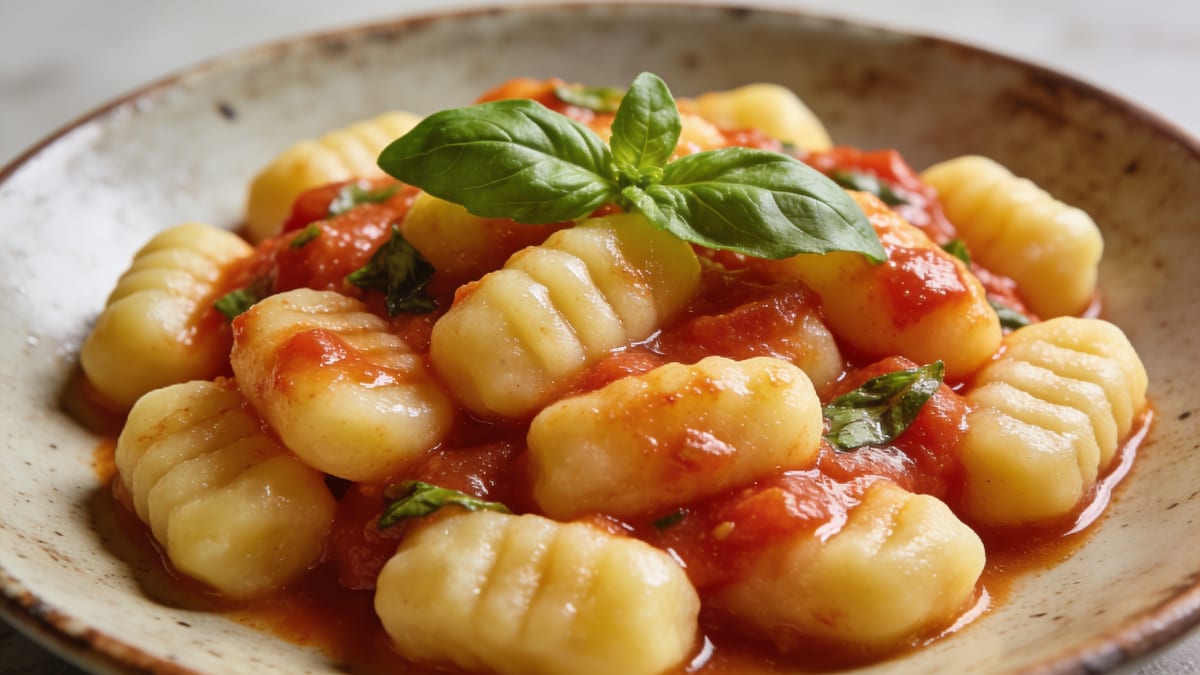
Bake or boil floury potatoes, then rice them while warm so they're dry and fluffy. Mix gently with a little flour, an egg and salt into a soft dough — handling it as little as possible. Roll into ropes, cut into pieces, and press each over a fork or board for ridges. Boil in salted water just until they float, then toss with a simple tomato-basil sauce or browned sage butter and Parmigiano.
- Use floury (starchy) potatoes and rice them while hot — dry, fluffy potato means light gnocchi.
- Add as little flour as holds the dough together and work it minimally; over-flouring or kneading makes them dense.
- They're cooked the moment they float — scoop them straight out, don't overboil.
Equipment
- Potato ricer
- Large pot
- Fork or gnocchi board
- Slotted spoon
Ingredients
Gnocchi
- 1 kg floury potatoes (e.g. Maris Piper, russet)
- 250 g plain (00) flour, approximately; add as needed
- 1 egg
- 1 tsp salt; nutmeg, optional
Simple sauce
- 400 g tomato passata, or 60 g butter + sage
- 1 garlic clove, basil, olive oil
- Parmigiano-Reggiano, grated, to serve
Method
- STEP01
Bake the potatoes in their skins (or boil whole) until tender. While still hot, peel and pass through a ricer onto a board so they're dry and fluffy. Spread out to cool slightly and release steam.
- STEP02
Sprinkle the riced potato with most of the flour, the salt and a little nutmeg, make a well, add the egg, and bring together gently into a soft, just-cohesive dough. Add only enough extra flour to stop it sticking — don't knead.
- STEP03
Cut the dough into pieces and roll each into a long rope about 2 cm thick. Cut into 2 cm pillows, then roll each over the tines of a fork or a gnocchi board to make ridges (which hold the sauce).
- STEP04
Warm the passata with garlic, olive oil and basil into a simple sauce (or melt butter with sage until nutty).
- STEP05
Boil the gnocchi in batches in well-salted water; they're done as soon as they float to the surface, about 2 minutes. Scoop out with a slotted spoon, toss gently with the sauce, and serve with grated Parmigiano.
Make ahead
Shape the gnocchi and freeze on a tray, then bag — boil straight from frozen whenever you want them. The dough doesn't keep well raw and unfrozen (it weeps), so freeze rather than refrigerate.
Storage
Best fresh. Uncooked gnocchi are delicate — freeze them on a floured tray until solid, then bag, and boil from frozen (don't thaw, or they stick). Cooked, sauced gnocchi keep a day and can be pan-fried crisp the next day.
Variations
Gnocchi alla Sorrentina
Toss with tomato sauce and mozzarella and bake until bubbling and golden.
Burro e salvia
Dress simply with browned butter, crisp sage and Parmigiano — the classic minimalist sauce.
Gnocchi al pesto
Toss with basil pesto for a Ligurian-style plate.
Serve with
Nutrition per serving
Nutrition values are estimates based on the metric measurements. Adjust as needed.
Frequently asked
Why are my gnocchi heavy or gummy?
Usually too much flour or too much working of the dough, or wet potatoes. Use floury potatoes, dry them by ricing while hot, add the minimum flour that holds the dough, and bring it together gently without kneading. Light handling is the whole secret to pillowy gnocchi.
What potatoes are best for gnocchi?
Floury, starchy varieties like russet, Maris Piper or King Edward — they're dry and fluffy when cooked, so the dough needs less flour. Waxy potatoes hold too much moisture and make dense, gluey gnocchi that need more flour to bind.
Should I boil or bake the potatoes?
Baking is best because it keeps the potato dry; boiling whole in the skin is fine too, but avoid boiling peeled, cut potatoes, which absorb water. Whichever you choose, rice them while hot and let the steam escape before adding flour.
How do I know when gnocchi are cooked?
They float. Drop them into well-salted boiling water and, within a couple of minutes, they bob to the surface — that's the signal they're done. Scoop them out immediately; leaving them to boil on makes them soggy and prone to falling apart.
Can I make gnocchi without egg?
Yes — many traditional recipes use just potato and flour. The egg makes the dough a little easier to handle and slightly firmer, but eggless gnocchi can be even more tender. With no egg, handle the dough gently and use floury potatoes for the best bind.
Cooked this? Rate it.
Real ratings from real cooks. We only show a score once enough of you have weighed in — no fabricated stars.