Homemade Four-Cheese Ravioli
Silky egg-pasta pillows stuffed with a creamy blend of ricotta, mozzarella, Parmigiano-Reggiano, and Gorgonzola, finished in sage-scented butter. Draining the ricotta and binding the filling with a single yolk keeps it lush but firm, so the ravioli seal cleanly and never turn watery. Rolling the dough thin enough to read a headline through it gives you tender pasta that cooks in under four minutes.
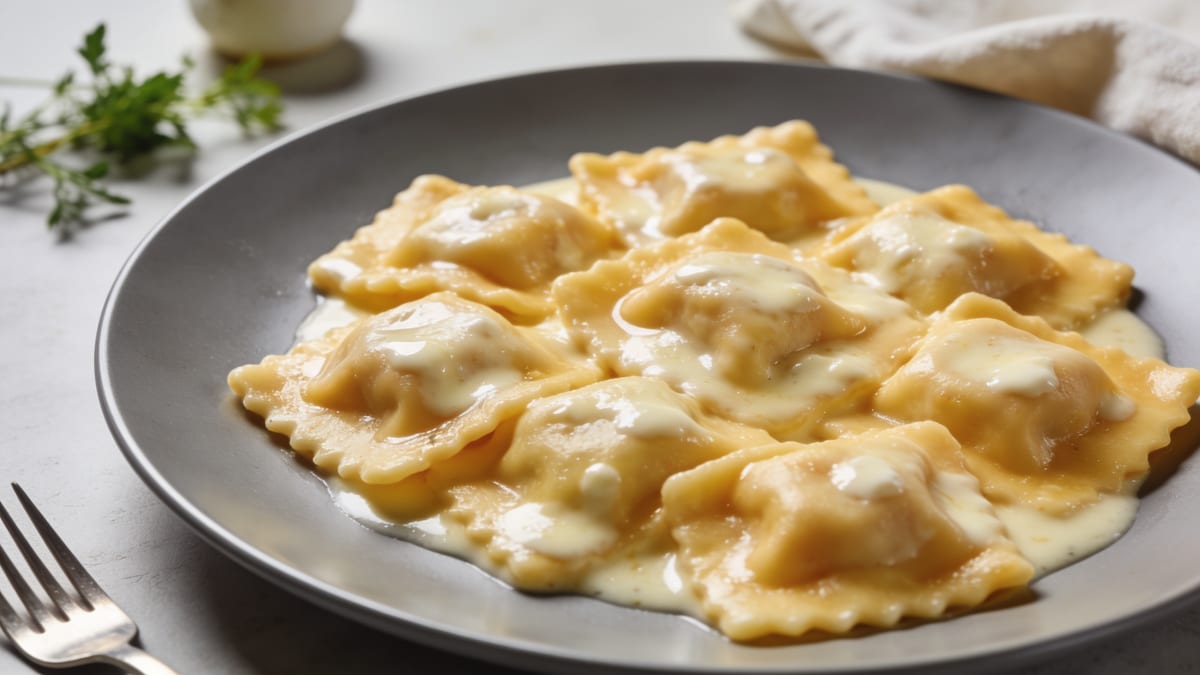
Knead 300 g flour with 3 eggs, 1 tbsp olive oil, and 1/2 tsp salt into a smooth dough and rest it 30 minutes under a bowl. Meanwhile stir drained ricotta with grated mozzarella, Parmigiano-Reggiano, crumbled Gorgonzola, one egg yolk, nutmeg, and pepper. Roll the dough into near-translucent sheets, pipe teaspoon-sized mounds of filling 4 cm apart on one sheet, brush the gaps with water, lay a second sheet on top, press out the air around each mound, and cut into squares with a fluted wheel. Boil in well-salted water for 3 to 4 minutes until they float and the edges are tender, then toss gently in butter melted with sage leaves and a splash of pasta water, and serve with extra Parmigiano.
- Drain the ricotta in a sieve for at least 20 minutes; a wet filling steams inside the pasta and blows the seams open in the pot.
- Roll the dough thin enough to see the shadow of your hand through it — thick sheets double up at the sealed edges and cook up chewy.
- Cup your hand around each mound and press from the filling outward before sealing; trapped air expands in boiling water and bursts ravioli.
Equipment
- Pasta machine or long rolling pin
- Large mixing bowls
- Fine-mesh sieve
- Bench scraper
- Fluted pastry wheel or ravioli cutter
- Large wide pot
- Spider or slotted spoon
Ingredients
Fresh egg pasta
- 300 g 00 flour or all-purpose flour, plus extra for dusting
- large eggs, room temperature
- 15 ml extra-virgin olive oil
- 3 g fine sea salt
Four-cheese filling
- 250 g whole-milk ricotta, drained in a sieve 20 minutes
- 100 g low-moisture mozzarella, finely grated
- 50 g Parmigiano-Reggiano, finely grated, or Grana Padano
- 60 g Gorgonzola dolce, crumbled, swap in fontina for a milder filling
- large egg yolk
- 0.5 g freshly grated nutmeg
- 1 g freshly ground black pepper
To cook and finish
- 15 g coarse salt for the pasta water
- 60 g unsalted butter
- fresh sage leaves
- 60 ml reserved pasta cooking water
- 20 g Parmigiano-Reggiano, for serving, finely grated
Method
- STEP01
Mound the flour on a clean counter and make a wide well in the center. Crack in the eggs, add the olive oil and salt, and beat with a fork, gradually pulling flour in from the walls until a shaggy paste forms. Switch to your hands and knead for 8 to 10 minutes, pushing with the heel of your palm and folding, until the dough is smooth, elastic, and springs back slowly when poked. If it feels sticky, dust with flour a teaspoon at a time; if dry and crumbly, wet your hands and keep kneading.
- STEP02
Shape the dough into a ball, wrap it tightly in plastic or cover with an inverted bowl, and rest at room temperature for 30 minutes. This lets the gluten relax so the sheets roll thin without snapping back. Do not skip it — unrested dough fights you at the pasta machine.
- STEP03
Stir the drained ricotta, grated mozzarella, Parmigiano-Reggiano, crumbled Gorgonzola, egg yolk, nutmeg, and pepper in a bowl until evenly combined. The mixture should hold its shape on a spoon; if it looks loose, stir in another tablespoon of Parmigiano. Taste and adjust pepper — the cheeses carry enough salt on their own. Chill until needed so it pipes cleanly.
- STEP04
Cut the dough into 4 pieces and keep the ones you are not using covered. Flatten one piece and pass it through a pasta machine at the widest setting, then fold in thirds and pass again twice to smooth it. Narrow the rollers one notch at a time down to the second-thinnest setting, dusting lightly with flour, until the sheet is about 60 cm long and thin enough that you can see the shadow of your hand through it. Lay finished sheets on a floured towel and cover; repeat with the remaining dough. With a rolling pin, work one piece at a time to just under 2 mm.
- STEP05
Lay one sheet on a floured surface. Drop rounded teaspoons of filling in a row down the center, spacing the mounds about 4 cm apart. Lightly brush the exposed dough around the filling with water, then drape a second sheet on top. Working from each mound outward, cup your hands and press the layers together, pushing out every pocket of air before sealing the edges firmly. Cut between the mounds with a fluted pastry wheel into roughly 5 cm squares, pinch the edges once more, and set the ravioli on a semolina- or flour-dusted tray in a single layer. Repeat with the remaining sheets and filling.
- STEP06
Bring a large wide pot of water to a rolling boil and add the coarse salt. Slide in half the ravioli and keep the water at a gentle boil, not a violent one, so the seams stay shut. Cook 3 to 4 minutes: they will float within a minute, so judge by the edges — bite a corner, and when the doubled rim is tender, they are done. Scoop out 60 ml of the cooking water, then lift the ravioli out with a spider onto a warm plate and cook the second batch.
- STEP07
While the second batch cooks, melt the butter with the sage leaves in a wide skillet over medium heat until it foams and smells nutty, about 2 minutes. Add the reserved pasta water and swirl to make a glossy sauce. Slide in the drained ravioli and spoon the butter over them gently rather than tossing hard. Plate immediately, shower with grated Parmigiano and a grind of pepper, and serve hot.
Make ahead
Both components hold well: the wrapped dough keeps refrigerated for 1 day (let it sit out 30 minutes before rolling) and the filling for 2 days. Best of all, freeze shaped ravioli in a single layer on a floured tray until hard, then bag them for up to 2 months; boil straight from frozen, adding about 1 extra minute.
Storage
Refrigerate cooked ravioli in an airtight container for up to 2 days and reheat gently in a skillet with a knob of butter and a splash of water. Uncooked ravioli keep on a floured tray, covered, for up to 8 hours in the fridge — any longer and the moist filling softens the pasta. For longer storage, freeze uncooked (see make-ahead).
Variations
Spinach and four-cheese
Wilt 150 g (5 oz) baby spinach in a dry skillet, squeeze it absolutely dry, chop finely, and fold it into the filling. The squeeze matters more than the amount — damp spinach loosens the filling and weakens the seams.
Gluten-free
Swap the flour for 300 g of a gluten-free blend that contains xanthan gum and add 1 extra egg yolk for pliability. Roll between sheets of parchment, keep the sheets slightly thicker (about 2 mm), and handle gently — the dough tears more easily but seals fine with a water brush.
Walnut and honey finish
Instead of sage butter, brown the butter with 40 g (1/3 cup) chopped walnuts, then drizzle the plated ravioli with a teaspoon of honey. The bitter-sweet combination flatters the Gorgonzola. Note this adds a tree nut allergen.
Serve with
Nutrition per serving
Nutrition values are estimates based on the metric measurements. Adjust as needed.
Frequently asked
Can I make ravioli without a pasta machine?
Yes. Rest the dough the full 30 minutes, divide it into four pieces, and roll each on a lightly floured counter with a long rolling pin, rotating a quarter turn between passes. Aim for just under 2 mm — you should see the shadow of your hand through the sheet. It takes more elbow grease than a machine but produces identical ravioli.
Why did my ravioli burst in the pot?
The usual culprits are trapped air, a wet filling, or a violent boil. Press from each mound of filling outward to force air through the open edge before sealing, drain the ricotta at least 20 minutes, and cook the ravioli at a gentle boil rather than a hard rolling one. A firm pinch around every edge after cutting is cheap insurance.
Which four cheeses work best, and can I substitute?
Ricotta gives body, mozzarella gives stretch, Parmigiano gives savory depth, and Gorgonzola gives punch — keep one cheese from each of those roles and the filling stays balanced. Fontina or provolone can stand in for Gorgonzola if you dislike blue cheese, and Grana Padano or Pecorino Romano can replace Parmigiano (Pecorino is saltier, so use a bit less).
Can I freeze homemade ravioli?
Absolutely, and they freeze beautifully. Arrange uncooked ravioli in a single layer on a floured tray, freeze until solid, then transfer to a freezer bag for up to 2 months. Boil them straight from frozen — do not thaw, or the pasta turns gummy — and add about one extra minute to the cooking time.
Is this ravioli recipe vegetarian?
The ingredient list contains no meat, but traditional Parmigiano-Reggiano and Gorgonzola are made with animal rennet. If that matters to you, look for cheeses labeled 'vegetarian' or made with microbial rennet — many supermarket hard cheeses and blues qualify — and the recipe works identically.
Cooked this? Rate it.
Real ratings from real cooks. We only show a score once enough of you have weighed in — no fabricated stars.