Hóng Shāo Ròu — Chinese Red-Braised Pork Belly
One of China's most iconic home dishes: cubes of pork belly caramelised in a sugar syrup, then slowly braised with soy, Shaoxing wine, ginger and warm spices until the meat is meltingly tender and lacquered in a glossy, sweet-savoury red glaze. Famously beloved (it was said to be Chairman Mao's favourite), it's deeply comforting over a bowl of plain rice.
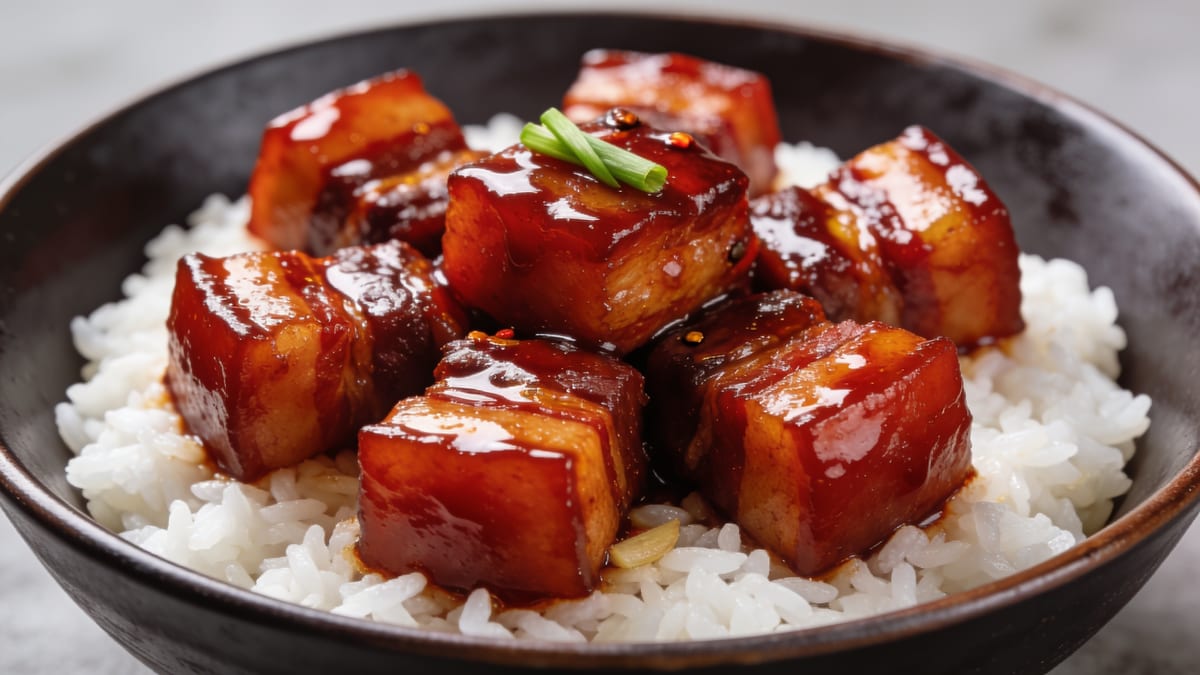
Blanch cubes of skin-on pork belly, then caramelise a little sugar in oil until amber and toss the pork to coat. Add ginger, Shaoxing wine, light and dark soy, and warm spices (star anise, cassia), cover with water, and braise low for about an hour until the pork is fork-tender. Uncover and reduce the sauce, basting, until it's thick, glossy and clings to the meat in a deep red glaze. Serve over rice.
- Blanch the pork belly first to clean it, for a clear, clean-tasting braise.
- Caramelise the sugar properly (rock sugar is traditional) — that's the source of the colour and shine.
- Reduce the sauce at the end, basting, until it lacquers the pork in a glossy red glaze.
Equipment
- Wok or heavy pot
- Lid
Ingredients
Pork & braise
- 600 g skin-on pork belly, in 3 cm cubes
- 30 g rock sugar (or regular sugar)
- 15 ml oil
- 1 thumb ginger, sliced; 2 spring onions
- 30 ml Shaoxing wine
- 30 ml light soy sauce
- 15 ml dark soy sauce, for colour
- 2 star anise, 1 small piece cassia/cinnamon
To serve
- Steamed jasmine rice
- Blanched greens; sliced spring onion
Method
- STEP01
Put the pork belly cubes in cold water, bring to a boil, simmer 3–4 minutes to clean, then drain and pat dry.
- STEP02
Heat the oil and rock sugar in a wok over medium heat until the sugar melts to an amber caramel. Add the pork and toss to coat in the caramel.
- STEP03
Add the ginger, spring onion, Shaoxing wine, both soy sauces and the spices. Pour in enough hot water to almost cover, bring to a simmer, then cover and braise low until the pork is fork-tender, about 50–60 minutes.
- STEP04
Uncover, remove the whole spices, and turn up the heat. Reduce the sauce, basting the pork, until it's thick, glossy and clings to the meat in a deep red glaze.
- STEP05
Serve the pork and its glossy sauce over steamed rice, with blanched greens and a scatter of spring onion.
Make ahead
Even better made ahead — braise a day before, refrigerate (skim the firmed fat if you like), and reheat in the glaze. A great make-ahead centrepiece that only improves overnight.
Storage
Keeps 4 days refrigerated and reheats beautifully — the flavour deepens and any set fat is easy to skim. Freezes 3 months. Reheat gently, loosening the glaze with a splash of water.
Variations
With eggs
Braise peeled hard-boiled eggs in the sauce for the last 20 minutes — they soak up the glaze.
With potatoes or tofu
Add chunks of potato, daikon or fried tofu to braise in the sauce and stretch the dish.
Mao-style
Some Hunan versions use more dried chilli and less star anise for a spicier braise.
Serve with
Nutrition per serving
Nutrition values are estimates based on the metric measurements. Adjust as needed.
Frequently asked
What cut of pork is essential for hong shao rou?
Skin-on pork belly, cut into cubes with alternating layers of fat and lean. The fat renders and turns silky over the braise while the skin becomes tender and gelatinous, and the lean stays moist. Leaner cuts won't give the signature melting texture.
Why caramelise the sugar?
The caramelised sugar (traditionally rock sugar) gives hong shao rou its characteristic glossy sheen, deep colour and rounded sweetness. Melting it to an amber caramel before adding the pork coats the meat and is the classic first step — dark soy then deepens the red colour further.
How do I get the glossy red glaze?
After braising until tender, uncover and reduce the sauce over higher heat while basting the pork, so the liquid concentrates into a thick, shiny glaze that clings to each piece. The combination of rendered fat, caramel and dark soy is what makes it lacquered and red.
Do I have to blanch the pork first?
It's recommended — blanching the belly in boiling water for a few minutes removes impurities and any strong smell, giving a cleaner-tasting braise and a clearer sauce. Drain and pat dry before caramelising so it browns rather than steams.
Can I make it ahead?
Yes — it's arguably better the next day, as the flavours deepen and you can easily skim any firmed fat from the top after chilling. Reheat gently, loosening the glaze with a little water. It also freezes well.
Cooked this? Rate it.
Real ratings from real cooks. We only show a score once enough of you have weighed in — no fabricated stars.