Kabab Koobideh — Persian Grilled Ground Meat Skewers
The king of Persian kebabs: seasoned ground lamb or beef (and grated onion) kneaded to a paste, moulded by hand onto wide flat skewers and grilled over hot charcoal until juicy and lightly charred. Served with saffron-buttered rice (chelo kabab) or wrapped in flatbread with grilled tomatoes, sumac and raw onion, kabab koobideh is the centrepiece of Iranian gatherings and kebab houses. The secret is the right fat, thorough kneading, and a screaming-hot grill.
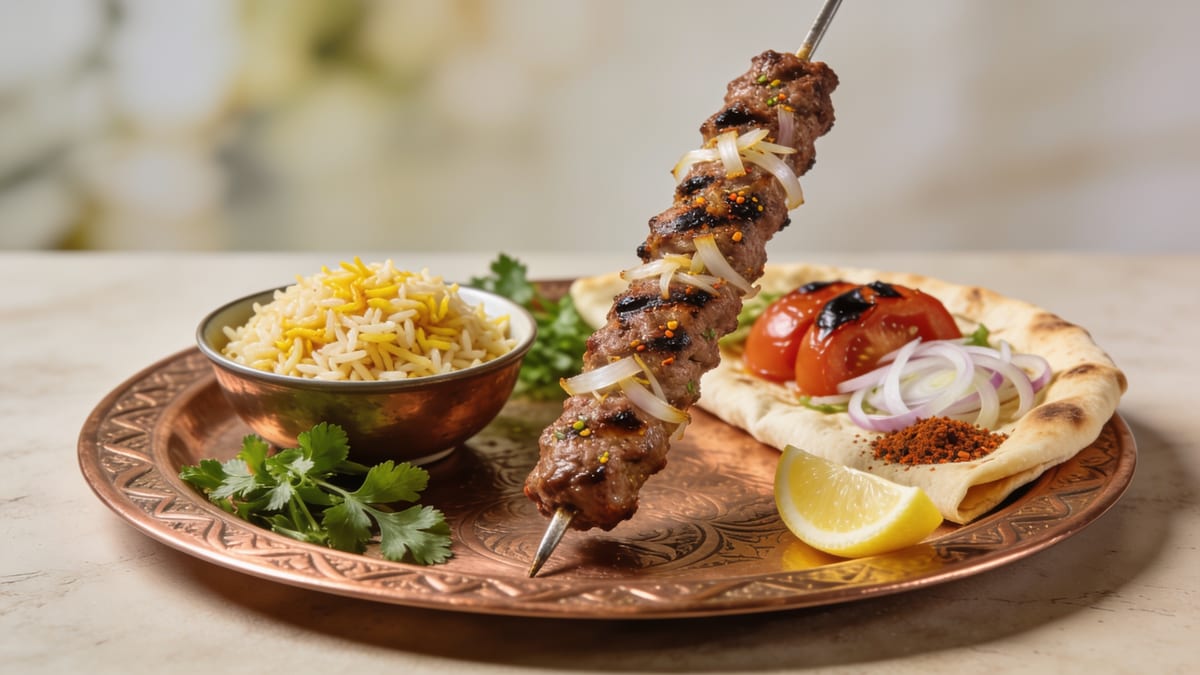
Grate onion and squeeze out most of its liquid, then mix it into ground lamb or beef (with some fat) with salt, pepper and a little turmeric. Knead the mixture thoroughly for several minutes until it's smooth, sticky and paste-like — this is what lets it cling to the skewers. Rest it (chilled) to firm up, then with wet hands mould the meat firmly around wide flat metal skewers, pressing ridges along it. Grill over very hot charcoal, turning, until just cooked and lightly charred — don't overcook. Serve with saffron rice or in flatbread with grilled tomato, sumac and onion.
- Knead the meat-and-onion mixture thoroughly until smooth and sticky — that's what makes it bind to the skewer.
- Use meat with some fat, squeeze the grated onion fairly dry, and rest the mixture chilled before skewering.
- Use wide flat skewers and a very hot grill; cook fast and turn, so it stays juicy and doesn't fall off.
Equipment
- Wide flat metal skewers
- Charcoal grill
- Bowl
Ingredients
Kabab
- 700 g ground lamb or beef (not too lean)
- 1 large onion, grated and squeezed of excess liquid
- 1 tsp salt; black pepper; ¼ tsp turmeric
- Optional: a little baking soda; an egg yolk (to help bind)
To serve
- Saffron-buttered rice (chelo) or Persian flatbread (lavash/sangak)
- Grilled tomatoes; raw onion; sumac; grilled chilli
- Butter; fresh basil/herbs
Method
- STEP01
Mix the ground meat with the grated, squeezed onion, salt, pepper and turmeric. Knead thoroughly with your hands for 5+ minutes until the mixture is smooth, sticky and paste-like — this develops the bind so it clings to the skewers. (A little baking soda or an egg yolk can help.)
- STEP02
Cover and chill the mixture for at least 30–60 minutes (or longer) to firm up and make it easier to mould.
- STEP03
With wet hands, take a handful of meat and mould it firmly and evenly around a wide flat skewer, squeezing it on and pressing ridges along its length with your fingers. It should grip the skewer all around.
- STEP04
Grill over very hot charcoal, turning frequently and keeping the skewers raised off the grate (resting on the sides) so the kababs don't sag. Cook just until done and lightly charred, only a few minutes — don't overcook or they dry out.
- STEP05
Slide the kababs off the skewers (often onto warm flatbread). Serve with saffron-buttered rice, grilled tomatoes, raw onion, sumac and grilled chilli — or wrapped in flatbread as a sandwich. A knob of butter on the hot rice is traditional.
Make ahead
Make and knead the meat mixture ahead — it actually improves with resting and can be made the day before (or frozen). Then it's just shaping onto skewers and a quick grill. Prep the rice, grilled tomatoes and garnishes ahead. Koobideh is great for entertaining since the work is front-loaded.
Storage
Best grilled and eaten fresh and juicy. The raw kneaded mixture keeps a day refrigerated (and benefits from resting) or freezes well — shape onto skewers when thawed. Cooked kababs keep 2 days and reheat, though they're best fresh; leftover meat is great chopped into rice or wraps. Grill the tomatoes and warm the bread fresh.
Variations
Chelo kabab
Served over saffron-buttered Persian rice with grilled tomato and butter — the classic restaurant plate.
Kabab barg
The sibling made with thin slices of marinated lamb/beef rather than ground meat.
Mixed grill
Serve alongside joojeh (chicken) kabab for a Persian mixed grill.
Serve with
Nutrition per serving
Nutrition values are estimates based on the metric measurements. Adjust as needed.
Frequently asked
How do I keep koobideh from falling off the skewers?
The keys are kneading and the right meat. Knead the ground meat and grated onion thoroughly (5+ minutes) until it's smooth, sticky and paste-like — this develops the protein bind that grips the skewer. Use meat with some fat (not too lean), squeeze excess water from the grated onion, rest the mixture chilled, and mould it firmly onto wide flat skewers with wet hands. A very hot grill that sears it quickly also helps it hold.
What meat is best for kabab koobideh?
Ground lamb, beef, or a mix — but not too lean, as some fat keeps the kababs juicy and helps them bind and not dry out. Traditionally lamb (or lamb-and-beef) is used. Ask for ground meat with around 20% fat, or add a little lamb fat. Very lean mince makes dry, crumbly kababs that fall apart on the skewer.
Do I need special skewers?
Wide, flat metal skewers are traditional and really do help — their width gives the moulded meat a broad surface to grip, and the flat shape lets you turn the kababs without them spinning loose. Thin round skewers make it much harder for the meat to stay on. If you don't have flat skewers, you can shape the meat into koobideh-style logs or kofte and grill them on a rack, though it's not quite the same.
What is chelo kabab?
Chelo kabab is the iconic Iranian dish of kabab (koobideh and/or barg) served over chelo — fluffy steamed Persian rice, often with saffron and a pat of butter, plus a grilled tomato. It's considered a national dish of Iran and the classic kebab-house plate. A raw egg yolk and sumac are sometimes served to mix into the buttered rice. Koobideh in flatbread is the more casual, street-food way to eat it.
Can I cook koobideh without a charcoal grill?
Charcoal gives the authentic smoky char, but you can cook koobideh under a hot oven grill/broiler or on a griddle pan — shape the meat into flat logs (skewered or not) and cook fast over high heat. It won't have quite the same smokiness, but with a well-kneaded, properly fatty mixture it's still juicy and delicious. Don't overcook it whichever method you use.
Cooked this? Rate it.
Real ratings from real cooks. We only show a score once enough of you have weighed in — no fabricated stars.