Kalua Pork
Kalua pork is the smoky, salty centerpiece of a Hawaiian luau: pork shoulder cooked low and slow until it collapses into silky shreds. This oven version stands in for the traditional imu (underground oven) with three honest shortcuts — coarse alaea sea salt, a spoonful of real liquid smoke, and a tight banana-leaf-and-foil wrap that traps steam so the meat braises in its own juices. The result is deeply savory, fall-apart pork with just three core ingredients and almost no hands-on work.
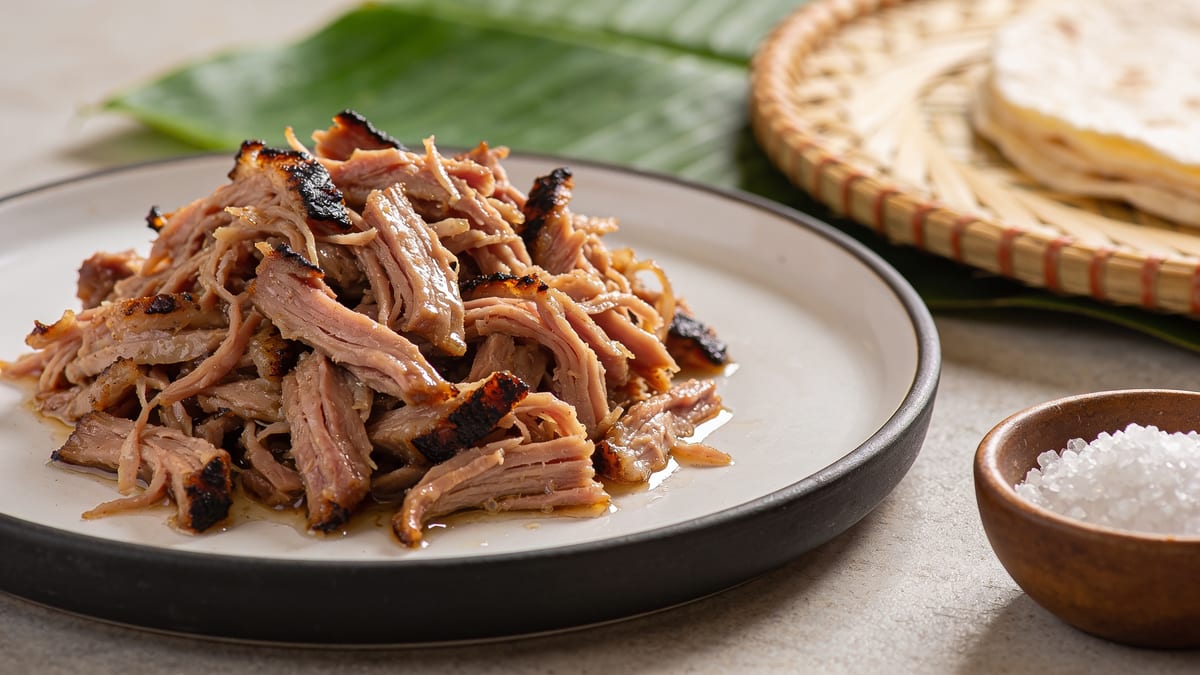
Rub a 1.8 kg (4 lb) boneless pork butt all over with 1 tablespoon of mesquite liquid smoke, then with 1 1/2 tablespoons of coarse Hawaiian alaea salt. Wrap it in banana leaves (if you have them) and a tight double layer of heavy-duty foil, set it seam-side up in a roasting pan with 120 ml (1/2 cup) of water in the bottom, and roast at 150°C (300°F) for about 5 hours, until the center reads 95°C (203°F) and a fork twists in with zero resistance. Rest it, still wrapped, for 30 minutes, shred with two forks, skim the fat from the captured juices, and toss the meat back through those smoky juices before piling it over hot rice.
- Cook to temperature and feel, not the clock — the collagen melts around 95°C (203°F), so pull the pork only when a fork slides in and twists without resistance.
- Never discard the wrap juices: skim the fat, then fold the liquid back into the shredded meat so it stays glossy, seasoned, and moist.
- Use pure liquid smoke with restraint — 1 tablespoon gives convincing imu-style smokiness; much more turns bitter and acrid.
Equipment
- Large roasting pan or Dutch oven
- Heavy-duty aluminum foil
- Instant-read thermometer
- Two sturdy forks or meat claws for shredding
- Cutting board and sharp knife
- Fat separator or large spoon for skimming
Ingredients
Kalua pork
- 1.8 kg boneless pork shoulder (pork butt), fat cap left on; bone-in works too, add 30-45 minutes
- 25 g coarse Hawaiian alaea red sea salt, coarse sea salt or kosher salt works as a substitute
- 15 ml mesquite or hickory liquid smoke, choose a brand that is pure condensed smoke, no added flavorings
- banana leaves, optional but traditional; thaw if frozen and wipe clean
- 120 ml water, for the bottom of the pan
Optional cabbage finish
- green cabbage, cut into 5 cm / 2 in wedges or thick ribbons
Method
- STEP01
Set a rack in the lower third of the oven and heat it to 150°C (300°F). Pat the pork dry with paper towels, then use a sharp knife to score the fat cap in a shallow crosshatch, about 1 cm (1/2 in) deep, so the salt and smoke can penetrate.
- STEP02
Rub the liquid smoke over every surface of the pork, working it into the score marks. Follow with the alaea salt, pressing it on evenly. It will look like a lot of salt for one roast — that is correct for kalua-style pork, since the salt has to season the meat all the way through a long cook.
- STEP03
Lay two overlapping sheets of heavy-duty foil in your roasting pan, place the banana leaves on top (if using), and set the pork fat-side up in the center. Fold the leaves over the meat, then bring the foil up and crimp it into a sealed packet with the seam facing up so no juices can leak. Pour the water into the pan around the packet.
- STEP04
Roast for about 5 hours, until an instant-read thermometer pushed through the foil into the center reads 95°C (203°F) and a fork twists in the meat with no resistance. If it still feels tight at 5 hours, reseal and check again every 30 minutes — pork shoulders vary, and undercooked collagen is the main cause of tough kalua pork.
- STEP05
Pull the pan from the oven and let the pork rest, still sealed, for 30 minutes. This lets the juices settle back into the meat and gives the temperature time to ease down so you can shred comfortably.
- STEP06
Open the packet carefully — there will be a lot of hot liquid — and tip all the juices into a fat separator or bowl. Discard the banana leaves, transfer the pork to a cutting board, and pull it into rough shreds with two forks, discarding any large pockets of unrendered fat. Skim the fat off the juices, then moisten the pork generously with the skimmed liquid, tasting as you go; it should be salty-smoky and glistening, not swimming.
- STEP07
For local-style kalua pork and cabbage, simmer the cabbage in the remaining skimmed juices (plus a splash of water if needed) in a covered pot for about 10 minutes, until tender, then fold it through the pork. Serve hot over steamed white rice.
Make ahead
This is an ideal make-ahead main: roast and shred up to 3 days before serving, chill the pork submerged in its skimmed juices, and reheat covered until steaming. For a party, hold it in a slow cooker on the warm setting with extra juices. Reheating in a hot skillet is a bonus, giving you crisp, caramelized edges that never come out of the foil packet on day one.
Storage
Refrigerate shredded kalua pork in its juices in an airtight container for up to 4 days. It also freezes exceptionally well — again with its juices — for up to 3 months; thaw overnight in the refrigerator. Reheat covered in a skillet or a 150°C (300°F) oven with a splash of the reserved liquid or water so it steams back to moistness rather than drying out.
Variations
Slow cooker kalua pork
Rub the pork with the same liquid smoke and salt, set it fat-side up in a slow cooker with no added water (the meat releases plenty), and cook on LOW for 10-12 hours until fork-tender. Shred and moisten with the skimmed cooking liquid exactly as in the oven method.
Kalua pork and cabbage
The classic local plate-lunch upgrade: double the cabbage, simmer it directly in all the skimmed pork juices until silky, and fold it through the shredded meat. The cabbage soaks up the smoke and salt and stretches the roast to feed a couple more people.
Kalua jackfruit (vegan swap)
Drain two 400 g (14 oz) cans of young green jackfruit in brine, pat dry, and toss with 1 tbsp neutral oil, 2 tsp liquid smoke, and 1 tsp coarse salt. Roast at 200°C (400°F) for about 40 minutes, shredding with forks halfway through, until the edges brown. It delivers the same smoky-salty profile over rice.
Serve with
Nutrition per serving
Nutrition values are estimates based on the metric measurements. Adjust as needed.
Frequently asked
Do I really need liquid smoke to make kalua pork?
Traditional kalua pork gets its flavor from kiawe wood smoldering in an imu, an underground oven. Since a home oven produces no smoke at all, a small amount of liquid smoke — which is genuinely condensed wood smoke, not an artificial flavor — is the most accurate stand-in. One tablespoon is enough; skip it and you will still have excellent salt-roasted pork, just without the signature smokiness.
What is the best cut of pork for kalua pork?
Pork butt (the upper shoulder, also sold as Boston butt) is the right cut. It has enough intramuscular fat and collagen to stay juicy through a 5-hour cook and shreds into the long, silky strands kalua pork is known for. Picnic shoulder also works; avoid lean cuts like loin, which turn dry and stringy.
Can I substitute regular salt for Hawaiian alaea salt?
Yes. Alaea salt — sea salt mixed with red volcanic clay — brings a subtle mineral note and is the traditional seasoning, but coarse sea salt or kosher salt in the same volume gives very similar results. Just avoid fine table salt at this quantity, which would over-season the meat; if fine salt is all you have, cut the amount by about a third.
Why did my kalua pork turn out tough or dry?
Almost always it was pulled too early. Shoulder collagen only fully melts around 95°C (203°F), so a roast that is technically 'done' at lower temperatures will still be tight and chewy. The second culprit is tossing the packet juices — shredded kalua pork should always be folded back through its skimmed cooking liquid, which reseasons and rehydrates every strand.
Can I make kalua pork in a slow cooker instead of the oven?
Absolutely — it is the most popular hands-off route. Use the same salt and liquid smoke rub, add no water, and cook on LOW for 10-12 hours until the meat shreds effortlessly. The oven method here is a bit faster and lets you fit a larger roast, but the slow cooker version tastes nearly identical.
Cooked this? Rate it.
Real ratings from real cooks. We only show a score once enough of you have weighed in — no fabricated stars.