Korean Fried Chicken (Yangnyeom-tongdak)
Shatter-crisp double-fried chicken tossed in a glossy gochujang sauce that's sweet, garlicky, and just hot enough. The coating stays crunchy under the sauce — that's the whole trick, and it comes from frying twice.
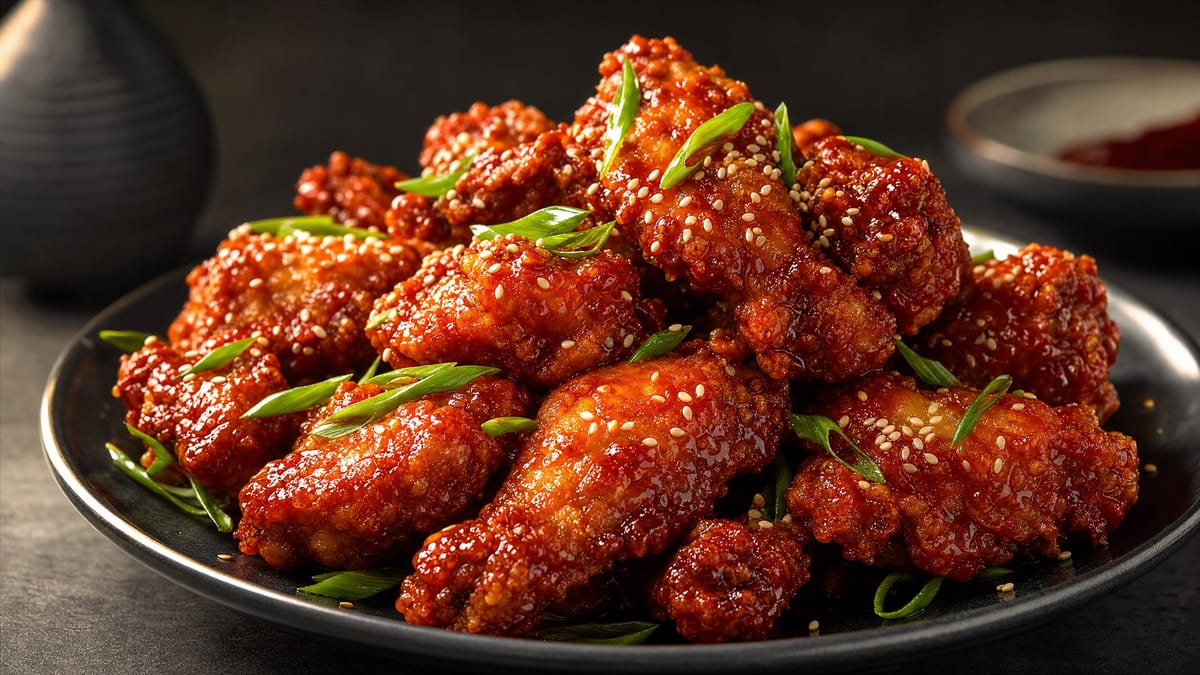
Toss chicken wings/drumettes with salt, pepper, ginger and garlic. Coat in potato starch (with a little flour and baking powder). Fry at 160°C / 325°F until pale and cooked, rest, then fry again at 190°C / 375°F until deep gold and glass-crisp. Simmer gochujang, gochugaru, soy, rice syrup, brown sugar, ketchup, garlic and ginger into a glossy sauce. Toss the hot chicken in just enough sauce and finish with sesame.
- Fry twice. The first fry cooks the chicken; the second, hotter fry sets the glass-like crunch that survives the sauce.
- Potato (or corn) starch — not flour alone — is what makes the coating shatter-crisp and stay that way.
- Toss the chicken in the sauce the moment before serving; let it sit too long and the crust softens.
Equipment
- Heavy pot or wok for deep-frying
- Thermometer
- Wire rack
- Large bowl for tossing
Ingredients
Chicken
- 1 kg chicken wings and drumettes
- 5 g fine salt
- ½ tsp black pepper
- 1 tsp grated ginger
- 2 garlic cloves, grated
- neutral oil, for deep-frying
Crisp coating
- 120 g potato starch, or cornstarch
- 30 g all-purpose flour
- 4 g baking powder
- pinch of salt
- 120 ml cold water, to loosen into a thin slurry
Yangnyeom sauce
- 45 g gochujang (Korean chili paste)
- 5 g gochugaru (Korean chili flakes), optional, for heat
- 30 ml soy sauce
- 45 ml rice syrup (jocheong), or honey
- 25 g brown sugar
- 30 g ketchup
- 15 ml rice vinegar
- 4 garlic cloves, minced
- 1 tsp grated ginger
- 5 ml toasted sesame oil
- toasted sesame seeds and sliced scallion, to finish
Method
- STEP01
Pat the wings very dry. Toss with salt, pepper, grated ginger, and garlic. Let sit 15 minutes while you prep everything else.
- STEP02
Simmer gochujang, gochugaru, soy, rice syrup, brown sugar, ketchup, vinegar, garlic, and ginger in a small pan over medium heat, stirring, until glossy and slightly thickened, about 3 minutes. Stir in the sesame oil and set aside.
- STEP03
Whisk the starch, flour, baking powder, and salt, then whisk in just enough cold water to make a thin slurry that clings. Dredge each wing, letting excess drip off.
- STEP04
Heat oil to 160°C / 325°F. Fry the wings in batches 7–8 minutes until pale gold and cooked through. Rest on a rack at least 5 minutes — this is where the crust dries and sets.
- STEP05
Raise the oil to 190°C / 375°F. Fry the wings again in batches 2–3 minutes until deep gold and audibly crisp. Drain on the rack.
- STEP06
Warm the sauce. Add the hot chicken to a bowl, spoon over just enough sauce to coat, and toss fast. Tip onto a platter, scatter with sesame seeds and scallion, and serve immediately.
Make ahead
Make the sauce up to a week ahead. You can do the first fry a couple of hours before serving and hold the chicken on a rack, then do the second fry and toss just before eating.
Storage
Best the moment it's tossed. Leftovers keep 2 days refrigerated; re-crisp in a hot oven or air fryer (never the microwave) and re-toss with a little fresh sauce. Plain double-fried chicken (un-sauced) keeps its crunch best.
Variations
Ganjang (soy-garlic)
Swap the gochujang sauce for soy, garlic, rice syrup, and a splash of mirin for the milder, non-spicy classic.
Half-and-half (banban)
Sauce half the chicken yangnyeom and leave half plain or soy-garlic — the most-ordered way in Korea.
Boneless
Use bite-size thigh pieces; reduce the first fry to 5 minutes.
Serve with
Nutrition per serving
Nutrition values are estimates based on the metric measurements. Adjust as needed.
Frequently asked
Why fry the chicken twice?
The first fry at a lower temperature cooks the chicken through and drives off surface moisture; resting lets the crust dry. The second, hotter fry sets a glass-like crunch and deep color. This double-fry is the defining technique of Korean fried chicken — it's what lets the coating stay crisp even after it's coated in wet sauce.
What makes the coating so crunchy?
Potato or corn starch rather than flour alone. Starch fries into a fine, glassy, less bready crust, and the double fry plus a little baking powder keeps it light and shattering. A thin slurry (not a thick batter) gives the characteristic delicate, craggy texture.
How spicy is yangnyeom sauce?
Moderately — gochujang is more savory-sweet than fiery. As written it's a gentle, family-friendly heat; add the gochugaru (and more) to push it hotter. The sugar and rice syrup balance the chili so it reads sweet-spicy rather than punishing.
Can I bake or air-fry instead of deep-frying?
You can air-fry for a lighter version: coat lightly, spray with oil, and cook at 200°C / 400°F, shaking, until deep gold and crisp, then toss in sauce. It won't be quite as shatter-crisp as double-deep-fried, but it's very good. Baking alone tends to give a softer crust.
What is gochujang and can I substitute it?
Gochujang is a fermented Korean chili-and-rice paste — savory, sweet, and moderately spicy. It's central to yangnyeom sauce and has no true substitute; a mix of miso plus chili paste only approximates it. It keeps for months refrigerated and is worth buying from a Korean or Asian grocer.
Cooked this? Rate it.
Real ratings from real cooks. We only show a score once enough of you have weighed in — no fabricated stars.