Locro — Argentine Hearty Corn & Bean Stew
The hearty, slow-simmered national stew of Argentina (and the Andes): white hominy corn and beans cooked for hours with squash, several cuts of pork and beef, chorizo and tripe until thick, creamy and deeply savoury. Locro is the dish of cold days and national holidays — above all May 25th and July 9th — ladled into bowls and crowned with a spicy quiajillo-and-paprika oil (salsa de grasa colorada). It's communal, warming, frugal cooking that turns humble ingredients into a feast.
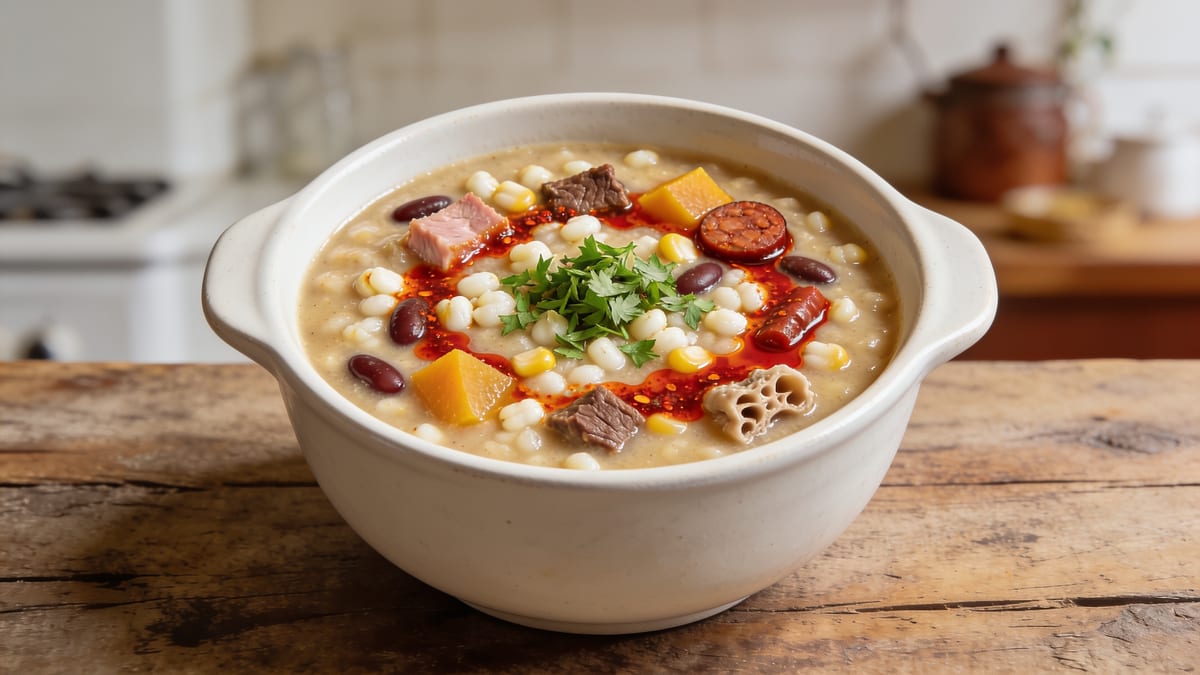
Soak dried white hominy corn and white beans overnight. Simmer them for a couple of hours with chunks of pork (shoulder, ribs, belly), beef and a piece of pork skin, plus diced squash that melts in to thicken the stew. Add chorizo and any tripe or pancetta partway, and keep cooking low and slow, stirring now and then, until everything is tender and the locro is thick, creamy and rich (the corn and squash do the thickening — no flour). Season well, and serve each bowl with a spoonful of spicy salsa (fried paprika-and-chilli oil with spring onion) on top.
- Soak the hominy corn and beans overnight, then simmer for hours — locro can't be rushed.
- Squash (and the hominy's starch) melts in to thicken it naturally — no flour needed.
- Serve with the spicy salsa/grasa colorada (paprika-chilli oil with spring onion) spooned over each bowl.
Equipment
- Very large heavy pot
- Bowl (for soaking)
Ingredients
Base
- 500 g dried white hominy (maíz blanco), soaked
- 250 g dried white beans, soaked
- 500 g squash/pumpkin (zapallo), diced
Meats
- Pork shoulder, ribs and belly, in chunks; a piece of pork skin
- Some beef (brisket/shin); 2 chorizos; tripe or pancetta (optional)
- 1 onion, garlic, bay; cumin, paprika; salt
Salsa (to serve)
- Spring onions, sliced
- Oil, sweet paprika and chilli flakes (for grasa/salsa colorada)
Method
- STEP01
Soak the dried hominy corn and the white beans in plenty of water overnight (separately is fine). Drain.
- STEP02
Put the soaked corn and beans in a very large pot with the pork chunks, beef, pork skin, onion, garlic, bay and spices, cover generously with water, and bring to a simmer.
- STEP03
Cook gently, partly covered, for about 2 hours, stirring occasionally and topping up water if needed, until the corn and beans are tender. Add the diced squash, which will break down and thicken the stew.
- STEP04
Add the sliced chorizo (and tripe/pancetta if using) and keep simmering until everything is tender and the locro is thick, creamy and rich — the corn and squash thicken it naturally, so stir to stop it catching. Season well with salt, cumin and paprika.
- STEP05
Gently fry sweet paprika and chilli flakes in oil with sliced spring onion to make a spicy red salsa (don't burn the paprika). Ladle the hot locro into bowls and spoon the spicy salsa over each. Serve with crusty bread.
Make ahead
Locro is the ultimate make-ahead and big-batch dish — it's traditionally cooked the day before national holidays and tastes even better reheated, and it freezes brilliantly. Make it a day or two ahead, then reheat gently (loosening with water) and finish each bowl with the freshly made spicy salsa.
Storage
Keeps 3–4 days refrigerated and is famously even better the next day, as it thickens and the flavours meld. Reheat gently with a splash of water, stirring, as it becomes very thick when cold. Locro freezes very well — it's made in huge batches for holidays precisely because it keeps. Make the salsa fresh and add per bowl.
Variations
Regional meats
Recipes vary by province and family — different cuts of pork and beef, tripe (mondongo), trotters, or chorizo colorado.
Vegetarian
A meatless locro relies on the corn, beans, squash and a good smoked-paprika salsa for depth.
Locro for the 25th
Made by the potful for Argentina's national days (25 May, 9 July) — the classic patriotic dish.
Serve with
Nutrition per serving
Nutrition values are estimates based on the metric measurements. Adjust as needed.
Frequently asked
What is locro made of?
Locro is a thick stew built on white hominy corn (maíz blanco / mote) and white beans, slow-cooked with squash and an assortment of meats — typically several cuts of pork (shoulder, ribs, belly, skin), beef, chorizo and often tripe — plus onion, cumin and paprika. The corn and squash break down to thicken it naturally. It's a substantial, one-pot meal with Andean roots, beloved across Argentina.
Why is locro associated with Argentine holidays?
Locro is the patriotic dish of Argentina's national holidays, especially the 25th of May (May Revolution) and the 9th of July (Independence Day), when it's cooked in huge pots and shared. Its Andean, criollo roots and its warming, communal nature — perfect for the cold late-May and July weather in Argentina — made it the traditional dish for marking these dates. Eating locro on the 25th is a beloved custom.
What is the salsa on top?
It's a spicy red oil-based salsa — often called salsa picante, grasa colorada or simply 'la salsa' — made by gently frying sweet paprika and chilli flakes (and sometimes cumin) in oil or fat with sliced spring onion. A spoonful is stirred into each bowl of locro, adding heat, colour and aromatic richness that cuts the hearty stew. It's an essential finishing touch, served on the side so everyone adds their own.
Can I make locro without all the different meats?
Yes — locro is flexible and varies by family and region. You can use just a couple of cuts of pork (and chorizo) rather than the full array of pork, beef and tripe, and it'll still be delicious. There are also vegetarian versions that rely on the corn, beans, squash and a good smoky salsa for depth. The corn-and-bean base is what makes it locro.
Why is my locro not thick and creamy?
Thickness comes from the starch released by the long-cooked hominy corn and the squash melting into the stew — so it needs time and gentle simmering, and the squash really breaking down. Don't add flour. If it's thin, keep simmering (uncovered) to reduce, mash some of the squash and beans against the pot, and make sure you cooked it long enough. It should be thick, almost creamy, and richer the next day.
Cooked this? Rate it.
Real ratings from real cooks. We only show a score once enough of you have weighed in — no fabricated stars.