Paella Valenciana — Traditional Valencian Paella
The original paella from Valencia — not a seafood free-for-all, but chicken, rabbit, green beans, and butter beans cooked with bomba rice in a wide pan over fire until the rice drinks the saffron stock and a prized crust (socarrat) forms on the bottom.
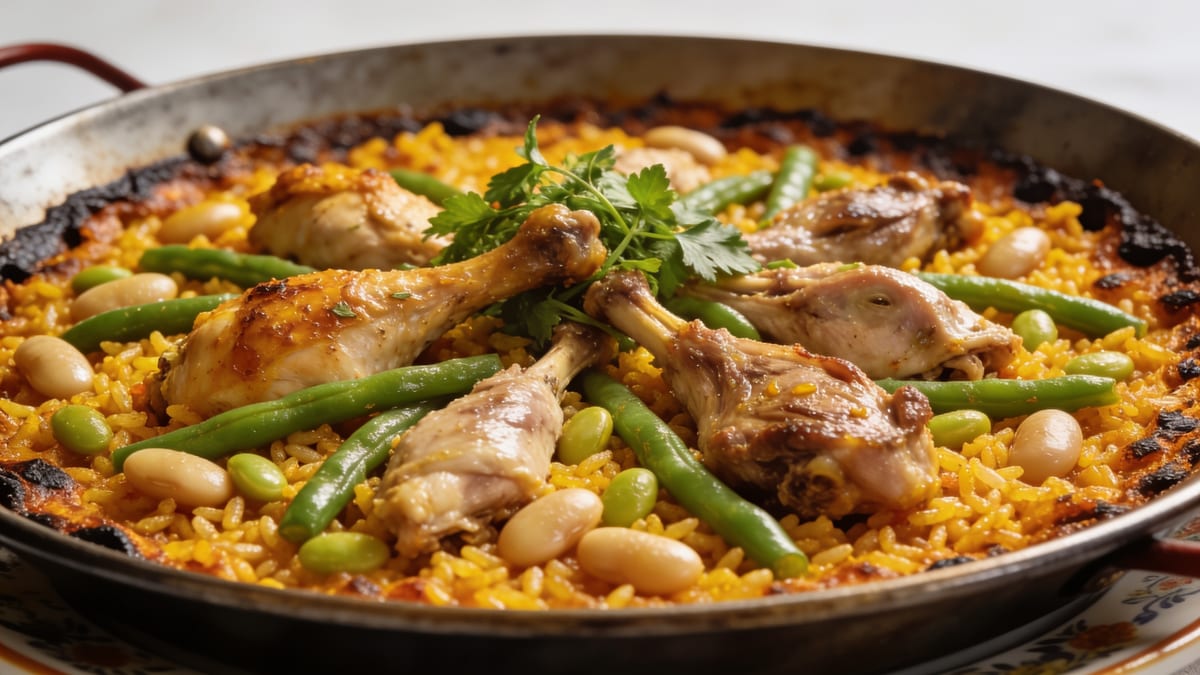
Brown chicken and rabbit in a wide paella pan, add green beans and grated tomato, then paprika and saffron stock. Scatter in bomba rice across the whole pan, spread it flat, and do NOT stir again. Cook on a wide flame so the rice cooks evenly and the bottom forms socarrat. Rest, then serve from the pan.
- Once the rice goes in, never stir — that's how you get even cooking and the prized socarrat crust.
- Use bomba or Calasparra rice — short-grain that absorbs lots of stock without going mushy.
- Traditional Valencian paella is chicken and rabbit with beans — not seafood. Both are valid, but this is the original.
Equipment
- Wide paella pan (or the widest shallow pan you have)
- Ladle
Ingredients
Sofrito & meat
- 60 ml olive oil
- 400 g bone-in chicken pieces
- 300 g rabbit pieces, or more chicken
- 150 g flat green beans (bajoqueta), trimmed
- 120 g butter beans (garrofó), or large white beans
- 2 tomatoes, grated
- 5 g sweet pimentón (paprika)
Rice & stock
- 320 g bomba or Calasparra rice
- 1 L chicken stock, hot
- 1 large pinch saffron threads
- 1 sprig rosemary
- 5 g salt, to taste
Method
- STEP01
Heat the oil in the paella pan over medium-high. Season and brown the chicken and rabbit well on all sides, 10 minutes. Push to the edges.
- STEP02
Add the green beans and cook a few minutes. Make a space, add the grated tomato, and cook it down until darkened and jammy, 5 minutes. Stir in the paprika off the heat (it burns fast).
- STEP03
Pour in the hot stock, crumble in the saffron, add the butter beans, rosemary, and salt. Simmer 10 minutes to build flavor and form a tasty broth. Taste — it should be well-seasoned.
- STEP04
Scatter the rice evenly across the entire pan. Spread it flat with the back of a spoon. From this point, do NOT stir — stirring releases starch and prevents the socarrat.
- STEP05
Cook over a wide medium flame (move the pan around if your burner is small) 18–20 minutes, until the rice is tender and the liquid is absorbed. Lower the heat near the end and listen/smell for the rice catching gently on the bottom — that's the socarrat forming.
- STEP06
Turn off the heat, cover loosely with a clean towel or foil, and rest 5 minutes. Serve straight from the pan, scraping up some of the crisp socarrat with each portion. Lemon wedges on the side.
Make ahead
Make the stock and brown the meat / build the sofrito ahead. Add rice and finish à la minute — once the rice goes in, paella is a 25-minute, all-attention dish.
Storage
Best fresh from the pan. Leftovers keep 2 days and reheat in a covered pan with a splash of stock; the socarrat won't return but the flavor deepens.
Variations
Paella de marisco (seafood)
The popular seafood version: use fish stock and top with prawns, mussels, clams, and squid instead of meat. Not 'valenciana' but beloved.
Paella mixta
Chicken plus seafood — common in restaurants, frowned on by Valencian purists, delicious anyway.
Vegetable paella
Artichoke, beans, peppers, and tomato with vegetable stock — paella de verduras.
Serve with
Nutrition per serving
Nutrition values are estimates based on the metric measurements. Adjust as needed.
Frequently asked
Isn't paella a seafood dish?
The original — paella valenciana — is chicken, rabbit, and beans, from the rice fields around Valencia. Seafood paella (paella de marisco) and mixed paella are later and popular variations. All are real; this is the traditional one.
Why can't I stir it?
Stirring releases the rice's starch (turning it creamy like risotto) and prevents the bottom layer from forming the socarrat — the caramelized, slightly crisp crust that's the most prized part of a paella. Spread the rice once and leave it alone.
What is socarrat?
The thin, toasty, caramelized crust of rice that forms on the bottom of the pan at the end. You encourage it by lowering the heat in the final minutes and listening for a gentle crackle (and smelling toasty, not burnt). Scraping it up is the cook's reward.
What rice must I use?
Short-grain Spanish rice — bomba or Calasparra — which absorbs about three times its volume in liquid without turning mushy or sticky. Don't use long-grain or risotto rice; the texture and absorption are wrong.
Do I need a paella pan?
It helps a lot — its wide, shallow shape spreads the rice in a thin layer so it cooks evenly and forms socarrat. Any wide, shallow pan works in a pinch; avoid deep pots, which steam the rice instead.
Cooked this? Rate it.
Real ratings from real cooks. We only show a score once enough of you have weighed in — no fabricated stars.