Panna Cotta — Italian Set Cream Dessert
Northern Italy's silkiest dessert: sweetened cream gently infused with vanilla and just set with a little gelatine into a delicate, trembling, melt-in-the-mouth cream that's barely held together. 'Panna cotta' means 'cooked cream', and the whole art is using the minimum gelatine for that perfect wobble — not a firm jelly. Turned out and pooled with a fruit coulis or caramel, it's effortlessly elegant, made ahead, and endlessly adaptable in flavour.
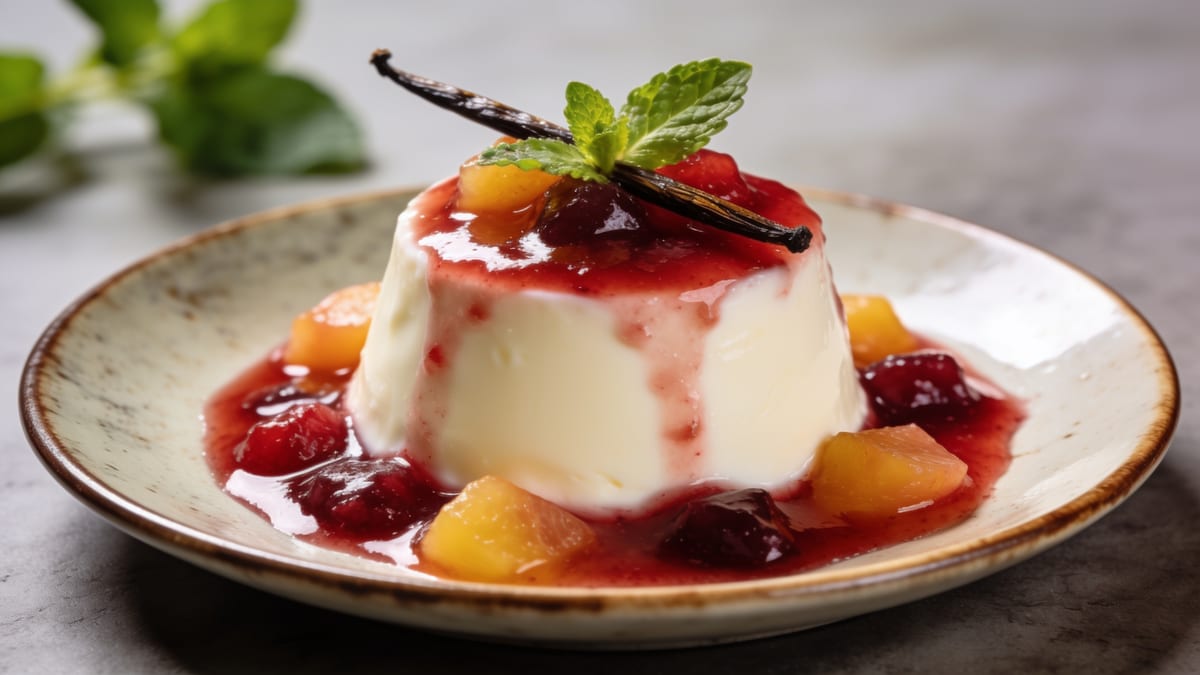
Soften gelatine (in cold water, or use leaves). Warm cream (often with a little milk) with sugar and a split vanilla pod until the sugar dissolves and it's hot but not boiling. Take off the heat, stir in the softened gelatine until fully dissolved, then pour through a sieve into ramekins or glasses. Chill for at least 4 hours until just set — it should wobble, not stand firm. Serve in the glass, or dip briefly in warm water and turn out onto a plate, with a fruit coulis, caramel or berries.
- Use the minimum gelatine for a delicate, just-set wobble — too much makes it rubbery.
- Warm the cream gently to infuse and dissolve the sugar and gelatine; don't boil it.
- Chill at least 4 hours (or overnight); serve in the glass or turned out with a coulis.
Equipment
- Saucepan
- Sieve
- Ramekins or glasses
Ingredients
Panna cotta
- 500 ml double (heavy) cream (or part milk)
- 60 g sugar
- 1 vanilla pod (split) or 1 tsp vanilla extract
- 3 g gelatine (or ~1¼ tsp powdered)
To serve
- Fruit coulis (e.g. raspberry), caramel, or fresh berries
Method
- STEP01
Soak the gelatine leaves in cold water until soft (or sprinkle powdered gelatine over a little cold water to bloom).
- STEP02
Gently warm the cream with the sugar and the split vanilla pod (scrape in the seeds), stirring, until the sugar dissolves and it's hot but not boiling. Let it infuse a few minutes.
- STEP03
Off the heat, squeeze out the gelatine leaves (or add the bloomed powdered gelatine) and stir into the hot cream until completely dissolved.
- STEP04
Strain the mixture through a sieve (to catch the pod and any undissolved bits) into ramekins or serving glasses. Let cool a little.
- STEP05
Chill for at least 4 hours, ideally overnight, until just set with a gentle wobble. Serve in the glass, or to unmould, dip the ramekin briefly in warm water and invert onto a plate. Top or pool with a fruit coulis, caramel or fresh berries.
Make ahead
Panna cotta is a perfect make-ahead dessert — it needs hours to set anyway and keeps well for a couple of days, so make it the day before a dinner. Prepare any coulis or caramel ahead too. Unmould (if serving turned out) shortly before serving. It's one of the easiest elegant desserts to prep in advance.
Storage
Keeps 3 days covered in the fridge and is meant to be made ahead. Don't freeze it (the texture turns grainy on thawing). Make the coulis or caramel ahead too and add when serving. If unmoulding, do it shortly before serving for the cleanest result; in glasses it holds perfectly for a couple of days.
Variations
Flavours
Infuse with coffee, lemon zest, cardamom, or melt in chocolate; or use buttermilk for a tangier set.
Toppings
Serve with raspberry or passionfruit coulis, salted caramel, balsamic strawberries, or espresso.
Lighter / vegetarian set
Use part milk for a lighter set, or agar-agar for a vegetarian/vegan version (different texture — firmer).
Serve with
Nutrition per serving
Nutrition values are estimates based on the metric measurements. Adjust as needed.
Frequently asked
How much gelatine should I use?
As little as you can get away with — the hallmark of a good panna cotta is a delicate, barely-set, trembling texture that melts in the mouth, not a firm, bouncy jelly. A rough guide is about 3 g of gelatine (1½ leaves, or ~1¼ tsp powdered) per 500 ml of cream, but err on the side of less. Too much gelatine is the most common mistake and gives a rubbery result.
Why is my panna cotta rubbery or too firm?
Almost always too much gelatine. Panna cotta should wobble and only just hold its shape — if it's bouncy or stands up stiffly, reduce the gelatine next time. Measure it carefully and remember that turning it out needs only a touch more set than serving it in a glass. A softer, more delicate set is the goal; a little extra cream relative to gelatine helps.
How do I unmould panna cotta cleanly?
Make sure it's fully set (chill several hours or overnight). Run a thin knife around the edge if needed, then dip the ramekin in hot water for just a few seconds (don't melt it), place a plate on top and invert, giving a gentle shake. It should slide out. A very lightly oiled mould also helps release. Do it shortly before serving. Serving in glasses skips this step entirely.
Can I make panna cotta without gelatine?
Yes — agar-agar (a plant-based setting agent from seaweed) makes a vegetarian/vegan panna cotta, though the texture is firmer and less melting than gelatine, and agar sets at room temperature, so the method differs slightly (you boil it briefly). Cornstarch-set 'panna cotta'-style puddings also exist. For the classic silky wobble, gelatine is traditional; agar is the main vegetarian alternative.
What can I serve with panna cotta?
Its mild, creamy sweetness pairs beautifully with something tart or sharp: a raspberry, strawberry or passionfruit coulis is classic, as is salted caramel, a drizzle of good honey, balsamic-macerated berries, or fresh seasonal fruit. A little espresso or a few crushed amaretti also work. The contrast of the silky cream with a bright, fruity or caramel topping is what makes it.
Cooked this? Rate it.
Real ratings from real cooks. We only show a score once enough of you have weighed in — no fabricated stars.