Pierogi — Polish Dumplings
Poland's national dumpling: tender pockets of soft dough wrapped around a savoury or sweet filling — the classic 'ruskie' of potato and twaróg cheese, or sauerkraut-and-mushroom, or sweet fruit — boiled until pillowy and then often pan-fried in butter with onions. Pierogi are made by the dozen for family gatherings, Christmas Eve (Wigilia) and Sunday dinners, pinched shut by hand around the kitchen table — humble, hearty and deeply comforting.
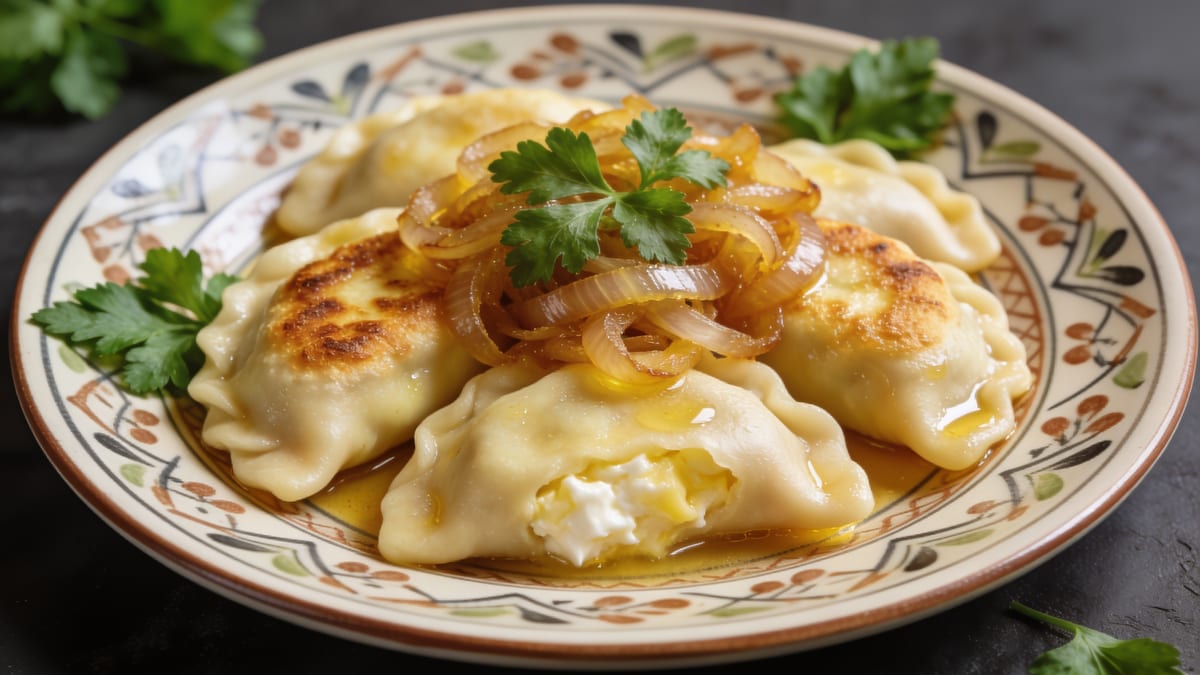
Make a soft, pliable dough (flour, warm water, a little egg and oil) and rest it. Prepare a filling — the classic ruskie is mashed potato mixed with twaróg (farmer's cheese) and fried onion. Roll the dough thin, cut out circles, place a spoon of filling in each, fold into a half-moon and pinch the edges firmly sealed. Boil in batches of salted water until they float and the dough is tender, a few minutes. Serve as is, or — best of all — pan-fry the boiled pierogi in butter with onions until golden, topped with sour cream.
- Keep the dough soft and rested so it rolls thin and seals without tearing.
- Seal the edges firmly (and free of filling) so they don't burst when boiling.
- Boil first, then pan-fry in butter with onions for the best texture; serve with sour cream.
Equipment
- Rolling pin
- Round cutter
- Large pot
- Frying pan
Ingredients
Dough
- 400 g plain (all-purpose) flour
- 180 ml warm water
- 1 egg
- 1 tbsp oil or melted butter; ½ tsp salt
Ruskie filling
- 500 g potatoes, boiled and mashed
- 200 g twaróg (farmer's cheese), or ricotta/curd
- 1 onion, finely chopped and fried; salt, pepper
To finish
- Butter; 1 extra onion, sliced and fried
- Sour cream (śmietana), to serve
Method
- STEP01
Mix the flour, salt, egg and oil with the warm water and knead into a soft, smooth, elastic dough. Cover and rest at least 30 minutes so it rolls out easily.
- STEP02
Mash the boiled potatoes with the twaróg, fried onion, salt and pepper until smooth and well seasoned. Let it cool so it's easy to handle.
- STEP03
Roll the dough thin and cut out circles. Put a spoon of filling in the centre of each, fold into a half-moon, and pinch the edges firmly together — make sure no filling is on the seal, or they'll open. Crimp decoratively if you like.
- STEP04
Boil the pierogi in batches in plenty of salted water, stirring gently so they don't stick. They're done a minute or two after they float and the dough is tender. Lift out with a slotted spoon.
- STEP05
For the best texture, pan-fry the boiled pierogi in butter with sliced onions until golden and a little crisp. Serve hot with fried onions and a dollop of sour cream.
Make ahead
Made for getting ahead — assemble a big batch and freeze them uncooked on a tray, then bag. Boil from frozen whenever you want them. The dough and filling can be made a few hours ahead. This is exactly how Polish families prepare them for Christmas and big gatherings.
Storage
Boiled pierogi keep 2–3 days refrigerated and are excellent pan-fried in butter the next day. Uncooked pierogi freeze brilliantly — freeze in a single layer until solid, then bag, and boil straight from frozen (a couple of extra minutes). Making and freezing a big batch is the traditional way.
Variations
Pierogi ruskie
The classic potato-and-twaróg cheese filling with fried onion (this version) — the most iconic.
Z kapustą i grzybami
Sauerkraut and mushroom filling — traditional for Christmas Eve (Wigilia).
Sweet (na słodko)
Fill with sweetened twaróg, blueberries or strawberries and serve with sour cream and sugar as a dessert.
Serve with
Nutrition per serving
Nutrition values are estimates based on the metric measurements. Adjust as needed.
Frequently asked
What's the difference between pierogi and varenyky?
They're very close cousins — pierogi are the Polish filled dumplings and varenyky the Ukrainian ones, both soft boiled dough around savoury or sweet fillings. The fillings (potato-cheese, sauerkraut, fruit) and technique overlap heavily across the region. Names and small details differ by country, but they're essentially the same beloved Eastern European tradition.
How do I stop pierogi bursting when boiling?
Seal them well: keep the filling away from the edges, press the dough firmly together (moisten the rim if needed), and pinch along the whole seam. Don't overfill. Boil at a gentle, steady simmer rather than a rolling boil, and don't overcrowd the pot. A well-sealed, not-overstuffed pierogi holds together fine.
Can I freeze pierogi?
Yes — they freeze beautifully uncooked, which is the traditional way to handle a big batch (and how families prep for Christmas). Freeze them in a single layer on a tray until solid so they don't stick, then bag them. Boil straight from frozen, adding a couple of extra minutes. Don't thaw first, or they get sticky and may tear.
What is twaróg, and what can I substitute?
Twaróg is Polish fresh curd/farmer's cheese — mild, slightly tangy and crumbly — used in the classic ruskie filling and in sweet pierogi. If you can't find it, dry curd cheese, farmer's cheese, or well-drained ricotta are the closest substitutes. It adds a gentle tang and creaminess to the potato filling that sets ruskie apart.
Should I boil or fry pierogi?
Both — and the classic move is to do both. Pierogi are first boiled until the dough is tender and they float. You can serve them straight from the water with butter, but the most popular finish is to then pan-fry the boiled pierogi in butter (often with onions) until golden and slightly crisp. Frying boiled pierogi gives the best of both textures.
Cooked this? Rate it.
Real ratings from real cooks. We only show a score once enough of you have weighed in — no fabricated stars.