Roasted Broccoli
Broccoli florets tossed in olive oil and blasted in a hot oven until the edges char and crisp while the stems turn sweet and tender. A dry surface, a 220°C (425°F) oven, and an uncrowded pan let the florets sear instead of steam, which is what turns plain broccoli into the side dish people fight over. It takes one bowl, one sheet pan, and about 35 minutes end to end.
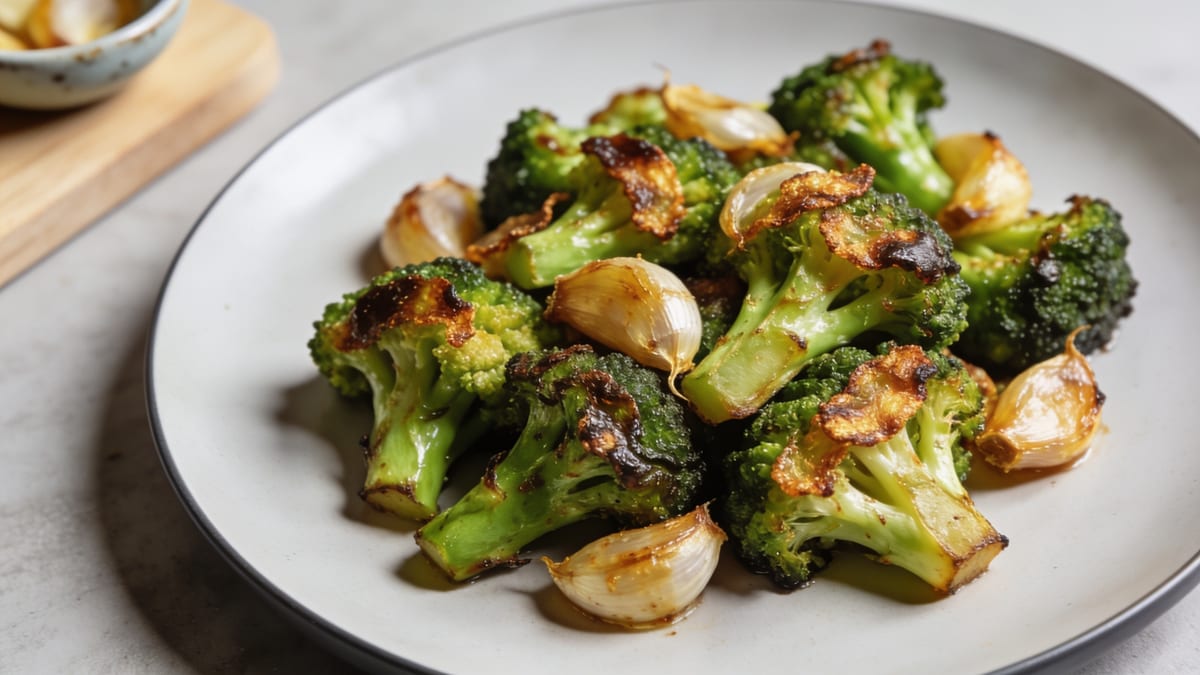
Heat the oven to 220°C (425°F) with a rack in the lower third. Cut 900 g (2 lb) of broccoli into even, palm-of-your-hand florets with one flat side, and peel and slice the stems into coins. Pat everything completely dry, then toss in a big bowl with 45 ml (3 tbsp) olive oil, 3/4 tsp fine salt, and 1/4 tsp black pepper. Spread the florets flat-side down on a rimmed baking sheet with space between each piece and roast 18 minutes without opening the oven. Scatter over 3 thinly sliced garlic cloves, toss once, and roast 5 more minutes until the edges are deeply browned and crisp. Finish with a squeeze of lemon and, if you like, a pinch of red pepper flakes, and serve hot.
- Dry the florets completely before oiling them — surface water steams the broccoli and blocks the browning you are after.
- Set each floret flat-side down and leave a gap between pieces; a crowded pan traps steam and gives you soft, pale broccoli.
- Do not stir for the first 18 minutes. The untouched contact with the hot pan is what builds the crisp, caramelized edges.
Equipment
- Large rimmed baking sheet
- Chef's knife
- Cutting board
- Large mixing bowl
- Measuring spoons
- Thin metal spatula or tongs
- Clean kitchen towel or paper towels
Ingredients
Broccoli and seasoning
- 900 g broccoli, about 2 large heads, crowns and stems
- 45 ml extra-virgin olive oil
- 4 g fine sea salt
- 1 g black pepper, freshly ground
- garlic cloves, thinly sliced; added partway through so they don't burn
To finish
- lemon, for squeezing over at the end
- 1 g red pepper flakes, optional
Method
- STEP01
Set a rack in the lower third of the oven and heat it to 220°C (425°F). The lower position puts the pan closer to the heat source, which browns the underside of the florets faster than the tops can dry out.
- STEP02
Slice the crowns into florets about 4 cm (1 1/2 inches) across, cutting each one so it has at least one flat face — flat sides make full contact with the hot pan and brown best. Don't toss the stems: peel off the tough outer skin with a vegetable peeler and slice them into 1 cm (1/2-inch) coins. They roast up sweet and tender.
- STEP03
If you washed the broccoli, pat every piece dry with a clean kitchen towel or paper towels. This is the step most people skip and the number one reason roasted broccoli comes out soggy — water on the surface has to boil off before any browning can start.
- STEP04
Combine the broccoli, olive oil, salt, and pepper in a large bowl and toss with your hands for a good 30 seconds, rubbing the oil into the frilly floret tops so every surface has a thin coat. Tossing in a bowl coats far more evenly than drizzling oil over the pan.
- STEP05
Tip the broccoli onto a large rimmed baking sheet and turn each floret flat-side down, leaving a little space between pieces. If the pan looks crowded, split the broccoli between two sheets — steam from crowded florets will soften everything on the pan.
- STEP06
Roast for 18 minutes without opening the oven or stirring. Resist the urge to peek; every time the door opens, the oven loses heat and the browning stalls. The undersides should be deeply golden with some dark, crispy spots when the time is up.
- STEP07
Scatter the sliced garlic over the pan, toss everything once with a spatula or tongs, and roast 5 more minutes, until the garlic is golden and the floret edges are browned and crisp. Adding garlic at the end keeps it from burning and turning bitter during the long initial roast.
- STEP08
Squeeze the lemon half over the hot broccoli right on the pan, add red pepper flakes if using, and taste a floret — add a small pinch more salt if it needs it. Serve immediately while the edges are still crisp.
Make ahead
You can cut and dry the florets up to 2 days ahead; store them in an open bag or a container lined with a paper towel in the fridge so they stay dry. Toss with oil and salt only just before roasting — salted broccoli weeps moisture as it sits. The roasting itself is best done right before serving, since the crisp edges soften within about 30 minutes.
Storage
Refrigerate leftovers in an airtight container for up to 4 days. To bring back the crisp edges, reheat in a 220°C (425°F) oven or an air fryer at 200°C (400°F) for 4-5 minutes; the microwave will warm it through but leaves it soft. Roasted broccoli doesn't freeze well — the florets turn watery when thawed.
Variations
Lemon-Parmesan
Toss the hot roasted broccoli with 25 g (1/4 cup) finely grated Parmesan and 1 tsp of lemon zest along with the lemon juice. The cheese melts into the crispy edges. For a vegan version with the same savory hit, use 2 tbsp of nutritional yeast instead of the Parmesan (note: Parmesan adds a Dairy allergen).
Spicy sesame-soy
Skip the salt in the base recipe and instead whisk 1 1/2 tbsp tamari (gluten-free) or soy sauce with 1 tsp toasted sesame oil and 1 tsp maple syrup; toss with the broccoli for the final 5 minutes of roasting and finish with 1 tbsp toasted sesame seeds and the pepper flakes (adds Soy and Sesame allergens).
Balsamic and shallot
Toss 2 thinly sliced shallots with the broccoli before roasting, then drizzle 1 tbsp balsamic vinegar over the pan in the last 5 minutes. The vinegar reduces to a sweet-tangy glaze that clings to the charred florets.
Serve with
Nutrition per serving
Nutrition values are estimates based on the metric measurements. Adjust as needed.
Frequently asked
What is the best oven temperature for roasting broccoli?
220°C (425°F) is the sweet spot. It's hot enough to brown and crisp the floret edges before the interior overcooks, but not so hot that the frilly tops burn before the stems turn tender. If your oven runs hot or you're using convection, drop to 200°C (400°F) and start checking a couple of minutes early.
Why does my roasted broccoli come out soggy instead of crispy?
Almost always one of three things: the florets were wet going into the oven, the pan was overcrowded, or the oven wasn't hot enough. Roasting broccoli is really a browning exercise — surface water and trapped steam both prevent it. Dry the florets thoroughly, give each piece breathing room (use two pans if needed), and make sure the oven is fully preheated to 220°C (425°F).
Do I need to blanch or steam broccoli before roasting it?
No. Raw florets go straight onto the pan, and the dry oven heat cooks them through in the same time it takes to brown them. Pre-cooking adds moisture, which works against the crispy edges, and it softens the stems so much they can collapse during roasting.
Can I roast frozen broccoli?
Yes, with adjustments. Don't thaw it — spread the frozen florets on a preheated baking sheet, roast at 230°C (450°F), and expect to add 5-10 minutes. It will brown decently but never gets quite as crisp as fresh, because frozen broccoli releases a lot of water as it heats.
Should I roast the broccoli stems too?
Absolutely. The stems are the sweetest part of the plant once the fibrous outer skin is peeled away. Slice them into 1 cm (1/2-inch) coins so they cook in the same time as the florets. Using them also stretches two heads of broccoli into a noticeably bigger batch.
Cooked this? Rate it.
Real ratings from real cooks. We only show a score once enough of you have weighed in — no fabricated stars.