Self-Rising Flour
Self-rising flour is simply all-purpose flour with baking powder and salt already whisked in — the secret behind feather-light Southern biscuits, tender scones, and lofty pancakes. Blending your own takes five minutes, costs less than the boxed version, and lets you control freshness, which matters because the leavener is what gives your bakes their lift. Sifting the mix twice distributes the baking powder evenly, so every scoop rises exactly the same way.
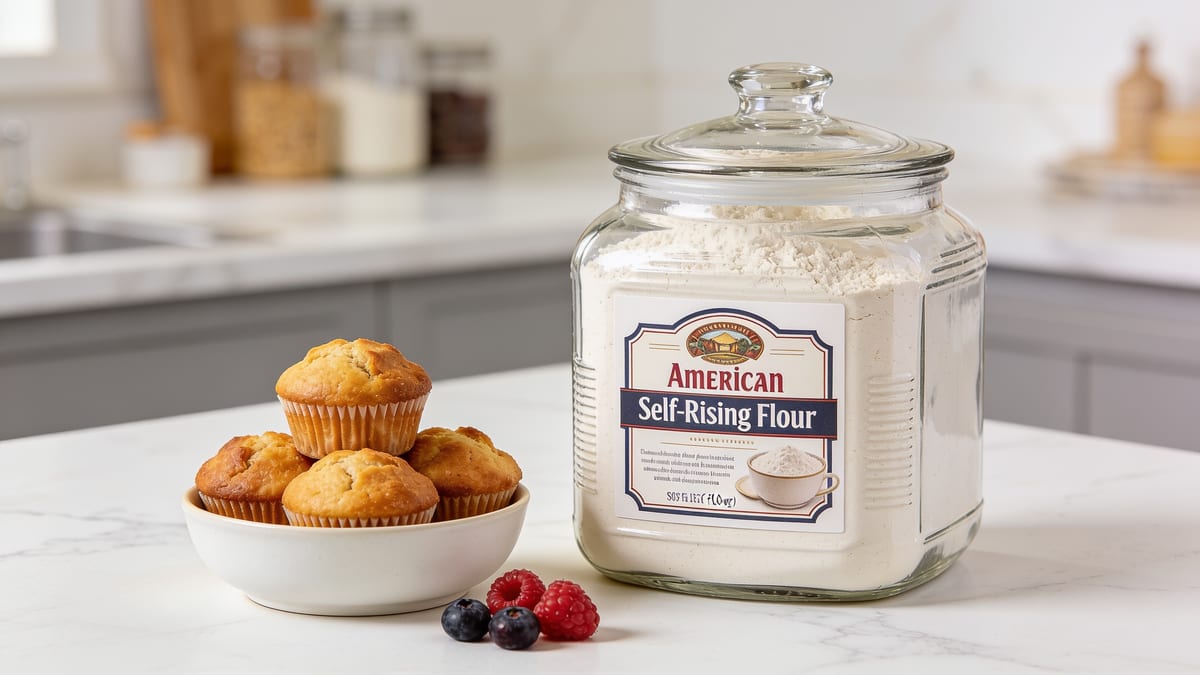
Whisk together 4 cups (480 g) all-purpose flour, 2 tablespoons (28 g) baking powder, and 1 teaspoon (6 g) fine salt in a large bowl, then sift the mixture twice through a fine-mesh sieve into a second bowl to distribute the leavener evenly. That is the classic ratio of 1 1/2 teaspoons baking powder plus 1/4 teaspoon salt per cup of flour, so you can scale up or down for any recipe. Store it in a labeled airtight container in a cool, dry cupboard and use it cup-for-cup anywhere a recipe calls for self rising flour — biscuits, scones, pancakes, quick breads.
- Test your baking powder first: stir 1/2 teaspoon into hot water — if it doesn't fizz vigorously, the flour won't rise either.
- Spoon flour into the measuring cup and level it off (or weigh 120 g per cup); scooping packs in up to 20 percent extra flour and throws off the ratio.
- Sift twice, not once — pockets of concentrated baking powder cause bitter, yellowish streaks in baked goods.
Equipment
- Large mixing bowl
- Balloon whisk
- Fine-mesh sieve
- Dry measuring cups and spoons
- Digital kitchen scale (optional but most accurate)
- Airtight storage container
Ingredients
Self-Rising Flour Blend
- 480 g all-purpose flour, spooned and leveled; a lower-protein Southern-style flour makes even more tender biscuits
- 28 g baking powder, fresh and aluminum-free for the cleanest flavor
- 6 g fine sea salt, or fine table salt; do not use coarse kosher salt, which distributes unevenly
Method
- STEP01
Stir 1/2 teaspoon of your baking powder into a few tablespoons of hot water. It should fizz and foam immediately and vigorously. If the reaction is weak, buy a fresh can before mixing — the entire point of self-rising flour is reliable lift, and stale leavener guarantees flat biscuits.
- STEP02
Weigh 480 g of all-purpose flour directly into a large mixing bowl, or spoon flour into a dry measuring cup and sweep it level with a straight edge for each of the 4 cups. Never scoop the cup into the bag — packed flour skews the flour-to-leavener ratio and makes dense baked goods.
- STEP03
Sprinkle the 2 tablespoons of baking powder and 1 teaspoon of fine salt over the surface of the flour rather than dumping them in one spot. Whisk with a balloon whisk for a full minute, reaching down to the bottom of the bowl and rotating it as you go.
- STEP04
Set a fine-mesh sieve over a second bowl and sift the entire mixture through. Then sift it back into the first bowl. The double pass breaks up any clumps of baking powder and disperses the salt evenly, so every quarter-cup you scoop later behaves identically.
- STEP05
Pour the finished flour into a clean, completely dry airtight container. Label it with the contents and today's date so you never confuse it with plain flour — and so you know when the leavener is nearing the end of its potency.
- STEP06
Substitute this blend 1:1 by volume or weight in any recipe written for self-rising flour. When adapting a plain-flour recipe, omit the baking powder and salt the original calls for, since your flour already carries both.
Make ahead
This is a make-ahead staple by design. Blend a double batch (8 cups flour, 1/4 cup baking powder, 2 teaspoons salt) at the start of biscuit season and it is ready whenever a recipe calls for it. If a batch is older than 4 months, revive it by whisking in an extra 1/2 teaspoon of fresh baking powder per cup just before using.
Storage
Keep in an airtight container in a cool, dry, dark cupboard — never near the stove or dishwasher, where heat and steam degrade the baking powder. The blend keeps for up to 6 months, but its lifting power is strongest in the first 3, so date the container and mix in batches you will actually bake through. Do not refrigerate; condensation activates the leavener prematurely.
Variations
Gluten-Free Self-Rising Flour
Swap the all-purpose flour for 480 g of a measure-for-measure gluten-free blend that already contains xanthan gum. Keep the baking powder and salt quantities identical, and confirm your baking powder is certified gluten-free. Works beautifully in drop biscuits and pancakes.
Southern Biscuit Blend
Use a low-protein soft red winter wheat flour (about 8-9 percent protein) in place of standard all-purpose. The lower gluten content mimics beloved Southern brands and produces noticeably more tender, higher-rising buttermilk biscuits.
Whole Wheat Version
Replace half the all-purpose flour with 240 g white whole wheat flour and increase the baking powder to 2 tablespoons plus 1 teaspoon. The extra leavener offsets the heavier bran so muffins and quick breads still rise well, with a nutty, wheaty flavor.
Serve with
Nutrition per serving
Nutrition values are estimates based on the metric measurements. Adjust as needed.
Frequently asked
What is the difference between self rising flour and all-purpose flour?
Self rising flour is all-purpose flour with a leavener and salt already blended in — specifically 1 1/2 teaspoons baking powder and 1/4 teaspoon salt per cup. Commercial versions are also usually milled from softer, lower-protein wheat, which is why they make especially tender biscuits. If a recipe calls for plain flour plus baking powder and salt, this blend can replace all three.
Can I use self rising flour in yeast bread or cookies?
It is not a good fit for either. Yeast breads rely on yeast alone for lift, and the added baking powder can leave a chemical aftertaste while the salt content throws off the formula. Most cookie recipes need far less leavener per cup than this blend contains, so cookies spread and puff unpredictably. Save it for biscuits, scones, pancakes, muffins, and quick breads, where it shines.
How long does homemade self rising flour keep its lifting power?
About 3 months at full strength and up to 6 months in usable condition, assuming the baking powder was fresh when you mixed it and the container stays sealed and dry. The flour itself lasts longer than the leavener, which slowly reacts with ambient humidity. If a batch is old, whisk 1/2 teaspoon of fresh baking powder into each cup before baking anything that needs a strong rise.
Can I make self rising flour with baking soda instead of baking powder?
Not as a straight swap. Baking soda needs an acid — buttermilk, yogurt, molasses — already present in the recipe to react, while baking powder carries its own acid and works with any liquid. Because you cannot predict what a future recipe will contain, baking powder is the only reliable choice for a shelf-stable self rising flour blend.
Why did my baked goods come out with yellow or bitter spots?
That is unmixed baking powder. When the leavener sits in concentrated pockets rather than being dispersed through the flour, it leaves behind bitter, yellowish streaks after baking. The fix is mechanical: whisk for a full minute and sift the blend twice through a fine-mesh sieve. Storing the container away from moisture also prevents the powder from clumping between uses.
Cooked this? Rate it.
Real ratings from real cooks. We only show a score once enough of you have weighed in — no fabricated stars.