Tarte Tatin — French Upside-Down Caramel Apple Tart
The famous French upside-down tart, born of a happy accident at the Hôtel Tatin: apples caramelised in butter and sugar in the pan, covered with pastry, baked, then flipped out so the glistening caramelised fruit sits on top. Burnished, buttery and not too sweet — served just warm with crème fraîche or a scoop of vanilla ice cream.
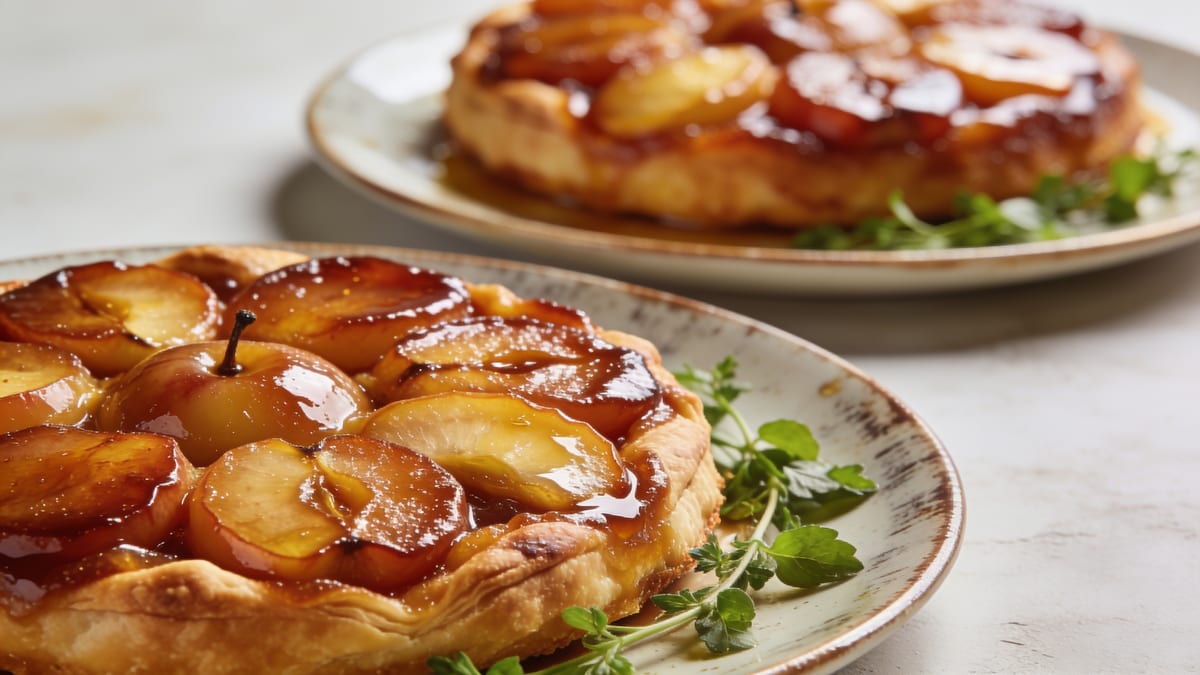
Make a caramel directly in an ovenproof pan with butter and sugar, then pack in halved or quartered firm apples, cut-side up, and cook on the stove until they soften and soak up the caramel. Lay a disc of pastry (puff or shortcrust) over the top, tucking the edges down, and bake until golden. Let it settle a few minutes, then confidently invert onto a plate so the caramelised apples are on top. Serve warm.
- Use firm apples that hold their shape (e.g. Braeburn, Pink Lady) — soft ones turn to mush.
- Cook the caramel and apples on the stove first so the fruit is deeply caramelised, not raw.
- Rest a few minutes, then flip while still warm and confident — don't let it cool and stick.
Equipment
- Ovenproof frying pan (or tatin mould)
- Rolling pin
- Serving plate
Ingredients
Caramel & apples
- 100 g sugar
- 60 g butter
- 1 kg firm apples, peeled, halved or quartered, cored
- Squeeze of lemon; pinch of salt
Pastry
- 320 g puff pastry (or shortcrust)
- Crème fraîche or vanilla ice cream, to serve
Method
- STEP01
Melt the sugar in an ovenproof pan over medium heat into an amber caramel, then stir in the butter and a pinch of salt to a smooth, bubbling caramel. Take off the heat.
- STEP02
Arrange the apple pieces tightly in the caramel, cut-side up, packing them in (they shrink). Return to medium-low heat and cook 12–15 minutes, basting with the caramel, until the apples soften and colour.
- STEP03
Heat the oven to 200°C/400°F. Roll the pastry to a disc slightly larger than the pan, lay it over the apples, and tuck the edges down inside the pan around the fruit.
- STEP04
Bake until the pastry is puffed and deep golden, 25–30 minutes. Let it settle 5–10 minutes (but don't let it cool fully and set).
- STEP05
Place a plate over the pan and, with a confident motion (and oven gloves), invert the tart so the caramelised apples are on top. Re-seat any apples that stick. Serve warm with crème fraîche or vanilla ice cream.
Make ahead
You can caramelise the apples in the pan ahead, then top with pastry and bake to serve. Or bake fully and gently reheat. Flip while warm — a fully cold tatin sticks in the pan.
Storage
Best the day it's made, warm. Keeps 2 days, loosely covered; reheat gently in a low oven to loosen the caramel and re-crisp the pastry. It softens in the fridge, so room temperature or gently warmed is best.
Variations
Pear tatin
Use firm pears instead of apples — equally classic and lovely.
Shortcrust base
Use shortcrust (pâte brisée) instead of puff for a crisper, less flaky base, as some traditional versions do.
Spiced
Add a little cinnamon or vanilla to the caramel, or a splash of Calvados.
Serve with
Nutrition per serving
Nutrition values are estimates based on the metric measurements. Adjust as needed.
Frequently asked
What apples are best for tarte Tatin?
Firm, slightly tart apples that hold their shape under long cooking — Braeburn, Pink Lady, Honeycrisp or the French Reine des Reinettes. Soft varieties like Bramley collapse into mush. You want pieces that caramelise and stay intact when you flip the tart.
Why did my caramel burn or seize?
Caramel goes from amber to burnt fast — watch it closely and pull it off the heat as soon as it's a deep amber. If it seizes when you add butter, keep it over low heat and stir; the residual heat usually smooths it back out.
How do I flip it without it falling apart?
Let the baked tart settle 5–10 minutes so it's not molten, but flip it while still warm (a cold tatin sticks). Put the serving plate firmly over the pan, hold both together, and invert in one confident motion with oven gloves. Re-place any apples that stay behind.
Puff or shortcrust pastry?
Both are traditional. Puff pastry gives a light, flaky lid that puffs around the fruit; shortcrust (pâte brisée) gives a crisper, biscuit-like base. Use whichever you prefer — just roll it slightly larger than the pan and tuck the edges in around the apples.
Can I make tarte Tatin ahead?
It's best warm and fresh, but you can bake it ahead and gently reheat to loosen the caramel and re-crisp the pastry before flipping. Don't refrigerate and serve cold — the caramel sets hard. A brief warm-up brings it back to life.
Cooked this? Rate it.
Real ratings from real cooks. We only show a score once enough of you have weighed in — no fabricated stars.