Vodka Martini
A vodka martini is the cleanest cocktail in the canon: ice-cold vodka and a whisper of dry vermouth, stirred with plenty of ice until silky and served in a frosted glass with a lemon twist or olives. Stirring — not shaking — chills and dilutes the drink without clouding it or shearing off ice chips, so you get that glassy, weightless texture the drink is famous for. Starting with freezer-cold vodka and a fresh, refrigerated bottle of vermouth is what separates a great one from a merely cold one.
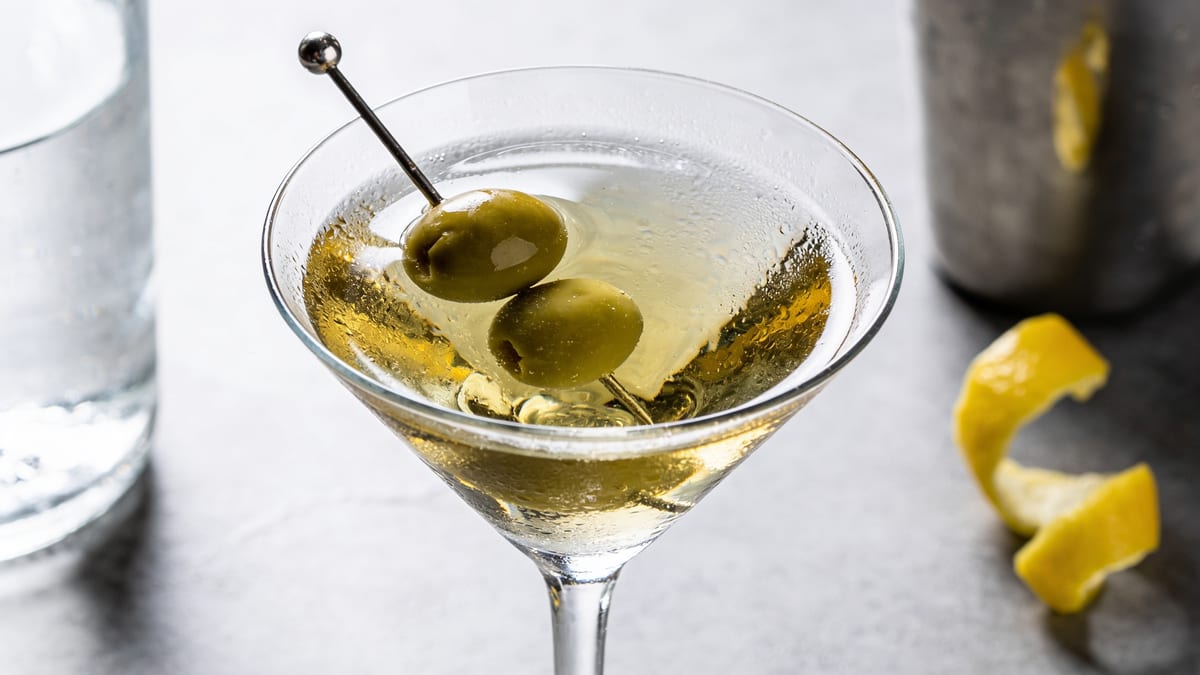
Fill a martini or coupe glass with ice water and set it aside to chill. In a mixing glass, combine 75 ml (2½ oz) vodka and 15 ml (½ oz) dry vermouth, fill the glass two-thirds full with large, solid ice cubes, and stir smoothly with a bar spoon for about 30 seconds — roughly 40 to 50 rotations — until the outside of the mixing glass is frosty. Dump the ice water from your serving glass, strain the drink in, and finish with an expressed lemon twist or a skewer of green olives. Serve immediately, while it is still painfully cold.
- Stir, don't shake: stirring gives you a crystal-clear, silky drink; shaking clouds it with air bubbles and ice shards and over-dilutes it.
- Keep your vodka in the freezer and your opened vermouth in the fridge — a martini has nowhere for stale or warm ingredients to hide.
- Use big, dry, freezer-hard ice cubes; small or wet ice melts too fast and waters the drink down before it gets properly cold.
Equipment
- Mixing glass (or a pint glass)
- Jigger or measuring spoons
- Bar spoon or other long-handled spoon
- Julep or Hawthorne strainer
- Martini or coupe glass, about 150 ml / 5 oz
- Y-peeler or paring knife, for the lemon twist
Ingredients
Cocktail
- 75 ml vodka, 80-proof; store the bottle in the freezer if you can
- 15 ml dry vermouth, from a fresh bottle kept in the refrigerator
- 250 g ice cubes, large, solid cubes straight from the freezer
Garnish (choose one)
- lemon twist, a 5 cm / 2-inch strip of peel with the bitter white pith trimmed away
- green olives, such as Castelvetrano or manzanilla, threaded on a cocktail pick
Method
- STEP01
Fill your martini or coupe glass to the brim with ice and cold water and set it aside while you build the drink. A warm glass will undo all your careful stirring in seconds, so don't skip this — or better yet, keep a glass in the freezer.
- STEP02
If using a lemon twist, use a Y-peeler to shave a 5 cm (2-inch) strip of peel from a washed lemon, taking as little white pith as possible. If using olives, thread three onto a cocktail pick. Having the garnish ready means the finished drink never sits around getting warm.
- STEP03
Pour 75 ml (2½ oz) vodka and 15 ml (½ oz) dry vermouth into a mixing glass. Measure with a jigger rather than free-pouring — a martini is only three components, so even 10 ml off changes the balance noticeably. For a drier drink, drop the vermouth to 7 ml (¼ oz); for a wetter, softer one, go up to 22 ml (¾ oz).
- STEP04
Fill the mixing glass about two-thirds full with large, solid ice cubes. Slide the bar spoon down the inside wall and stir in smooth, quiet circles for about 30 seconds — roughly 40 to 50 rotations. You are aiming for two things at once: a temperature around -2°C (28°F) and about 20 percent dilution from melting ice, which softens the alcohol and gives the drink its silky body. The mixing glass should feel frosty in your hand when it's ready.
- STEP05
Dump the ice water out of your serving glass. Set a julep or Hawthorne strainer over the mixing glass and pour the martini in a single steady stream, holding back every last chip of ice so the surface stays mirror-clear.
- STEP06
For a twist, hold the lemon peel skin-side down a few centimeters above the drink and give it a sharp pinch to spray its oils across the surface, then rub the peel around the rim and drop it in or perch it on the edge. For olives, simply rest the pick across the glass. Serve right away — a martini's window of perfection is about ten minutes.
Make ahead
For a party, batch it: combine 450 ml (15 oz) vodka, 90 ml (3 oz) dry vermouth, and 135 ml (4½ oz) cold water in a bottle (that's six drinks with the dilution already built in), and freeze for at least 4 hours. The water mimics what stirring over ice would contribute, so you can pour straight from the freezer into chilled glasses and garnish — no stirring required.
Storage
A finished vodka martini doesn't keep — it warms and flattens within about ten minutes, so mix each one to order. The ingredients are another story: store vodka in the freezer indefinitely, and keep opened dry vermouth tightly capped in the refrigerator, where it stays lively for about 4 to 6 weeks (it is a wine and oxidizes just like one).
Variations
Dirty Vodka Martini
Add 15 ml (½ oz) olive brine to the mixing glass along with the vodka and vermouth, then stir and strain as usual and garnish with olives. The brine adds a savory, saline edge; start with less than you think you want, since you can always stir in more.
Vodka Gibson
Make the drink exactly as written but garnish with two or three cocktail onions instead of a twist or olives. The pickled onions add a gentle sweet-sour bite that plays surprisingly well against clean vodka.
Alcohol-Free Martini
Swap the vodka for a chilled non-alcoholic spirit alternative (a juniper- or quinine-forward one works best) and the vermouth for 15 ml (½ oz) of a non-alcoholic dry aperitif, plus a small pinch of salt to sharpen the flavors. Stir briefly — only 15 seconds or so, since there's no alcohol to tame — and serve with a lemon twist.
Serve with
Nutrition per serving
Nutrition values are estimates based on the metric measurements. Adjust as needed.
Frequently asked
Should a vodka martini be shaken or stirred?
Stirred, despite what the movies say. Shaking aerates the drink and shatters the ice, leaving you with a cloudy, slightly foamy martini flecked with ice chips that keep diluting it in the glass. Stirring for about 30 seconds chills the drink to roughly -2°C (28°F) while adding just the right amount of water, and the result is glassy, dense, and silky. If you genuinely prefer the sharper cold and lighter texture of a shaken drink, shake away — it's your cocktail — but try this vodka martini recipe stirred at least once for comparison.
What's the best vodka for a vodka martini?
Use one you'd happily sip neat, because there's nothing to hide behind — a martini is essentially chilled, diluted vodka with an aromatic frame. A clean mid-shelf bottle is all you need; wheat-based vodkas tend to read soft and faintly sweet, rye-based ones a little spicier, and potato vodkas creamier in texture. Ultra-premium bottles are lovely but the improvement is subtle once the drink is properly cold.
How much vermouth should I use?
This vodka martini recipe uses a 5:1 ratio — 75 ml vodka to 15 ml dry vermouth — which keeps the drink recognizably dry while still giving it aromatic lift and a rounder texture. 'Extra dry' means less vermouth (a quarter ounce, a rinse of the glass, or famously just a glance at the bottle), while a 'wet' martini at 3:1 or 2:1 tastes noticeably more herbal and wine-like. If your only experience is vermouth-phobic martinis, try the wetter end with a fresh bottle — stale vermouth, not vermouth itself, is usually what people dislike.
Does vermouth really need to be refrigerated?
Yes. Vermouth is a fortified, aromatized wine, not a spirit, and once opened it oxidizes just like an open bottle of white wine — it goes flat, nutty, and dull within a couple of months even in the fridge, and within weeks on a warm shelf. Keep it capped and refrigerated, buy small bottles (375 ml) if you drink martinis occasionally, and write the opening date on the label.
What's the difference between a vodka martini and a classic gin martini?
Only the base spirit, but it changes the personality of the drink completely. Gin brings juniper, citrus peel, and botanical spice that interlock with the herbs in dry vermouth, while vodka steps back and lets the drink read as pure, cold, and clean, with the vermouth and garnish doing the aromatic talking. That neutrality is exactly why garnish choice matters more here — a lemon twist makes it bright and perfumed, olives make it savory, and a splash of brine turns it dirty.
Cooked this? Rate it.
Real ratings from real cooks. We only show a score once enough of you have weighed in — no fabricated stars.