Peking Duck — Beijing Roast Duck with Pancakes
China's most celebrated dish: a duck dried and roasted until the skin is lacquered, mahogany and shatteringly crisp, carved and served with thin pancakes, scallion, cucumber and sweet bean (hoisin-style) sauce to roll at the table. Peking duck is a centuries-old Beijing art form built entirely around that famous crisp skin — and while restaurants use special ovens, a careful home method of air-drying and roasting gets you remarkably close.
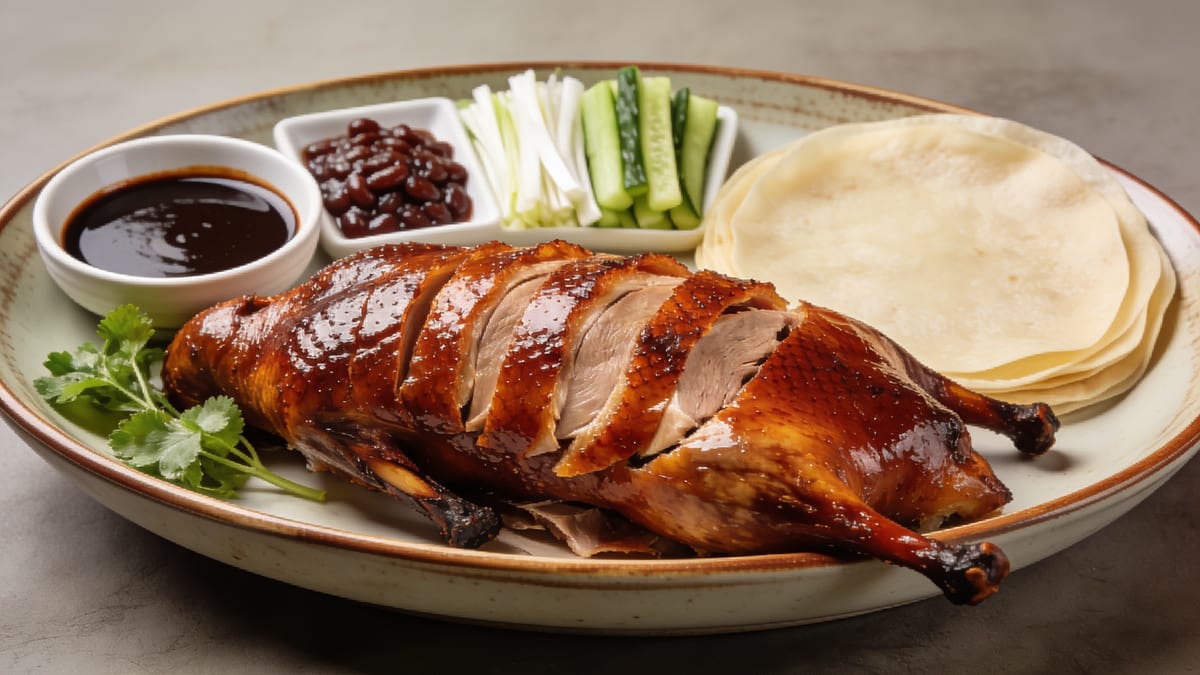
The whole game is dry, crisp skin. Loosen the duck's skin from the meat, scald it with boiling water so it tightens, then brush with a maltose-or-honey-and-vinegar glaze and air-dry it uncovered in the fridge for several hours to overnight (the drier the skin, the crispier it roasts). Roast at moderate heat, then crank the heat at the end, until the skin is deep mahogany and crackling crisp and the fat has rendered. Carve the skin and meat and serve with warm thin pancakes, slivered scallion and cucumber, and sweet bean or hoisin sauce, to roll and eat by hand.
- Crisp skin is everything: scald it, glaze it, and air-dry it uncovered (hours to overnight) before roasting.
- Separating the skin from the meat (and rendering the fat) is what makes it crisp, not greasy.
- Serve carved with thin pancakes, scallion, cucumber and sweet bean/hoisin sauce to wrap at the table.
Equipment
- Roasting rack & tray
- Kettle (for scalding)
- Fridge space (to air-dry)
מצרכים
Duck & glaze
- 1 whole duck
- 2 tbsp maltose or honey
- 1 tbsp rice vinegar; 250 ml hot water (for the glaze)
- Salt; (optional) five-spice for the cavity
To serve
- Thin Mandarin pancakes (or thin flour pancakes), warmed
- Scallion and cucumber, cut into fine strips
- Sweet bean sauce (tianmianjiang) or hoisin sauce
אופן ההכנה
- שלב01
Pat the duck dry. Loosen the skin from the breast and legs (blow air under it or work a spoon handle) so fat can render. Pour boiling water over the skin all over until it tightens and the pores close; pat dry.
- שלב02
Mix the maltose/honey, vinegar and hot water and brush it all over the skin. Set the duck on a rack and air-dry it uncovered in the fridge for at least 6 hours, ideally overnight — dry skin is the secret to crispness.
- שלב03
Roast the duck breast-up on a rack at 180°C/350°F for about 60–70 minutes so the fat renders, then raise the heat to 220°C/425°F (or briefly grill) for the last 10–15 minutes until the skin is deep mahogany and crackling crisp. Don't let it burn.
- שלב04
Rest the duck 10–15 minutes. Meanwhile, steam or warm the thin pancakes and arrange the scallion, cucumber and sauce.
- שלב05
Carve off the prized crisp skin and slice the meat. Serve on a platter for everyone to build their own: smear a pancake with sweet bean/hoisin sauce, add skin, meat, scallion and cucumber, roll up and eat by hand.
Make ahead
The air-drying is itself an overnight make-ahead step — start a day before. You can prep the pancakes, scallion, cucumber and sauce ahead. Roast the duck to serve, as the skin's crispness fades quickly. Leftover duck is a bonus for other dishes.
Storage
The crisp skin is best the moment it's carved and never the same once stored. Leftover meat keeps 3 days refrigerated and is excellent in fried rice, noodle soup or stir-fries (don't expect the skin to stay crisp). The carcass makes a superb stock. Warm pancakes fresh.
Variations
Two courses
Restaurant-style: serve the skin and meat in pancakes first, then stir-fry the rest of the meat with bean sprouts, or make duck soup from the bones.
Crispy aromatic duck
The takeaway-style version steams then deep-fries the spiced duck before shredding — easier crisp skin at home.
Duck crowns / breasts
Short on time or oven space? Apply the scald-glaze-dry-roast method to duck crowns or breasts.
Serve with
Nutrition per serving
Nutrition values are estimates based on the metric measurements. Adjust as needed.
שאלות נפוצות
Why air-dry the duck before roasting?
Dry skin is the entire secret to Peking duck's signature crackling crispness. Scalding tightens the skin and the glaze helps it lacquer, but it's the long air-drying (uncovered in the fridge, several hours to overnight) that removes surface moisture so the skin roasts up crisp and mahogany rather than soft. Skip it and the skin will be flabby.
How do I get the skin really crisp at home?
Several steps work together: loosen the skin from the meat so the fat renders out from underneath, scald the skin with boiling water, glaze it, and air-dry it thoroughly. Then roast at a moderate temperature to render the fat, finishing with a blast of high heat to crisp and colour the skin. Patience with the drying is the biggest factor.
What sauce and pancakes do I serve with Peking duck?
Thin Mandarin pancakes (báobǐng) — small, soft, steamed flour wrappers — plus sweet bean sauce (tianmianjiang) or hoisin sauce, and fine strips of scallion and cucumber. You smear a pancake with sauce, add crisp skin and meat with the vegetables, roll it up and eat by hand. The pancakes and garnishes are essential to the experience.
Can I make Peking duck without a special oven?
Yes — restaurants use hung, wood-fired or special ovens, but a careful home method (loosen, scald, glaze, air-dry, then roast low-then-high in a regular oven on a rack) gets you remarkably crisp results. It won't be identical to a Beijing roast-duck house, but it's genuinely impressive and worth the effort for a special occasion.
What do I do with the leftover duck meat?
Plenty — traditionally the meat not eaten in pancakes is stir-fried (e.g. with bean sprouts) or the bones simmered into a soup, sometimes served as a second course. At home, leftover duck meat is delicious in fried rice, noodle soups, stir-fries or even a duck salad. The carcass makes a rich stock. Only the skin needs eating fresh.
Cooked this? Rate it.
Real ratings from real cooks. We only show a score once enough of you have weighed in — no fabricated stars.