Pizza Margherita — Neapolitan Pizza at Home
The original Neapolitan pizza: a slow-fermented dough stretched thin, topped simply with San Marzano tomato, fresh mozzarella, and basil, baked as hot as your oven goes until the crust blisters. Three toppings, total respect for the dough.
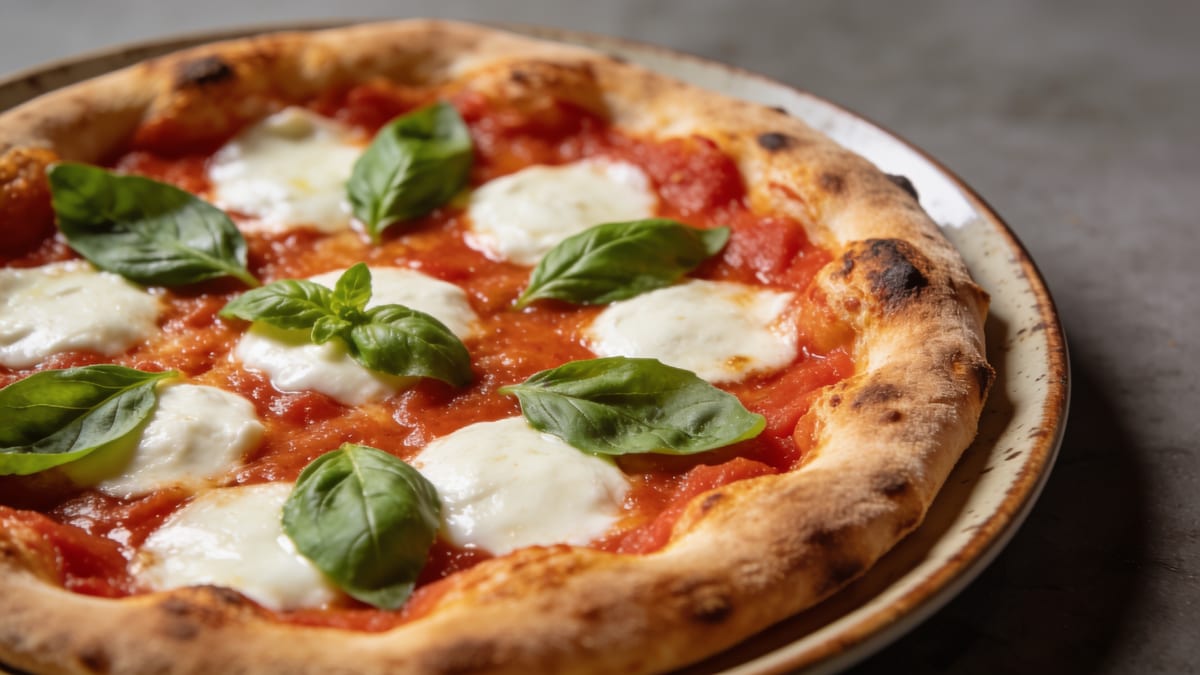
Make a lean dough (flour, water, salt, a little yeast) and cold-ferment it 24–48 hours. Stretch a ball thin by hand, leaving a puffy rim. Top with crushed San Marzano tomato, torn fresh mozzarella, and a little olive oil. Bake on a preheated stone/steel as hot as your oven allows (250–300°C) until the crust blisters, then finish with fresh basil.
- Long, cold fermentation (24–48h) is what gives flavour and a digestible, blistered crust — not a same-day rush.
- Stretch by hand, never a rolling pin, to keep the air in the rim (cornicione).
- Maximum heat on a preheated stone or steel — a hot surface is how you get leopard-spotted crust at home.
Equipment
- Baking stone or steel
- Large bowl
- Peel or flat baking sheet
- Oven at maximum
מצרכים
Dough (2 balls)
- 300 g 00 or bread flour
- 200 ml water, room temperature
- 7 g fine salt
- 1 g instant yeast
Topping (per pizza)
- 80 g San Marzano tomatoes, hand-crushed, lightly salted
- 80 g fresh mozzarella (fior di latte), torn and drained
- A few fresh basil leaves
- 5 ml extra-virgin olive oil
אופן ההכנה
- שלב01
Dissolve the yeast in the water, add the flour and salt, and mix to a shaggy dough. Knead 8–10 minutes until smooth and elastic. Cover and rest 30 minutes.
- שלב02
Divide into 2 balls, place in a covered container, and refrigerate 24–48 hours. This slow ferment builds flavour and an airy, digestible crust.
- שלב03
Take the dough out 2 hours before baking to come to room temperature. Put a baking stone or steel on the top rack and heat the oven to its maximum (250–300°C) for at least 45 minutes.
- שלב04
On a floured surface, gently press and stretch a ball from the centre outward by hand, leaving a 2 cm puffy rim. Never use a rolling pin — it pushes the air out of the crust.
- שלב05
Slide the base onto a floured peel. Spread a thin layer of crushed tomato, dot with torn mozzarella, and drizzle a little olive oil. Don't overload — Margherita is about restraint.
- שלב06
Slide onto the hot stone. Bake 6–10 minutes (less if hotter) until the crust is puffed and leopard-spotted and the cheese bubbles. Finish with fresh basil leaves out of the oven.
Make ahead
The dough is meant to be made ahead — 24–48 hours of cold fermentation is the whole point. Balls can also be frozen; thaw overnight in the fridge before use.
Storage
Best straight from the oven. Leftover slices reheat well in a hot dry pan or oven (never microwave — the crust goes leathery). The dough keeps 3 days refrigerated.
Variations
Marinara
The other Neapolitan classic: tomato, garlic, oregano, olive oil — no cheese. Naturally vegan.
Bufala
Use mozzarella di bufala, added partway through baking so it doesn't flood the base.
No stone? Pan pizza
Press the dough into an oiled cast-iron pan, top, and bake — a thicker, crisp-bottomed home version.
Serve with
Nutrition per serving
Nutrition values are estimates based on the metric measurements. Adjust as needed.
שאלות נפוצות
Why ferment the dough so long?
A long, cold fermentation (24–48 hours) develops flavour and makes the crust lighter, more digestible, and able to blister properly. Same-day dough works but tastes flat and bready by comparison. Time is the most important ingredient.
Can I use a rolling pin?
No — a rolling pin presses all the gas out of the dough, giving a flat, cracker-like crust with no airy rim (cornicione). Stretch gently by hand from the centre outward to preserve the air at the edge.
How do I get a blistered crust at home?
Maximum heat and a preheated baking stone or steel. A home oven can't match a wood-fired oven, but a screaming-hot surface on the top rack gets you close — the dough hits the heat and springs and chars before it dries out.
What tomatoes and cheese should I use?
San Marzano (or good plum) tomatoes, hand-crushed and lightly salted — no need to cook them first. Fresh mozzarella (fior di latte), torn and well-drained so it doesn't flood the base. Quality and restraint over quantity.
Why is my pizza soggy?
Usually too much sauce or wet mozzarella. Use a thin layer of tomato and drain the torn mozzarella on paper towel first. A hot stone and a quick bake also keep the base crisp.
Cooked this? Rate it.
Real ratings from real cooks. We only show a score once enough of you have weighed in — no fabricated stars.