बेक्ड लॉबस्टर टेल
Butterflied lobster tails brushed with garlic-lemon butter and baked hot and fast until the meat is snowy, sweet, and just barely firm. Propping the meat up over the shell lets the butter baste it as it roasts, so every bite stays juicy instead of rubbery. It looks like a steakhouse splurge but takes about half an hour, most of it hands-off.
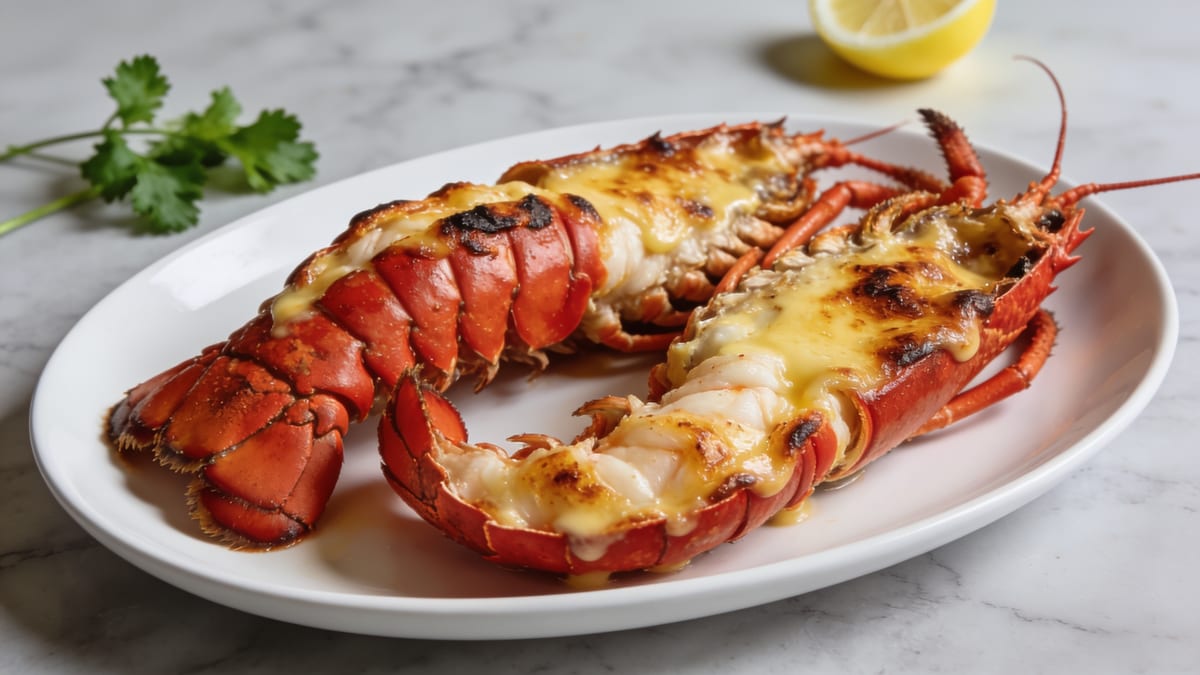
Thaw four 5-to-6-ounce lobster tails, then use kitchen shears to cut down the center of the top shell to the tail fan, loosen the meat from the shell, and lift it up to rest on top (butterflying). Set the tails on a rimmed baking sheet, brush generously with melted butter mixed with minced garlic, lemon juice, paprika, salt, and pepper, and bake at 425°F (220°C) for 10 to 13 minutes, until the meat is opaque and an instant-read thermometer in the thickest part reads 135-140°F (57-60°C). Rest 3 minutes, spoon over the pan butter, and serve with lemon wedges.
- Pull the tails at 135-140°F (57-60°C) internal — carryover heat finishes them, and anything past 145°F turns chewy fast.
- Butterfly the meat up over the shell so the garlic butter bastes it as it bakes instead of dripping into the pan.
- Thaw frozen tails overnight in the fridge (or 30-60 minutes sealed in cold water); baking from frozen cooks the outside to rubber before the center is done.
Equipment
- Kitchen shears
- Rimmed baking sheet or shallow baking dish
- Small saucepan
- Pastry brush
- Instant-read thermometer
- Cutting board
सामग्री
Lobster
- cold-water lobster tails (about 5-6 oz / 140-170 g each), thawed if frozen, cold-water tails (Maine, Canada) are sweeter and more tender than warm-water
Garlic butter
- 60 g unsalted butter, melted
- garlic, finely minced
- 15 ml fresh lemon juice
- 2 g sweet paprika, mostly for color; smoked paprika works too
- 3 g fine sea salt
- 1 g freshly ground black pepper
To serve
- 4 g fresh flat-leaf parsley, chopped
- lemon, cut into wedges
विधि
- स्टेप01
If your lobster tails are frozen, thaw them overnight in the refrigerator, or seal them in a zip-top bag and submerge in cold water for 30-60 minutes until fully pliable. Pat them very dry with paper towels — wet shells steam instead of roast. Heat the oven to 425°F (220°C) with a rack in the upper third.
- स्टेप02
Hold a tail top-shell up and, with kitchen shears, cut straight down the center of the shell from the wide end to the base of the tail fan — cut the shell only, not the fan. Flip the tail over and press gently to crack the ribs on the underside. Slide your thumbs between meat and shell to loosen it, keeping it attached at the fan, then lift the meat up through the split and rest it on top of the closed shell. Repeat with the remaining tails and remove the dark vein along the top of each if you see one.
- स्टेप03
In a small saucepan over low heat, melt the butter with the minced garlic and let it sizzle gently for about 1 minute so the garlic softens without browning. Off the heat, stir in the lemon juice, paprika, salt, and pepper.
- स्टेप04
Arrange the tails on a rimmed baking sheet or in a shallow baking dish, propping them against each other or on a bed of coarse salt if they tip over. Brush the meat generously with about two-thirds of the garlic butter, working it into the split so it seeps down around the meat. Reserve the rest for serving.
- स्टेप05
Bake at 425°F (220°C) for 10-13 minutes, depending on size. The meat is done when it is opaque and white all the way through and an instant-read thermometer inserted into the thickest part reads 135-140°F (57-60°C). A 5-6 oz tail usually lands right around the 11-12 minute mark; start checking at 10.
- स्टेप06
For a lightly bronzed top, switch the oven to broil for the final 1-2 minutes and watch constantly — the butter and paprika color quickly. Skip this if your tails are small or already at temperature.
- स्टेप07
Rest the tails 3 minutes on the pan so the juices settle and carryover heat finishes the centers. Rewarm the reserved garlic butter, spoon it over the meat, and finish with chopped parsley and a squeeze of lemon. Serve immediately.
Make ahead
You can butterfly the tails and mix the garlic butter up to a day ahead: keep the tails covered on a plate in the coldest part of the fridge and store the butter separately (rewarm it to liquid before brushing). Do not butter the tails in advance — the salt draws moisture out of the meat. Bake just before serving; the active cooking window is only about 15 minutes, so this is an easy dish to fire à la minute.
Storage
Baked lobster is best eaten right away, but leftovers keep in an airtight container in the refrigerator for up to 2 days. Reheat gently — covered in a 300°F (150°C) oven with a spoonful of butter or water for 5-8 minutes, just until warm — or pull the cold meat for lobster rolls or salad, since a second hard blast of heat will toughen it. Freezing cooked tails is not recommended; the texture turns mealy.
Variations
Dairy-free garlic-herb tails
Swap the butter for 60 ml (1/4 cup) good olive oil warmed with the garlic, and add 1/2 tsp chopped fresh thyme or oregano. The tails brown a touch less but stay just as juicy, and the dish becomes dairy-free and paleo-friendly.
Parmesan-crusted
After 8 minutes of baking, top each tail with a mixture of 2 tbsp grated Parmesan, 2 tbsp panko, and 1 tbsp melted butter, then broil 1-2 minutes until golden. (Skip the panko or use gluten-free crumbs to keep it gluten-free.)
Spicy Cajun butter
Replace the paprika, salt, and pepper with 2 tsp salt-free Cajun or Creole seasoning plus 1/4 tsp cayenne, and finish with sliced scallions instead of parsley. Great alongside dirty rice or grits.
Serve with
Nutrition per serving
Nutrition values are estimates based on the metric measurements. Adjust as needed.
अक्सर पूछे जाने वाले
What oven temperature is best for baking lobster tails?
425°F (220°C) is the sweet spot for a lobster tail recipe: the oven is hot enough to cook a 5-6 oz tail in about 10-13 minutes and lightly concentrate the garlic butter, but not so hot that the outside toughens before the center comes up to temperature. At 350°F the tails take longer and can dry out; under the broiler alone, the top can scorch while the base lags.
How do I know when baked lobster tails are done?
Use an instant-read thermometer in the thickest part of the meat and pull the tails at 135-140°F (57-60°C); carryover heat during the 3-minute rest carries them to a perfect finish. Visually, the meat should be opaque white with no translucent gray patches, and it should feel just firm when pressed. Past about 145°F lobster tightens noticeably and turns chewy, so err on the early side and check again.
Can I bake lobster tails straight from frozen?
It's not worth it. Frozen tails bake unevenly — the surface overcooks and turns rubbery while the core is still cold — and you can't butterfly a frozen tail cleanly. Thaw overnight in the fridge, or seal the tails in a zip-top bag and submerge in cold water for 30-60 minutes. Once pliable, pat them dry and proceed with the recipe as written.
Why butterfly the tails instead of just cutting the shell open?
Lifting the meat up to sit on top of the shell does three things: the garlic butter clings to and bastes the meat instead of pooling under it, the meat cooks evenly because it isn't insulated by the shell, and the finished tail has that dramatic piggyback presentation. It takes about a minute per tail with kitchen shears and is the single biggest upgrade in any oven lobster tail recipe.
Should I bake or broil lobster tails?
Baking is gentler and far more forgiving, which is why this lobster tail recipe uses the oven at 425°F rather than the broiler for the main cook. Broiling works, but the margin between browned and scorched is under a minute, especially with paprika in the butter. The best of both: bake until nearly done, then broil for a final 1-2 minutes if you want color on top.
Cooked this? Rate it.
Real ratings from real cooks. We only show a score once enough of you have weighed in — no fabricated stars.