बटरक्रीम फ्रॉस्टिंग
Silky, pipe-ready American buttercream frosting that whips up glossy and stable in ten minutes flat, with just enough salt and vanilla to keep all that sweetness in check. This is the workhorse frosting that crusts lightly for clean piping yet stays soft enough to spread like a dream.
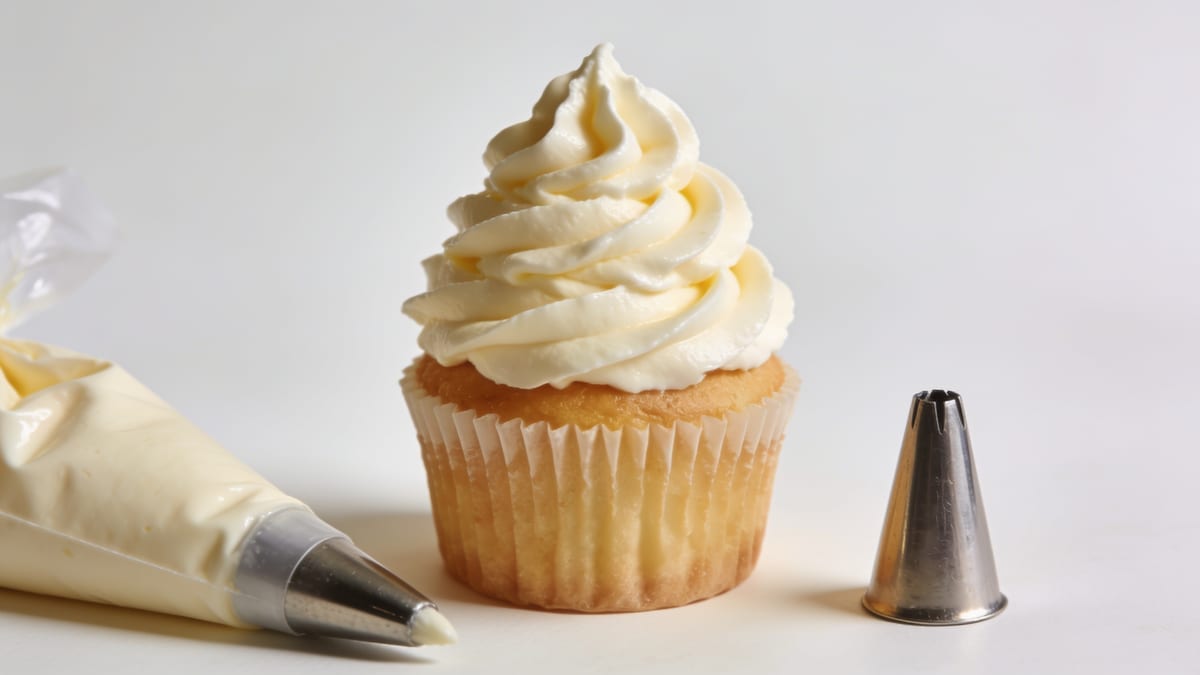
Beat softened unsalted butter alone until pale and fluffy (about 3 minutes), then add sifted powdered sugar in two additions on low so it doesn't dust your kitchen, and finally whip in vanilla, salt, and a splash of cream. Two to three minutes of final whipping on medium-high gives you a light, spreadable, pipe-ready buttercream frosting. The whole thing lives or dies on butter temperature — cool room temp, around 65°F/18°C, not greasy-soft.
- Sift the powdered sugar and add it in stages on low speed to avoid lumps and a sugar cloud.
- Butter should be 'cool room temperature' (65°F/18°C) — dented by a finger but not oily.
- Whip the butter first, then add sugar; a pinch of salt and a beat on low at the end tames sweetness and kills air bubbles.
Equipment
- Stand mixer with paddle attachment (or hand mixer)
- Fine-mesh sieve for sifting
- Silicone spatula
- Measuring cups and spoons or a kitchen scale
सामग्री
Buttercream
- 340 g unsalted butter, cool room temperature, About 65°F/18°C — pliable but not greasy
- 600 g powdered sugar (confectioners' sugar), sifted, Sift after measuring to remove lumps
- 10 ml pure vanilla extract, Use clear vanilla for a stark-white frosting
- 1 g fine salt, Dissolves better than coarse salt
- 30–45 ml heavy cream or whole milk, Add gradually to reach spreadable consistency
विधि
- स्टेप01
Pull the butter out 45–60 minutes ahead so it comes to a cool room temperature, about 65°F/18°C. Press a finger into it: it should dent cleanly and hold the shape without smearing or leaving grease behind. Meanwhile, sift the powdered sugar into a bowl to break up every lump — this is the single biggest guard against a grainy frosting.
- स्टेप02
Put the butter in the stand-mixer bowl fitted with the paddle. Beat on medium-high for 3 minutes, scraping down the bowl once, until the butter is noticeably paler, fluffy, and almost mousse-like. Creaming the butter fully before any sugar goes in is what makes American buttercream light instead of dense.
- स्टेप03
With the mixer OFF, add half the sifted powdered sugar. Start on the lowest speed until the sugar is absorbed, then raise to medium for 30 seconds. Stop, add the remaining sugar, and repeat. Keeping the speed low at the start prevents a powdered-sugar cloud and keeps the mix from breaking.
- स्टेप04
Add the vanilla, salt, and 2 tablespoons (30 ml) of cream. Beat on medium until fully combined, about 1 minute. Assess the texture: for piping you want it to hold a stiff peak; for spreading, drizzle in the last tablespoon of cream until it moves like soft peanut butter.
- स्टेप05
Turn the mixer to medium-high and whip for 2 to 3 minutes until the buttercream is light, glossy, and pale. It will visibly increase in volume and lose its yellow tint. Don't over-whip past this point or you'll beat in too much air for clean piping.
- स्टेप06
Switch to the lowest speed (or hand-mix with a spatula) for 1 to 2 minutes to press out large air bubbles. This 'paddle down' step gives you the smooth, dense finish that spreads without holes — professional decorators never skip it.
- स्टेप07
Frost or pipe immediately for the easiest handling. If the buttercream has been sitting, re-beat for 30 seconds to restore its silky texture before using. Keep unused frosting covered so a crust doesn't form on the surface.
Make ahead
This buttercream frosting is ideal for making ahead. Prepare it up to 2 weeks in advance and refrigerate, or freeze up to 3 months in a zip-top bag with the air pressed out. Thaw overnight in the fridge, then let it sit at room temperature for an hour and re-whip until fluffy. If it looks broken or separated after chilling, just keep beating — it always comes back together.
Storage
Store in an airtight container at cool room temperature for up to 2 days, in the refrigerator for up to 2 weeks, or frozen for up to 3 months. Bring refrigerated or frozen buttercream fully back to room temperature, then re-whip for 1–2 minutes to bring back its smooth, spreadable texture before using. A cake frosted with this buttercream keeps at room temperature for 2–3 days, loosely covered.
Variations
Chocolate Buttercream
Reduce the powdered sugar to 4 cups (480 g) and beat in ¾ cup (75 g) sifted unsweetened cocoa powder with the sugar, plus an extra 1–2 tablespoons of cream to loosen. For a deeper flavor, add 60 g cooled melted dark chocolate with the vanilla.
Cream Cheese Buttercream
Cut the butter to 1 cup (226 g) and beat in 8 oz (226 g) cold-but-pliable full-fat cream cheese after creaming the butter. Reduce cream to 1 tablespoon; the frosting will be softer and tangier — chill 20 minutes before piping.
Almond or Lemon
Swap 1 teaspoon of the vanilla for pure almond extract, or replace the cream with fresh lemon juice and add 1 tablespoon lemon zest for a bright, less-sweet finish.
Serve with
Nutrition per serving
Nutrition values are estimates based on the metric measurements. Adjust as needed.
अक्सर पूछे जाने वाले
Why is my buttercream frosting grainy?
Graininess almost always comes from unsifted powdered sugar or butter that was too cold to cream properly. Always sift the confectioners' sugar and start with butter at a cool room temperature (65°F/18°C). If your finished buttercream frosting still feels gritty, keep whipping on medium for another 2–3 minutes — the sugar continues to dissolve as it beats.
How do I make buttercream frosting less sweet?
American buttercream is sweet by design, but you have levers: increase the salt to ½ teaspoon, add an extra ½ teaspoon of vanilla, or replace some cream with a tablespoon of tangy sour cream or lemon juice. Cutting the powdered sugar by a cup and adding more butter also mellows the sweetness while keeping it stable.
Can I make buttercream frosting ahead of time?
Yes — it stores beautifully. Refrigerate up to 2 weeks or freeze up to 3 months. Bring it fully to room temperature and re-whip for 1–2 minutes before using. If it looks curdled coming out of the fridge, just keep beating; it comes back together every time.
How much buttercream frosting do I need for a cake?
This batch (about 4 cups / 950 ml) covers and fills one 8- or 9-inch two-layer cake with enough for a simple piped border, or frosts 24 cupcakes generously with a piping tip. For an elaborately decorated tiered cake, plan to make 1.5 to 2 batches.
What's the best butter to use?
Use a good-quality unsalted butter so you control the salt. Higher-fat European-style butter (82%+) makes a richer, silkier buttercream, while standard American butter gives a slightly whiter, more neutral result. Whatever you choose, temperature matters more than brand — cool room temp is non-negotiable.
Cooked this? Rate it.
Real ratings from real cooks. We only show a score once enough of you have weighed in — no fabricated stars.