ईल सॉस (उनागी सॉस)
Eel sauce, or unagi no tare, is Japan's glossy sweet-savory glaze built from just soy sauce, mirin, sake, and sugar simmered down to a pourable syrup, and despite the name there is no eel in it at all. Slow reduction concentrates the salt and dark-caramel sweetness so the sauce clings to grilled eel, sushi rolls, and rice without any thickeners. Cooking the alcohol off first and letting the sauce cool is what tells you exactly how thick it will set.
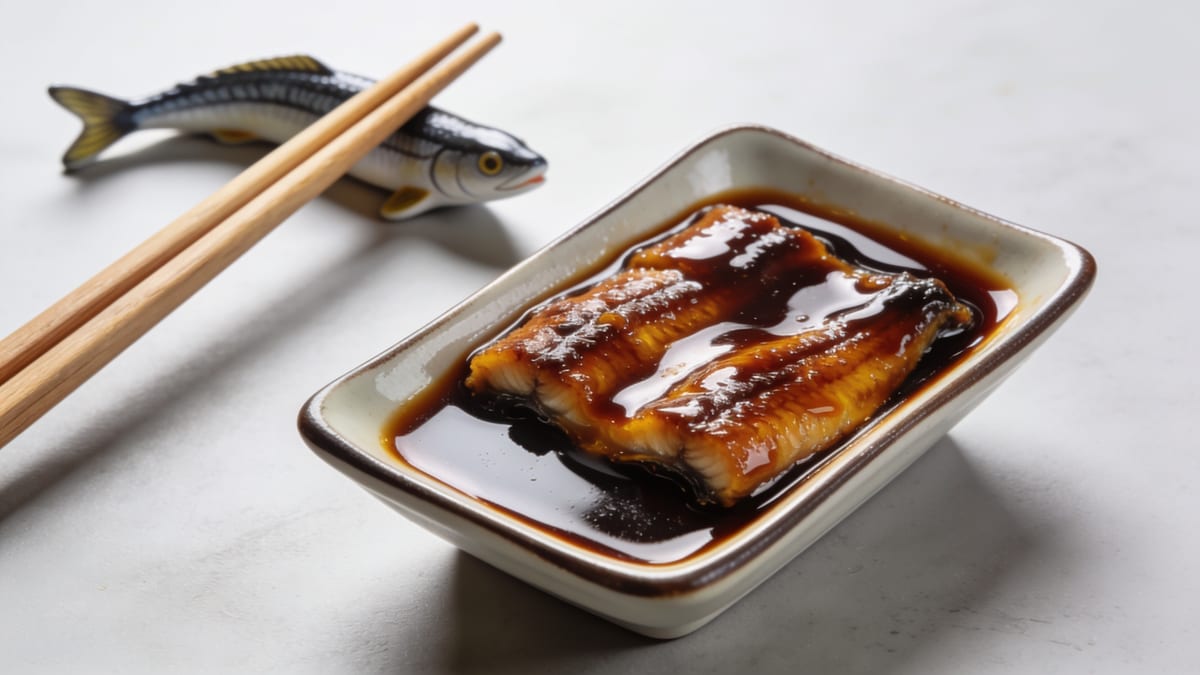
Simmer sake and mirin in a small saucepan for 2 minutes to burn off the raw alcohol, stir in an equal measure of soy sauce plus a quarter cup of sugar until dissolved, then bring to a gentle boil and drop to a steady simmer; reduce uncovered for 12 to 15 minutes, stirring now and then, until the sauce darkens and lightly coats the back of a spoon, remembering it thickens further as it cools, then take it off the heat and rest it 10 minutes before bottling.
- Pull it off the heat while it still looks a touch thin, because it sets to a syrup as it cools and over-reducing turns it tacky and bitter.
- Cook the sake and mirin down first so the finished sauce tastes rounded, not sharp with alcohol.
- Swap regular soy sauce for tamari to make the whole batch gluten-free without changing the method.
Equipment
- Small saucepan
- Wooden spoon or silicone spatula
- Measuring cups and spoons
- Whisk
- Glass jar or squeeze bottle with lid
सामग्री
Sauce
- 120 ml soy sauce, regular Japanese shoyu; use tamari for gluten-free
- 120 ml mirin, sweet Japanese rice wine
- 60 ml sake, or dry white wine
- 50 g granulated sugar
विधि
- स्टेप01
Pour the sake and mirin into a small saucepan and bring to a simmer over medium heat. Let it bubble gently for 2 minutes to drive off the raw alcohol, which rounds out the finished flavor.
- स्टेप02
Add the soy sauce and sugar. Stir with a whisk or spoon until the sugar fully dissolves and the liquid looks uniform.
- स्टेप03
Raise the heat until the sauce reaches a gentle boil, then lower it to a steady, lazy simmer so the surface just breaks with small bubbles.
- स्टेप04
Simmer uncovered, stirring occasionally, for 12 to 15 minutes until the sauce has reduced by roughly a third, darkened, and lightly coats the back of a spoon.
- स्टेप05
Drag a finger across the coated spoon; it should leave a clear line. Remember the sauce thickens noticeably as it cools, so stop while it still looks slightly thin. Remove from the heat.
- स्टेप06
Let the sauce cool in the pan for about 10 minutes, where it will thicken to a pourable syrup, then transfer to a clean jar or squeeze bottle.
Make ahead
This is an ideal make-ahead condiment; the flavor actually deepens after a day in the fridge. Simmer a double batch, cool, and keep it bottled so you can drizzle it over rice bowls, tofu, or sushi any night of the week.
Storage
Cool completely, then pour into a clean airtight jar or squeeze bottle and refrigerate. The high salt and sugar content act as preservatives, so it keeps for about 3 to 4 weeks. If it firms up when cold, warm the jar in a bowl of hot water or microwave it for a few seconds to loosen it.
Variations
Gluten-free eel sauce
Replace the soy sauce with an equal amount of certified gluten-free tamari. The color runs slightly darker and the flavor a touch deeper, but the method and reduction time stay identical.
Quick cornstarch version
Short on time? Simmer the sauce for just 5 minutes, then whisk in a slurry of 1 teaspoon cornstarch dissolved in 1 tablespoon cold water. Cook 1 minute more until glossy and thick, handy when you want body without a long reduction.
Alcohol-free
Skip the sake and mirin and use 180 ml water, 60 g sugar, and 1 tablespoon rice vinegar with the soy sauce. Reduce as usual for a family-friendly glaze; it won't be quite as complex but works well on rice bowls and tofu.
Serve with
Nutrition per serving
Nutrition values are estimates based on the metric measurements. Adjust as needed.
अक्सर पूछे जाने वाले
Does eel sauce actually contain eel?
No. Eel sauce (unagi sauce) gets its name because it is the traditional glaze brushed over grilled unagi, not because eel is an ingredient. This version is made only from soy sauce, mirin, sake, and sugar, so it is completely plant-based and safe for anyone avoiding fish.
How do I store homemade eel sauce and how long does it last?
Cool it fully, then pour into a clean airtight jar or squeeze bottle and refrigerate. The high salt and sugar act as preservatives, so eel sauce keeps for about 3 to 4 weeks. If it firms up when cold, warm the jar in hot water or microwave it for a few seconds to loosen it.
Can I make eel sauce without sake and mirin?
Yes. Replace the sake with water and the mirin with 60 ml water plus an extra 2 tablespoons of sugar, adding a splash of rice vinegar for brightness. The texture stays the same, though the sauce loses a little of the depth the rice wines give traditional eel sauce.
My eel sauce is too thin or too thick, what went wrong?
Eel sauce thickens dramatically as it cools, so judge it warm, not hot: it should just coat a spoon when you pull it off the heat. Too thin means it needs a few more minutes of simmering; too thick or tacky means it reduced too far, so whisk in a tablespoon of water over low heat to bring it back.
Is this eel sauce gluten-free?
Not as written, because regular Japanese soy sauce contains wheat. Swap in a certified gluten-free tamari at the same measurement and the sauce is naturally gluten-free, since mirin, sake, and sugar contain no gluten.
Cooked this? Rate it.
Real ratings from real cooks. We only show a score once enough of you have weighed in — no fabricated stars.