Ayam Piccata
Chicken piccata is the Italian-American weeknight hero: thin, golden-crusted chicken cutlets draped in a glossy pan sauce of lemon, white wine, butter, and briny capers. The light flour dredge does double duty — it browns into a delicate crust and then thickens the sauce as the pan drippings dissolve. Because the cutlets are pounded thin, they cook in minutes and stay juicy under all that bright, buttery sauce.
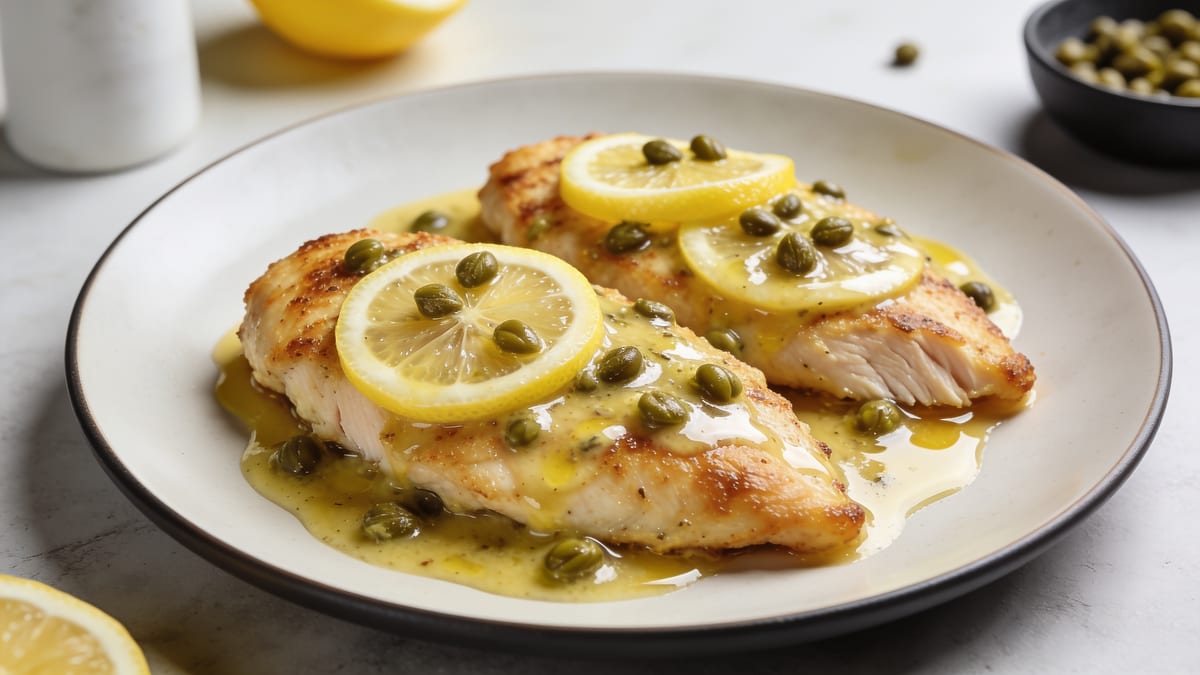
Halve 2 large chicken breasts horizontally and pound the 4 cutlets to about 6 mm (1/4 inch), season with salt and pepper, and dredge lightly in flour, shaking off the excess. Sear the cutlets in olive oil and a little butter in a hot 30 cm (12-inch) skillet, 2-3 minutes per side until golden, working in two batches; set aside. Deglaze the pan with 120 ml (1/2 cup) dry white wine, scraping up the browned bits, and reduce by half, then add 180 ml (3/4 cup) chicken broth, 60 ml (1/4 cup) fresh lemon juice, and 3 tablespoons capers and simmer until slightly thickened. Off the heat, swirl in 45 g (3 tablespoons) cold butter until the sauce turns glossy, return the chicken to coat, and finish with chopped parsley.
- Pound the cutlets to an even 6 mm (1/4 inch) so they cook through in the same few minutes it takes to brown them — thick spots mean dry edges.
- Shake off all but a thin film of flour: just enough to brown and thicken the sauce without turning it gluey.
- Add the final butter off the heat, swirling constantly — a hard boil at this stage breaks the emulsion and leaves the sauce greasy instead of glossy.
Equipment
- Large 30 cm (12-inch) stainless steel or other heavy skillet
- Meat mallet or small heavy saucepan (for pounding)
- Sharp chef's knife and cutting board
- Shallow dish or pie plate (for dredging)
- Tongs
- Citrus juicer
- Measuring cups and spoons
Bahan
Chicken cutlets
- large boneless, skinless chicken breasts, about 700 g / 1.5 lb total, halved horizontally into 4 cutlets
- 65 g all-purpose flour, for dredging; most is shaken off
- 5 g fine sea salt
- 1 g freshly ground black pepper
- 30 ml olive oil
- 15 g unsalted butter, for searing, added with the oil
Lemon-caper pan sauce
- garlic cloves, thinly sliced, optional but recommended
- 120 ml dry white wine, such as Pinot Grigio; substitute extra broth plus 1 tsp lemon juice
- 180 ml low-sodium chicken broth
- 60 ml fresh lemon juice, from about 2 lemons; bottled juice tastes flat here
- 25 g capers, drained, rinse if packed in salt
- 45 g cold unsalted butter, cubed, added off the heat to finish the sauce
- 8 g chopped flat-leaf parsley
- lemon, thinly sliced, optional, for simmering in the sauce and garnish
Cara membuat
- LANGKAH01
Lay each chicken breast flat and slice it in half horizontally with a sharp knife to make 4 thin cutlets. Place them between two sheets of plastic wrap or parchment and pound gently with a meat mallet or the bottom of a small saucepan to an even 6 mm (1/4 inch) thickness. Pat completely dry with paper towels — dry cutlets brown, wet ones steam.
- LANGKAH02
Season both sides of the cutlets with the salt and pepper. Spread the flour in a shallow dish, press each cutlet into it to coat both sides, then lift and shake firmly so only a thin, even film remains. Dredge just before cooking — flour that sits on the chicken turns gummy.
- LANGKAH03
Heat the olive oil and 15 g (1 tablespoon) butter in a large skillet over medium-high heat until the butter's foam subsides. Lay in 2 cutlets without crowding and cook undisturbed for 2-3 minutes, until the underside is golden. Flip with tongs and cook 2 minutes more, until just cooked through (internal temp 74°C / 165°F). Transfer to a plate.
- LANGKAH04
Repeat with the remaining 2 cutlets, adding a splash more oil if the pan looks dry. Don't scrub away the browned bits stuck to the pan — that fond is the backbone of the sauce. Set the second batch on the plate with the first; they will finish warming in the sauce later.
- LANGKAH05
Reduce the heat to medium. Add the sliced garlic, if using, and stir for 30 seconds until fragrant. Pour in the wine and scrape the bottom of the pan with a wooden spoon to dissolve the browned bits. Simmer until the wine has reduced by about half and no longer smells sharply of alcohol, about 2 minutes.
- LANGKAH06
Add the broth, lemon juice, capers, and lemon slices, if using. Simmer briskly until the sauce reduces enough to lightly coat the back of a spoon, 3-4 minutes. It should taste bright and punchy — the butter in the next step will round it out.
- LANGKAH07
Pull the pan off the heat and add the cold cubed butter, swirling and stirring until it melts creamily into a glossy sauce. Return the cutlets and any accumulated juices to the pan, spoon the sauce over, and let them warm through for a minute over low heat. Scatter with parsley and serve immediately.
Make ahead
You can halve, pound, and season the cutlets up to a day ahead; keep them covered in the refrigerator and dredge in flour only at cooking time. Juice the lemons, drain the capers, and measure the broth and wine in advance so the sauce comes together in one uninterrupted 10-minute sequence. The finished dish is best eaten straight from the pan.
Storage
Refrigerate leftovers in an airtight container for up to 3 days. Reheat gently in a covered skillet over low heat with a splash of broth or water to loosen the sauce; the microwave works in a pinch but can toughen the thin cutlets. Freezing is not recommended — the butter-emulsified sauce separates when thawed.
Variations
Gluten-free and dairy-free piccata
Dredge the cutlets in white rice flour or a 1:1 gluten-free blend — both brown beautifully and thicken the sauce the same way. For dairy-free, sear in olive oil only and finish the sauce with 2 tablespoons of extra-virgin olive oil or a dairy-free butter substitute swirled in off the heat.
Chicken thigh piccata
Swap in 6 boneless, skinless chicken thighs, pounded lightly to even them out. They need 4-5 minutes per side over medium heat and stay forgivingly juicy, with a deeper flavor that stands up well to the lemon and capers.
Creamy piccata
After reducing the sauce, stir in 80 ml (1/3 cup) heavy cream and simmer 1 minute before returning the chicken. Cut the lemon juice back to 3 tablespoons so the cream doesn't curdle, and skip the finishing butter — the cream does that job.
Serve with
Nutrition per serving
Nutrition values are estimates based on the metric measurements. Adjust as needed.
Pertanyaan umum
Can I make this chicken piccata recipe without wine?
Yes. Replace the wine with an equal amount of chicken broth plus an extra teaspoon of lemon juice, and deglaze exactly the same way. You lose a little of the wine's acidity and aroma, but the lemon and capers carry so much brightness that most people won't notice the difference.
Why did my piccata sauce turn out greasy or broken instead of glossy?
The finishing butter was almost certainly added over heat that was too high. Butter emulsifies into a sauce only when it melts slowly, so pull the pan completely off the burner, add the butter cold and cubed, and swirl constantly. If the sauce does break, whisk in a tablespoon of cold water or broth off the heat to bring it back together.
What's the best chicken piccata recipe swap for a gluten-free version?
White rice flour is the closest match — it browns into the same delicate crust and thickens the pan sauce just like all-purpose flour. A 1:1 gluten-free baking blend also works. Skip cornstarch as a dredge, though; it fries up into a harder, tempura-like shell that doesn't suit the dish.
Do I need to rinse the capers?
If your capers are brined (the common jarred kind), a quick drain is enough — their salty tang is part of the dish. If they're packed in salt, rinse them under cold water and soak for 5 minutes, or the sauce will end up overwhelmingly salty. Taste the finished sauce before adding any extra salt either way.
How do I keep the chicken from drying out?
Two things matter most: pound the cutlets to an even 6 mm (1/4 inch) so there are no thick spots that need extra time, and pull them at 74°C (165°F) — with cutlets this thin, that's only 2-3 minutes per side over medium-high heat. They also get a final minute warming in the sauce, so err on the side of pulling them early.
Cooked this? Rate it.
Real ratings from real cooks. We only show a score once enough of you have weighed in — no fabricated stars.