Empanadas — pastel panggang isi daging ala Argentina
Argentina's beloved hand pies: tender pastry discs folded around a savoury-sweet filling of beef, onion, cumin and pimentón, studded with hard-boiled egg, green olive and a hint of sugar. Sealed with the signature pleated 'repulgue' crimp and baked golden — a national snack eaten at every gathering, from asados to football nights.
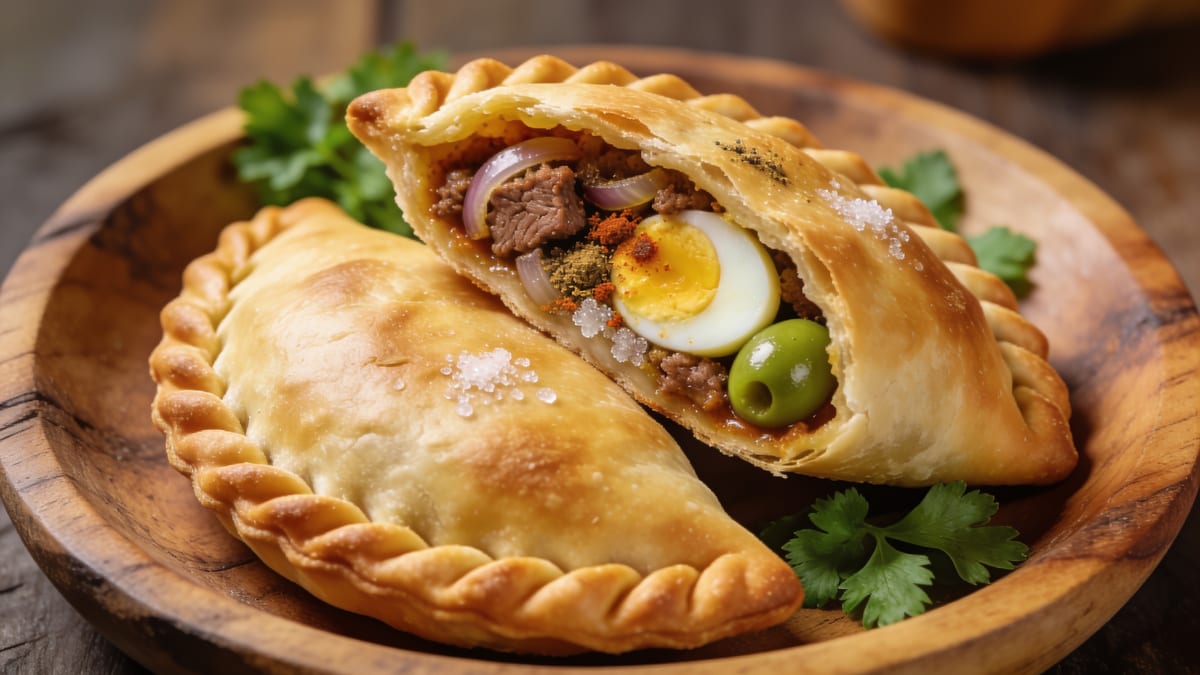
Make a filling (relleno) by cooking minced beef with lots of onion, cumin, paprika and a pinch of sugar, then chilling it — ideally overnight — with chopped hard-boiled egg and green olives. Cut rounds from a short pastry (or use empanada discs), spoon filling onto each, fold into half-moons and seal with a pleated repulgue crimp. Brush with egg and bake hot until golden. Serve warm.
- Chill the filling (ideally overnight) so it's firm and easy to seal — warm, wet filling leaks.
- Don't overfill: a heaped spoon per disc, with a clean rim to seal well.
- Master the repulgue (pleated crimp) — or just press with a fork — for a tight, leak-proof seal.
Equipment
- Frying pan
- Rolling pin (or empanada discs)
- Round cutter
- Baking trays
Bahan
Filling (relleno)
- 500 g minced beef
- 2 onions, finely diced
- 1 spring onion bunch, sliced
- 30 ml oil or beef fat
- 2 tsp ground cumin, 2 tsp sweet pimentón (paprika)
- 1 tsp chilli flakes, 1 tsp sugar, salt
- 2 hard-boiled eggs, chopped
- 12 green olives, chopped
Pastry & finish
- 12 empanada discs (tapas), or homemade short pastry
- 1 egg, beaten, to seal and glaze
Cara membuat
- LANGKAH01
Soften the onion and spring onion in the oil until sweet, then add the beef and brown it. Stir in the cumin, pimentón, chilli, sugar and salt and cook a few minutes more. Cool, then chill — ideally overnight.
- LANGKAH02
Stir the chopped hard-boiled egg and green olives through the cold filling. The mixture should be moist but not wet, and well seasoned.
- LANGKAH03
Lay out the empanada discs. Spoon a heaped tablespoon of filling onto each, keeping the rim clean. Brush the edge with beaten egg.
- LANGKAH04
Fold each disc into a half-moon, press out the air, and seal the edge — either pleat it over in the traditional repulgue, or crimp firmly with a fork.
- LANGKAH05
Brush the tops with beaten egg and bake at 200°C/400°F until deep golden, 20–25 minutes. Rest a few minutes and serve warm.
Make ahead
Make the filling a day or two ahead (it's better chilled) and freeze a batch of assembled raw empanadas. Bake straight from frozen whenever you need a crowd-pleasing snack — ideal for parties.
Storage
Baked empanadas keep 3 days refrigerated and reheat well in a hot oven. They freeze beautifully both baked and unbaked — freeze raw on a tray, then bag, and bake from frozen (add a few minutes). The filling can be made 2 days ahead.
Variations
Fried (fritas)
Deep-fry instead of baking for a blistered, crisp shell — common in many provinces.
Regional fillings
Try empanadas with ham and cheese (jamón y queso), chicken, or the spicy Salta and Tucumán styles.
Humita / caprese
Vegetarian fillings of creamed corn (humita) or tomato, mozzarella and basil.
Serve with
Nutrition per serving
Nutrition values are estimates based on the metric measurements. Adjust as needed.
Pertanyaan umum
Why chill the filling before assembling?
A cold, firm filling is much easier to portion and seal, and far less likely to leak or make the pastry soggy. Argentines traditionally make the relleno the day before — chilling overnight also lets the flavours meld and the fat set.
What is repulgue?
Repulgue is the decorative pleated crimp that seals an empanada, folded over by hand around the curved edge. Beyond looking beautiful, it makes a tight seal. Different fillings are traditionally marked with different repulgue patterns. A fork-crimp is a simple alternative.
Baked or fried?
Both are authentic and regional. Baked empanadas are the most common at home and a touch lighter; fried ones (fritas) have a blistered, extra-crisp shell. This recipe bakes them, but the same filling and discs fry beautifully.
Can I use shop-bought empanada discs?
Absolutely — ready-made 'tapas para empanadas' are widely used even in Argentina and give consistent results. Look for them in the freezer of Latin grocers. Otherwise make a simple short pastry with flour, fat and water.
Why is there sugar and egg in beef empanadas?
A pinch of sugar balances the savoury, slightly spiced beef in the classic Argentine style, and chopped hard-boiled egg (plus green olives, and sometimes raisins) is traditional — adding richness, texture and little bursts of brine. It's the signature sweet-savoury Argentine profile.
Cooked this? Rate it.
Real ratings from real cooks. We only show a score once enough of you have weighed in — no fabricated stars.