Lobio — semur kacang merah berbumbu khas Georgia
The soul-warming bean dish of Georgia: red kidney beans simmered until soft and creamy, then seasoned with the bright, unmistakable flavours of the Georgian pantry — blue fenugreek, coriander, garlic, fresh herbs, red wine vinegar and a little chilli. Lobio can be brothy and stewy or mashed to a coarse purée, and is traditionally served in a clay pot (ketsi) with crackly cornbread (mchadi), pickles and raw onion. It's hearty, tangy, deeply aromatic and entirely vegan — humble peasant food elevated by Georgia's singular spicing.
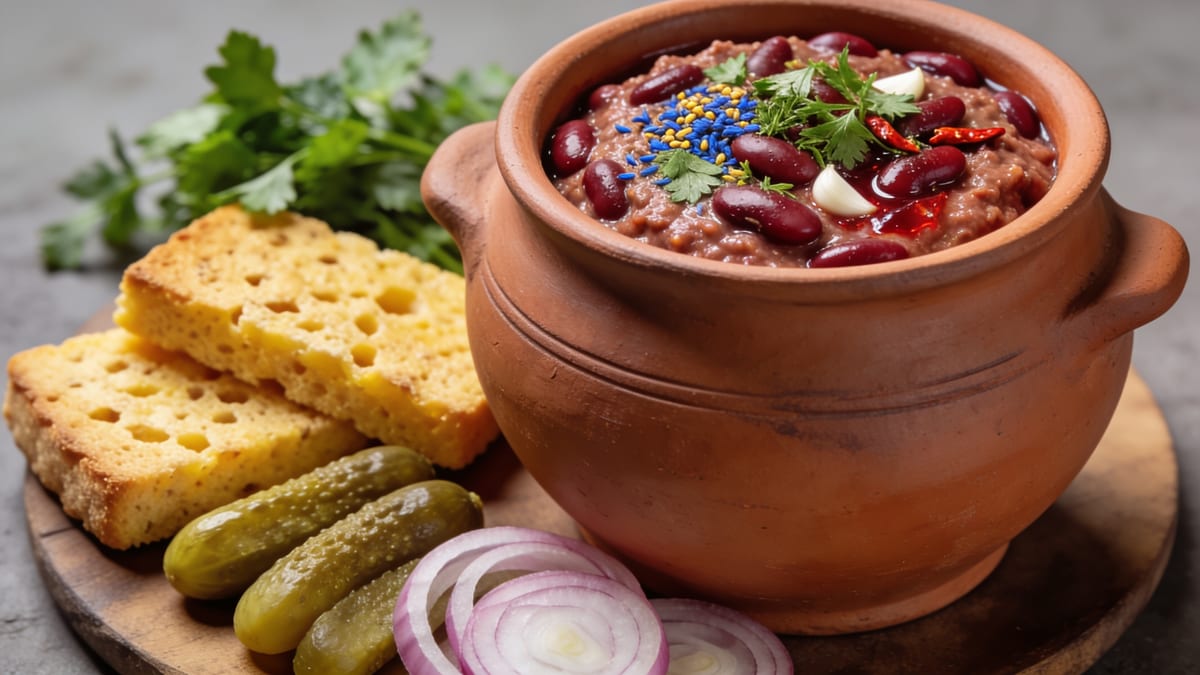
Soak dried red kidney beans overnight, then simmer them in plenty of water until completely soft, an hour or more (don't salt until they're tender). Meanwhile soften onion in oil. When the beans are soft, mash some of them for a creamier texture and stir in the onion plus the Georgian seasonings — lots of garlic, ground coriander, blue fenugreek (utskho suneli), a pinch of chilli, salt, chopped fresh coriander and a good splash of red wine vinegar. Simmer briefly so it thickens and the flavours marry, then taste: it should be tangy, garlicky and aromatic. Serve hot with cornbread.
- Cook the beans until really soft, and mash some of them — lobio should be creamy, not watery.
- Blue fenugreek (utskho suneli), coriander, garlic and red wine vinegar are the defining Georgian flavours.
- Stir the fresh herbs, garlic and vinegar in near the end so they stay bright; serve with mchadi cornbread.
Equipment
- Large pot
- Bowl (for soaking)
- Potato masher
Bahan
Beans
- 350 g dried red kidney beans, soaked overnight
- 1 onion, finely chopped; oil
- 1 bay leaf
Georgian seasoning
- 4 garlic cloves, crushed
- 1 tsp ground coriander; 1 tsp blue fenugreek (utskho suneli)
- Pinch chilli (or fresh); 2 tbsp red wine vinegar
- Lots of fresh coriander/cilantro; salt
Cara membuat
- LANGKAH01
Soak the red kidney beans overnight, then drain and simmer in plenty of fresh water with the bay leaf until completely soft, about 1–1½ hours. Don't add salt until they're tender, or the skins toughen.
- LANGKAH02
Meanwhile, cook the chopped onion gently in a little oil until soft and golden.
- LANGKAH03
When the beans are very soft, lightly mash about a third to a half of them (in the pot or a bowl) to make the lobio creamy and thick, leaving the rest whole. Keep a little of the cooking liquid for consistency.
- LANGKAH04
Stir the cooked onion into the beans with the crushed garlic, ground coriander, blue fenugreek, chilli, salt, most of the chopped fresh coriander and the red wine vinegar. Simmer a few minutes so it thickens and the flavours marry.
- LANGKAH05
Taste and adjust salt, vinegar and chilli — lobio should be tangy, garlicky and aromatic. Stir in the rest of the fresh herbs. Serve hot, traditionally in a clay pot, with mchadi (cornbread), pickles and slices of raw onion.
Make ahead
Lobio is excellent made ahead — the flavours deepen overnight, so cooking it a day before genuinely improves it. It also freezes well, so it's a good batch-cook dish. Reheat gently with a little water, and brighten it with a fresh hit of chopped coriander, garlic or vinegar just before serving. Cook the beans from dried ahead of time to make assembly quick.
Storage
Lobio keeps 3–4 days refrigerated and, like most bean dishes, tastes even better the next day once the garlic, herbs and vinegar have melded. It thickens when cold, so loosen with a splash of water and reheat gently, then refresh with a little extra fresh coriander and vinegar before serving. It freezes well too — a great batch dish. Make the mchadi fresh.
Variations
Lobio with walnuts
Stir in a paste of ground walnuts for a richer, nuttier version (common in western Georgia; adds tree-nut allergen).
Brothy vs mashed
Serve it soupy and stewy, or mash most of the beans for a thick, pâté-like lobio — both are traditional.
Lobiani
Use a similar bean filling inside lobiani, the Georgian bean-stuffed bread.
Serve with
Nutrition per serving
Nutrition values are estimates based on the metric measurements. Adjust as needed.
Pertanyaan umum
What is lobio?
Lobio (ლობიო, simply 'beans') is a classic Georgian dish of stewed beans — usually red kidney beans — seasoned with the distinctive Georgian flavours of garlic, coriander, blue fenugreek, fresh herbs, vinegar and chilli. It can be served brothy and stew-like or mashed to a thick purée, hot or cold, and is traditionally eaten from a clay pot with mchadi (cornbread), pickles and onion. It's hearty, tangy, aromatic and naturally vegan — a cornerstone of the Georgian table.
What is blue fenugreek and can I substitute it?
Blue fenugreek (utskho suneli) is a signature Georgian spice with a warm, slightly nutty, herbaceous flavour, milder than common fenugreek. It's central to the taste of lobio and many Georgian dishes, and is a main component of the spice blend khmeli suneli. If you can't find it, khmeli suneli itself is a good substitute, or use a small amount of regular ground fenugreek (use less, as it's more bitter) — the dish won't be quite the same but will still be delicious.
Should lobio be brothy or mashed?
Both are traditional — it varies by region, recipe and preference. Some lobio is soupy and stew-like, with whole beans in a flavourful broth; other versions are mashed to a thick, coarse purée, almost like a dip. A common middle path (used here) is to mash some of the beans for creaminess while leaving others whole for texture. There's no single 'correct' way, so make it as thick or brothy as you like.
Why add vinegar to lobio?
A splash of red wine vinegar (or sometimes the sour plum sauce tkemali) gives lobio its characteristic tang, which balances the earthy beans and brings the garlic and herbs to life. Georgian cooking loves bright, sour notes, and that acidity is a big part of what makes lobio taste Georgian rather than like a plain bean stew. Add it near the end and adjust to taste — it should be noticeably tangy but not sharp.
What do you serve with lobio?
Classically, mchadi — a rustic Georgian cornbread that's crisp outside and soft within — perfect for scooping up the beans. Lobio is also served with sliced raw onion, pickled vegetables (pickles cut the richness), fresh herbs and sometimes Georgian cheese. A clay pot (ketsi) is the traditional vessel. Altogether with a glass of Georgian wine, it makes a satisfying, fully vegan meal that's a staple of the supra (feast) table.
Cooked this? Rate it.
Real ratings from real cooks. We only show a score once enough of you have weighed in — no fabricated stars.