Manakish — roti pipih za'atar khas Levantin
The breakfast of the Levant: a soft round of dough spread with a fragrant paste of za'atar and olive oil and baked until the base is crisp and the edges puff. Sold from bakeries from Beirut to Amman at dawn, manakish (singular man'oushe) is eaten folded and warm — with cheese, fresh tomato and mint, or simply on its own with a glass of tea.
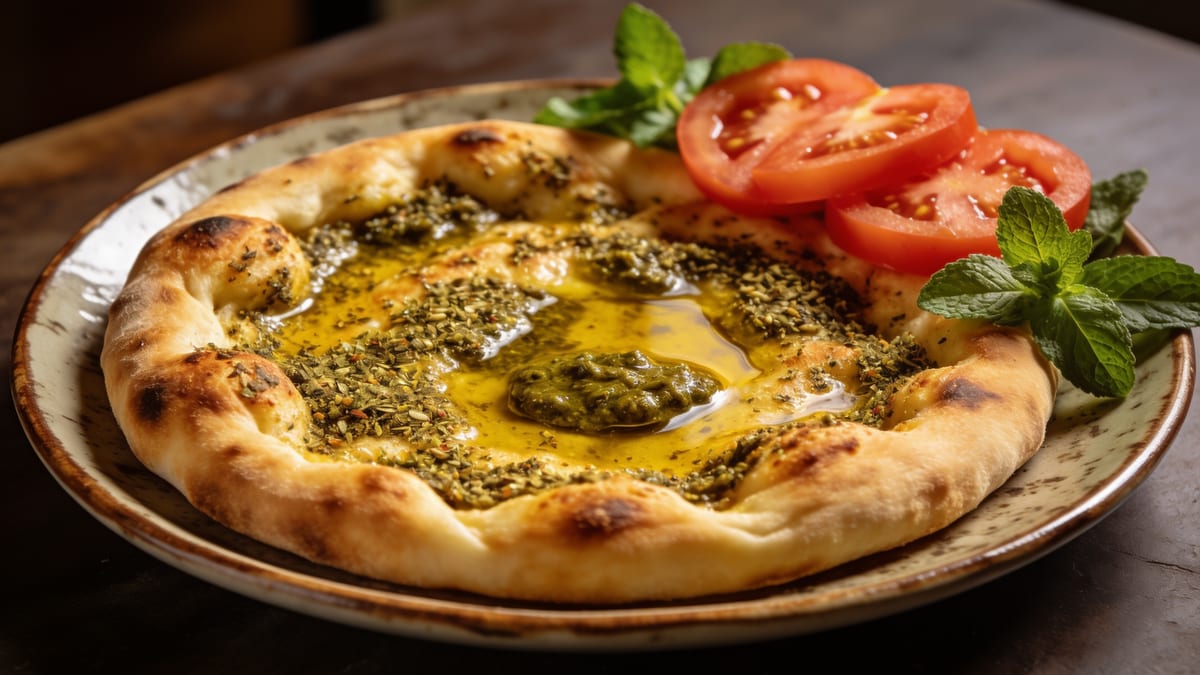
Make a soft yeasted dough and let it rise until doubled. Mix a generous, loose paste of za'atar with plenty of good olive oil. Divide and roll the dough into rounds, dimple them with your fingers, and spread the za'atar oil thickly over each, right to the edge. Bake on a hot stone or tray at high heat until the base is crisp and golden and the edges are puffed and just colouring. Eat warm, folded.
- Use a generous, oily za'atar paste — it should be spreadable and soak into the dough, not dry.
- Bake hot and fast so the base crisps while the dough stays soft — don't over-bake or the za'atar scorches.
- Eat warm, folded; add cheese, tomato, cucumber and mint if you like.
Equipment
- Baking stone or tray
- Rolling pin
- Bowl
Bahan
Dough
- 400 g plain (all-purpose) flour
- 240 ml warm water
- 7 g instant yeast
- 1 tsp salt, 1 tsp sugar, 2 tbsp olive oil
Za'atar topping
- 60 g za'atar (the herb-sumac-sesame blend)
- 90 ml extra virgin olive oil, enough for a loose paste
Optional (to serve)
- Akkawi or halloumi cheese (for cheese manakish)
- Fresh tomato, cucumber, mint, olives
Cara membuat
- LANGKAH01
Mix the flour, yeast, salt and sugar, add the warm water and olive oil, and knead to a soft, smooth dough. Cover and rise until doubled, about 1–1½ hours.
- LANGKAH02
Stir the za'atar with enough olive oil to make a loose, spreadable paste — it should be oily and saucy, not dry and crumbly.
- LANGKAH03
Heat the oven as hot as it goes (250°C/480°F) with a stone or tray inside. Divide the dough into 6, roll each into a round about 1 cm thick, and dimple all over with your fingertips.
- LANGKAH04
Spread a thick layer of the za'atar oil over each round, right to the edge, pressing it into the dimples.
- LANGKAH05
Bake on the hot stone until the base is crisp and golden and the edges are puffed and just colouring, 7–10 minutes (don't let the za'atar scorch). Eat warm, folded in half.
Make ahead
Make the dough (a slow overnight fridge rise adds flavour) and the za'atar oil ahead, then roll, top and bake fresh. Baked manakish also freeze well for a quick breakfast.
Storage
Best warm from the oven. Keeps 1 day; refresh in a hot oven for a couple of minutes. Baked manakish freeze well — reheat from frozen. The za'atar oil keeps for weeks in a jar, ready to top fresh dough.
Variations
Manakish jibneh (cheese)
Top with shredded akkawi or a mild melting cheese instead of (or alongside) za'atar.
Lahm bi ajin
Top with a thin layer of spiced minced meat (a meat manakish, close to a small lahmacun).
Cocktail
Make small ones for a mezze spread, or fold a za'atar man'oushe around cheese, tomato and mint.
Serve with
Nutrition per serving
Nutrition values are estimates based on the metric measurements. Adjust as needed.
Pertanyaan umum
What is za'atar?
Za'atar is both a wild herb (a kind of oregano/thyme) and the famous spice blend made from it — dried herbs mixed with sumac, toasted sesame seeds and salt. For manakish it's loosened with olive oil into a spreadable paste. Its tangy, herby, nutty flavour is the soul of the dish; quality varies, so use a good blend.
What's the difference between manakish and man'oushe?
They're the same thing — man'oushe (or man'ouche) is the singular, manakish (manakeesh) the plural. One za'atar flatbread is a man'oushe; a tray of them is manakish. It comes from the word for the 'imprints' (dimples) pressed into the dough.
How do I stop the za'atar burning?
Use a generous, oily paste (dry za'atar scorches fast), bake hot but watch it closely, and pull the manakish as soon as the base is crisp and the edges just colour — usually under 10 minutes. The oil protects the za'atar; a dry, thin topping in a too-long bake is what burns.
Can I make cheese manakish?
Yes — manakish jibneh is topped with cheese (akkawi is traditional, or a mild melting cheese) instead of, or alongside, the za'atar. A 'half-half' man'oushe with za'atar on one side and cheese on the other is popular. Bake until the cheese melts and bubbles.
How is manakish eaten?
Warm, usually folded in half like a soft taco or rolled up, as a handheld breakfast or snack. A za'atar man'oushe is often eaten with fresh tomato, cucumber, mint, olives and sometimes cheese tucked inside, with a glass of tea. It's the classic Levantine bakery breakfast.
Cooked this? Rate it.
Real ratings from real cooks. We only show a score once enough of you have weighed in — no fabricated stars.