Spaghetti alla Nerano (Spageti Zukini ala Nerano)
Spaghetti alla Nerano is the Amalfi Coast dish that turns a pile of humble zucchini into a silky, deeply savory pasta — the one that became famous as the "stanley tucci zucchini pasta" after his Searching for Italy episode. Thin zucchini coins are fried until golden and jammy, rested so their flavor concentrates, then melted into starchy pasta water with Provolone del Monaco, butter, and basil. The vigorous off-heat toss (mantecatura) is what binds oil, cheese, and starch into a glossy cream with no actual cream in sight.
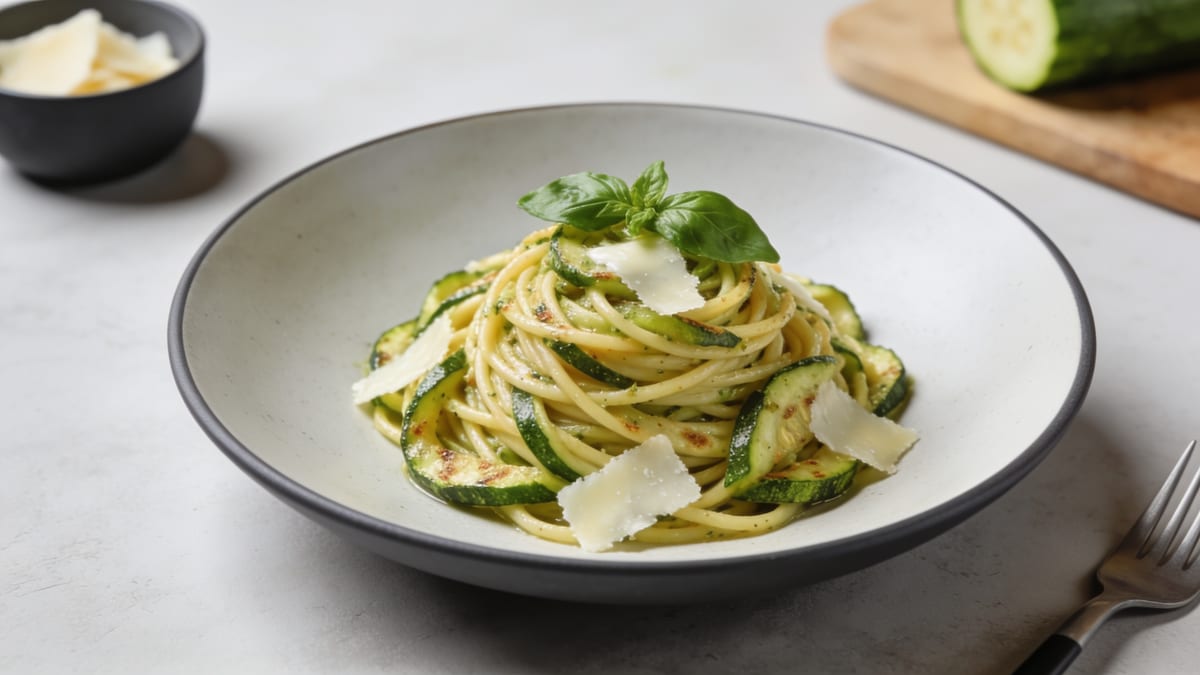
Slice 900 g (2 lb) of small zucchini into 3 mm (1/8 in) coins and fry them in batches in 480 ml (2 cups) of neutral or light olive oil until deeply golden, then drain them on a rack, salt them, and let them sit for 30 minutes so they soften and concentrate. Boil 400 g (14 oz) of spaghetti in lightly salted water until 2 minutes shy of al dente. Meanwhile, warm 2 tablespoons of the frying oil in a wide skillet, add the rested zucchini and a ladle of pasta water, and mash a third of the coins into a rough cream. Drag the spaghetti straight into the skillet, finish cooking it in the zucchini base with more pasta water, then pull the pan off the heat and toss hard with 30 g (2 tbsp) butter, 120 g (1 1/4 cups) grated Provolone del Monaco, 30 g (1/3 cup) Parmigiano, and torn basil, adding splashes of starchy water until the sauce turns glossy and clings to every strand.
- Fry the zucchini ahead and let it rest at least 30 minutes — rested coins collapse into the sauce instead of staying stiff and watery.
- Undersalt the pasta water slightly; the provolone is salty and the reduced starchy water concentrates as you toss.
- Add cheese only off the heat, in two additions, tossing constantly — direct heat makes provolone seize into clumps instead of melting into cream.
Equipment
- Large pot for boiling pasta
- 30 cm (12-inch) skillet or sauté pan
- Mandoline or sharp chef's knife
- Spider strainer or slotted spoon
- Wire rack or paper-towel-lined tray
- Box grater or rotary cheese grater
- Tongs
Bahan
Fried zucchini
- 900 g small zucchini, the smaller and firmer, the sweeter and less watery
- 480 ml neutral or light olive oil, for frying, sunflower, peanut, or light olive oil all work
- fine sea salt, for seasoning the fried zucchini
Pasta and mantecatura
- 400 g spaghetti, bronze-cut holds the sauce best
- 120 g Provolone del Monaco, finely grated, substitute aged provolone or caciocavallo
- 30 g Parmigiano Reggiano, finely grated
- 30 g unsalted butter, cubed and cold
- fresh basil leaves, torn at the last moment
- freshly ground black pepper, or to taste
Cara membuat
- LANGKAH01
Trim the zucchini and slice them into thin, even coins about 3 mm (1/8 inch) thick — a mandoline makes this fast and consistent. Even thickness matters: thin, uniform coins fry to the same golden softness instead of a mix of pale and burnt. Pat the slices dry with a kitchen towel so they fry rather than steam.
- LANGKAH02
Heat the oil in a wide skillet over medium-high heat to about 175°C (350°F) — a slice should sizzle on contact. Fry the coins in 4 to 5 batches, without crowding, until golden with browned edges, 4 to 5 minutes per batch. Lift each batch out with a spider strainer and spread it on a wire rack or paper towels. Reserve 2 tablespoons of the frying oil and keep the empty skillet.
- LANGKAH03
Sprinkle the fried zucchini with the fine sea salt and let it rest at room temperature for at least 30 minutes (up to a day, covered, in the fridge). This rest is the quiet secret of the dish: the coins go limp and jammy, their sweetness deepens, and they later dissolve into the sauce instead of sitting on top of it.
- LANGKAH04
Bring a large pot of water to a boil and salt it a little more lightly than usual — the provolone brings plenty of salt. Cook the spaghetti for 2 minutes less than the package's al dente time. Before draining anything, scoop out about 480 ml (2 cups) of the starchy cooking water.
- LANGKAH05
While the pasta cooks, warm the 2 tablespoons of reserved frying oil in the skillet over medium heat. Add the rested zucchini and a ladle of pasta water and simmer for a few minutes, crushing about a third of the coins against the pan with the back of a spoon so they break down into a rough, pale-green cream while the rest stay whole.
- LANGKAH06
Use tongs to drag the spaghetti straight from the pot into the skillet, bringing some water along with it. Cook over medium heat, tossing and adding splashes of pasta water, until the spaghetti is fully al dente and sitting in a small amount of loose, starchy liquid — the sauce should look slightly wetter than you want the final dish.
- LANGKAH07
Pull the skillet completely off the heat and wait about 30 seconds. Add the cold butter and half the grated Provolone del Monaco and Parmigiano, tossing and swirling hard. Add the rest of the cheese with the torn basil and black pepper and keep tossing vigorously, loosening with pasta water a tablespoon at a time, until the sauce turns glossy, pale green, and coats each strand like a light cream.
- LANGKAH08
Let the pan sit for 30 to 60 seconds — the sauce tightens to its perfect clinging consistency as it cools slightly. Twirl into warm bowls, spooning the whole zucchini coins from the pan over the top, and finish with a basil leaf and a grind of pepper. Serve immediately; this sauce waits for no one.
Make ahead
The fried zucchini is actually better made ahead: fry, salt, and rest it up to 24 hours in advance, refrigerated in a covered container, then bring it to room temperature before building the sauce. Grate the cheeses up to a day ahead and keep them chilled. The final pasta, however, should be cooked and tossed just before serving — the emulsified sauce is at its silkiest in the first few minutes.
Storage
Refrigerate leftovers in an airtight container for up to 2 days. Reheat gently in a skillet over low heat with a splash of water, tossing until the sauce loosens and turns glossy again — the microwave tends to split the emulsion and toughen the cheese. This dish does not freeze well; the zucchini turns watery and the sauce breaks on thawing.
Variations
Gluten-free Nerano
Swap in a good corn-and-rice gluten-free spaghetti. These pastas release less starch, so reserve extra cooking water, simmer it a minute to concentrate, and lean on that plus the crushed zucchini to bind the sauce. Pull the pasta out a full 2 to 3 minutes early, since gluten-free strands overcook quickly in the skillet.
Lighter skillet version
Instead of deep-frying, sauté the zucchini coins in 4 tablespoons of olive oil over medium-high heat in two batches until golden and collapsed, about 10 minutes per batch. You lose a little of the classic fried depth but keep the creamy texture — and cleanup is far easier on a weeknight.
With garlic and chilli
Not strictly Neranese, but delicious: warm a lightly smashed garlic clove and a pinch of red pepper flakes in the reserved frying oil before adding the zucchini, then fish out the garlic before the mantecatura. The gentle heat plays beautifully against the sweet zucchini and sharp provolone.
Serve with
Nutrition per serving
Nutrition values are estimates based on the metric measurements. Adjust as needed.
Pertanyaan umum
Why is this called the Stanley Tucci zucchini pasta?
The dish is properly Spaghetti alla Nerano, created in the 1950s at Ristorante Maria Grazia in the fishing village of Nerano on the Sorrentine peninsula. It went viral as the stanley tucci zucchini pasta after Tucci tasted it on his CNN series Searching for Italy and looked genuinely stunned that fried zucchini and cheese could taste like that. The recipe predates the fame by about seventy years — the show just introduced the rest of the world to it.
What can I use instead of Provolone del Monaco?
Provolone del Monaco is a DOP aged cow's-milk cheese from the Sorrento area that melts smoothly with a sharp, almost spicy finish, and it's hard to find outside Italy. The closest stand-ins are aged (piccante) provolone or caciocavallo; a mix of about two-thirds aged provolone and one-third Parmigiano gets you very close. Avoid mild deli provolone alone — it melts fine but tastes flat.
Do I really have to rest the fried zucchini?
Yes, if you want the real thing. Freshly fried coins are crisp and hold their shape, so they sit on the pasta rather than becoming the sauce. After 30 minutes (or better, overnight), they turn soft and concentrated and partially dissolve during the toss, which is exactly what gives the stanley tucci zucchini pasta its signature creamy, pale-green coating without any cream.
Why did my sauce turn oily or clumpy instead of creamy?
Two usual culprits. If the cheese clumped, the pan was too hot — always add provolone off the heat, in stages, tossing constantly, because direct heat makes it seize into strings. If the sauce looks greasy and loose, there wasn't enough starch to hold the emulsion: add a splash of the reserved pasta water and toss hard, and next time cook the pasta in slightly less water so the cooking liquid is starchier.
Can I make it ahead or scale it up for a crowd?
Fry the zucchini up to a day ahead — it improves with the rest — but do the pasta and mantecatura at the last minute, since the emulsion is best in the first few minutes. For scaling, this recipe doubles well if you use your widest pan and toss in two batches; overcrowding one skillet makes it hard to keep the sauce moving, which is what keeps it glossy.
Cooked this? Rate it.
Real ratings from real cooks. We only show a score once enough of you have weighed in — no fabricated stars.