Garam Masala
Garam masala is the warm, fragrant backbone of North Indian cooking: a blend of whole spices dry-toasted until aromatic, then ground to a fine powder. Toasting the seeds before grinding wakes up their essential oils, giving this version a deeper, rounder aroma than any store-bought jar. It is sweet with cinnamon and cardamom, earthy from cumin and coriander, and gently peppery, with no single spice shouting over the rest.
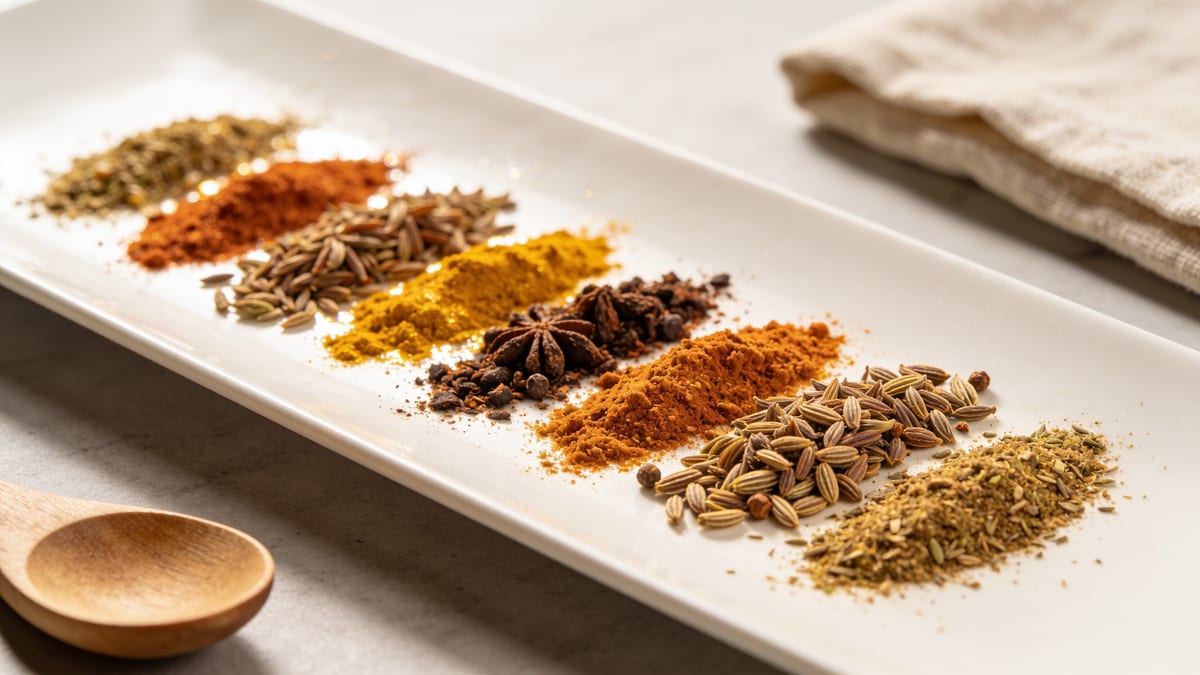
Measure out 3 tbsp coriander seeds, 2 tbsp cumin seeds, 1 tbsp black peppercorns and an optional teaspoon of fennel, and dry-toast them in a skillet over medium-low heat for about 5 minutes until fragrant and a shade darker; then add the more delicate green and black cardamom, cloves, a broken cinnamon stick, bay leaves and mace and toast 1 to 2 minutes more until they smell aromatic. Tip everything onto a plate to cool completely, grate in half a nutmeg, then grind the whole lot to a fine powder in a spice or coffee grinder, sieve out any coarse bits and regrind them, and store the finished garam masala in an airtight jar away from light.
- Toast on medium-low and pull the pan off the heat the moment the spices smell fragrant; scorched spices turn the whole blend bitter.
- Cool the spices completely before grinding, because warm spices steam up the grinder and clump into a paste instead of a fine powder.
- Grind in small batches and sieve, regrinding the coarse leftovers, for an even, dust-fine texture that blends smoothly into dishes.
Equipment
- Dry skillet or frying pan
- Spice grinder or clean coffee grinder
- Mortar and pestle (optional)
- Fine-mesh sieve
- Airtight glass jar
- Measuring spoons
Ingredienti
Seeds to toast
- 18 g coriander seeds
- 12 g cumin seeds
- 8 g black peppercorns
- 3 g fennel seeds, optional, adds a sweet note
Warm aromatic spices
- 12 g green cardamom pods, grind whole, or use seeds from about 20 pods
- black cardamom pods, for smoky depth; optional
- 3 g whole cloves
- 5 g cinnamon or cassia stick, broken into pieces
- Indian bay leaves (tej patta), regular bay leaves work in a pinch
- 1 g mace blades
- whole nutmeg, grated in after toasting
Optional for heat
- dried red chilies, stems removed; adjust to taste
Preparazione
- PASSO01
Measure every spice before you start; toasting moves fast and there is no time to fumble mid-pan. Break the cinnamon stick into two or three pieces, snap open the black cardamom pods so they toast evenly, and set the whole nutmeg aside to grate later. Keep the delicate spices (cardamom, cloves, cinnamon, bay, mace) in one pile and the harder seeds in another, since they toast at different rates.
- PASSO02
Set a dry skillet over medium-low heat. Add the coriander, cumin, peppercorns, fennel and the optional chilies. Toast, shaking the pan almost constantly, until the seeds darken by a shade, turn glossy with released oil and smell nutty and fragrant, about 5 minutes. Do not walk away; cumin in particular goes from perfect to bitter in seconds.
- PASSO03
Add the green and black cardamom, cloves, cinnamon pieces, bay leaves and mace to the pan. Toast, stirring, for 1 to 2 minutes, just until the cinnamon and cardamom release their perfume. These are thin and delicate, so they need far less time than the seeds. Pull the pan off the heat the moment it smells aromatic.
- PASSO04
Tip everything onto a wide plate or tray, spreading it into a single layer so the residual heat escapes quickly. Let the spices cool for about 5 minutes until they are room temperature. This step is not optional: grinding warm spices creates steam that clumps the powder and dulls the aroma.
- PASSO05
Grate the half nutmeg directly over the cooled spices with a microplane or the fine side of a box grater. Transfer everything to a spice grinder or clean coffee grinder and grind in short pulses, shaking between bursts, until you have a fine, even powder, about 3 minutes total. Work in two batches if your grinder is small rather than overloading it.
- PASSO06
Pass the ground spice through a fine-mesh sieve into a bowl. Return any coarse husks or peppercorn bits left in the sieve to the grinder, grind again, and sieve once more. This gives you a dust-fine garam masala that dissolves smoothly into curries and marinades instead of leaving gritty specks.
- PASSO07
Funnel the finished blend into a clean, dry, airtight jar. Label it with the date and tuck it into a cool, dark cupboard away from the stove. Give it a sniff before first use; a good homemade garam masala should smell sweet, woody and alive.
Make ahead
Garam masala is made entirely ahead; that is the whole point of a spice blend. Toast and grind a batch when your kitchen is calm, then reach for it all month long. For maximum freshness, toast the whole spices in advance and store them whole in a jar, grinding just a few teaspoons right before you cook.
Storage
Store in an airtight jar away from heat and light for up to 3 months at peak aroma; it stays safe to use for about 6 months but fades over time. Keep the jar out of direct sun and never dip a wet spoon in, as moisture causes clumping and mold. For the longest life, store the toasted whole spices separately and grind small batches as needed.
Variations
Punjabi-style extra warm
Double the black cardamom to 3 pods and add an extra inch of cinnamon and a few more cloves for the rich, warming profile favored in Punjabi curries and dals. This version leans sweet and woody rather than peppery.
No-toast quick blend
Skip the skillet entirely and grind the raw whole spices straight away. The result is brighter, sharper and a little more raw-tasting; handy when you are short on time or want a fresher, greener edge for finishing dishes.
Heat-forward South Indian twist
Add 3 to 4 dried red chilies and a single star anise to the toasting pan for a spicier, more licorice-scented blend that stands up to robust meat and lentil dishes.
Serve with
Nutrition per serving
Nutrition values are estimates based on the metric measurements. Adjust as needed.
Domande frequenti
What exactly is garam masala?
Garam masala is a North Indian blend of warming ground spices; the name translates roughly to warm or hot spice mix, referring to warmth in the Ayurvedic sense rather than chili heat. A classic garam masala leans on coriander, cumin, cardamom, cinnamon, cloves, pepper and nutmeg, and recipes vary widely from region to region and household to household.
When should I add garam masala to a dish?
For the fullest aroma, add garam masala near the end of cooking or as a finishing sprinkle, since its volatile oils fade with long simmering. Many cooks add a pinch early for depth and a fresh pinch at the end for fragrance, which gives you the best of both.
How long does homemade garam masala stay fresh?
Kept in an airtight jar away from heat and light, homemade garam masala holds its best aroma for about 3 months and remains usable for around 6. Because you toasted and ground it fresh, it will smell noticeably livelier than a store-bought jar; when the fragrance dulls, it is time to grind a new batch.
Can I make garam masala without toasting the spices?
Yes. Toasting deepens and rounds the flavor, but you can grind the raw whole spices for a brighter, sharper blend. If you skip toasting, use the garam masala a little more generously, since untoasted spices taste a touch milder and rawer.
Is garam masala spicy or hot?
On its own, a traditional garam masala is aromatic and warming rather than fiery; the pepper gives a gentle bite but there is little to no chili. If you want real heat, add dried red chilies to the toasting pan or pair the blend with fresh chili in your dish.
Cooked this? Rate it.
Real ratings from real cooks. We only show a score once enough of you have weighed in — no fabricated stars.