Gyoza — ravioli giapponesi alla piastra
Japan's beloved dumplings: thin wrappers stuffed with juicy pork and finely chopped cabbage, garlic, ginger and nira, then cooked the yaki-gyoza way — fried crisp on the bottom, steamed soft on top, finished with a lacy golden 'wing'. Served with a punchy soy-vinegar-chilli oil dip.
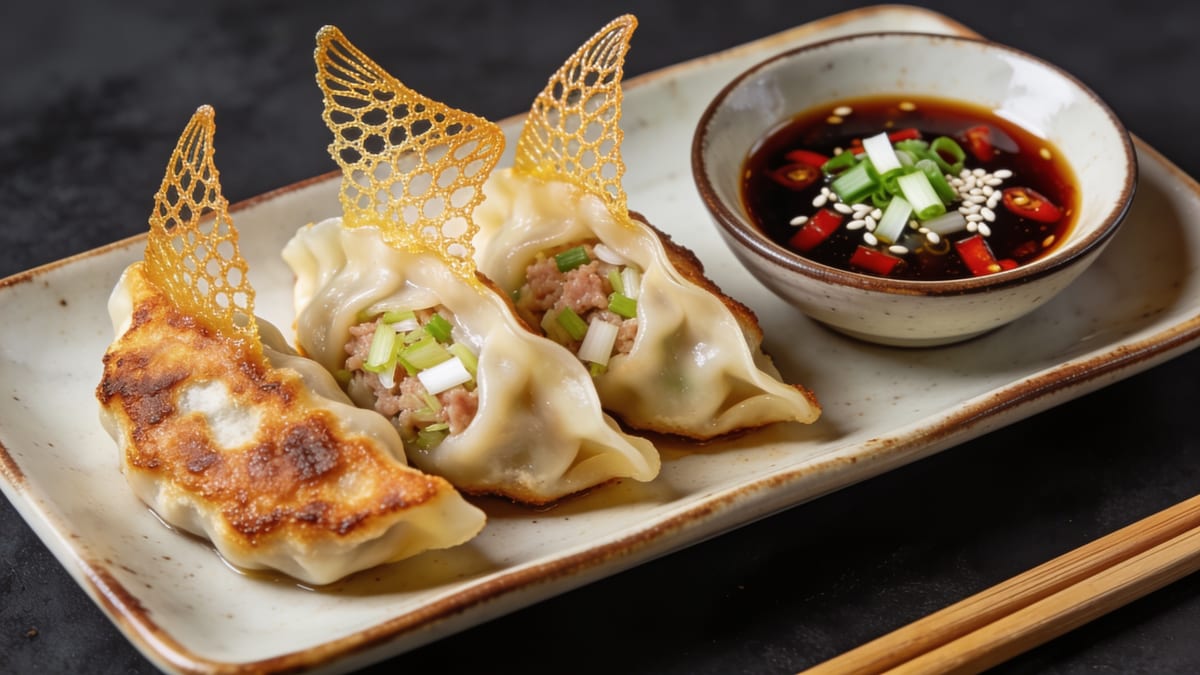
Mix minced pork with finely chopped cabbage (salted and squeezed dry), garlic, ginger, nira, soy, sesame oil and a little sake. Place a spoonful on each round wrapper, wet the edge, and pleat into a half-moon. Pan-fry the flat bottoms until golden, add water and cover to steam through, then uncover and cook off the water to re-crisp the base. Serve with a soy, rice vinegar and chilli oil dip.
- Salt and squeeze the cabbage hard — excess water makes a loose filling and soggy gyoza.
- Pleat only one side and press onto a flat bottom so they sit and crisp evenly.
- Fry-steam-fry: crisp the base, steam to cook through, then crisp again as the water evaporates.
Equipment
- Non-stick frying pan with lid
- Mixing bowl
- Small bowl of water (for sealing)
Ingredienti
Filling
- 300 g minced pork
- 200 g white cabbage, finely chopped
- 3 garlic cloves, grated
- 1 tbsp grated ginger
- Small bunch nira (garlic chives) or spring onion, chopped
- 15 ml soy sauce
- 10 ml sesame oil
- 10 ml sake, optional
To cook & serve
- About 30 round gyoza wrappers
- Neutral oil, for frying
- Soy sauce, rice vinegar and chilli oil (la-yu), to dip
Preparazione
- PASSO01
Finely chop the cabbage, toss with a pinch of salt, and leave 10 minutes. Squeeze out as much water as you can with your hands or a cloth — this keeps the filling tight.
- PASSO02
Combine the squeezed cabbage with the pork, garlic, ginger, nira, soy, sesame oil and sake. Mix well until slightly sticky.
- PASSO03
Put a teaspoon of filling in the centre of a wrapper. Wet the edge, fold into a half-moon, and pleat one side over towards the front, pressing onto a flat base so it stands up.
- PASSO04
Heat a little oil in a non-stick pan and arrange the gyoza flat-side down. Fry until the bottoms are golden, 2–3 minutes.
- PASSO05
Pour in about 75 ml water and immediately cover. Steam until the water has evaporated and the wrappers are translucent and cooked, 4–5 minutes. Uncover, add a few drops of oil, and fry until the bases are crisp and golden again.
- PASSO06
Slide out crisp-side up. Mix a dip of soy sauce, rice vinegar and chilli oil to taste, and serve the gyoza hot.
Make ahead
Make a big batch and freeze raw on a floured tray, then bag — the freezer is the gyoza cook's friend. Pan-fry straight from frozen whenever you want them.
Storage
Cooked gyoza are best fresh. Uncooked gyoza freeze brilliantly — freeze on a tray, then bag, and cook from frozen (add a little extra steaming time). Cooked leftovers keep 2 days and re-crisp in a hot pan.
Variations
Sui-gyoza (boiled)
Boil the dumplings instead of pan-frying for a softer, soupier result.
Prawn gyoza
Use minced prawn (or a pork-prawn mix) for a sweeter, springier filling.
Vegetable gyoza
Fill with finely chopped mushrooms, cabbage and tofu for a vegetarian version.
Serve with
Nutrition per serving
Nutrition values are estimates based on the metric measurements. Adjust as needed.
Domande frequenti
What's the difference between gyoza and potstickers?
They're close cousins. Gyoza is the Japanese adaptation of Chinese jiaozi (potstickers), generally with thinner wrappers, finer filling and a heavier hit of garlic. The pan-fry-then-steam cooking method is essentially the same.
How do I get the crispy bottom and 'wings'?
Fry the flat bases until golden, then add water and cover to steam. As the water cooks off, the bottoms re-crisp. For lacy 'wings', add a thin flour-water slurry instead of plain water — it fries into a crisp golden lattice.
Why salt and squeeze the cabbage?
Cabbage holds a lot of water. Salting draws it out, and squeezing it dry stops the filling from going loose and watery, which would otherwise make the gyoza split and steam soggy.
Can I freeze gyoza?
Yes, and it's the best way to store them. Freeze the shaped raw dumplings on a floured tray until solid, then bag. Cook straight from frozen — don't thaw, or they stick and tear — adding a minute or two of steaming.
What are nira?
Nira are garlic chives — flat green chives with a mild garlic flavour, classic in gyoza filling. If you can't find them, use regular chives or the green parts of spring onions plus the grated garlic already in the recipe.
Cooked this? Rate it.
Real ratings from real cooks. We only show a score once enough of you have weighed in — no fabricated stars.