Katsu Curry — curry giapponese con cotoletta croccante
Japan's ultimate comfort plate: a thick, mild, slightly sweet curry sauce ladled over rice and a crisp panko-crumbed cutlet (katsu). The sauce is built on a roux with onion, carrot and warm curry spices; the katsu shatters under the fork. Endlessly popular in Japanese homes and diners — and far better than the instant-cube shortcut.
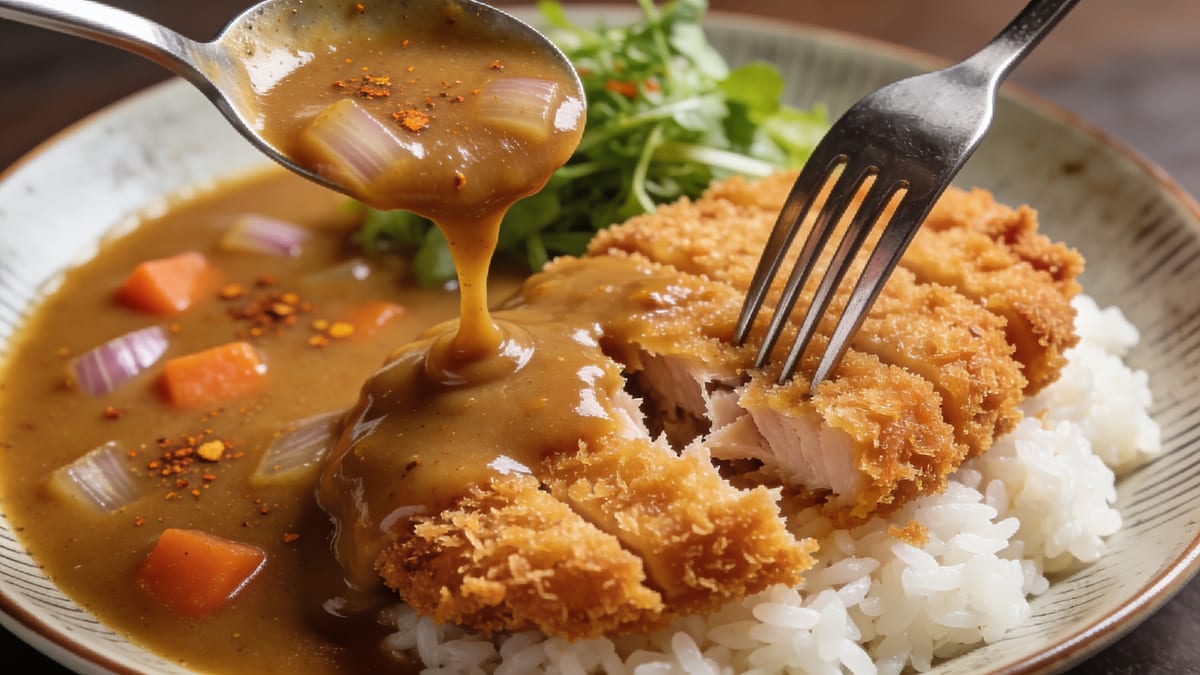
Make a Japanese curry sauce: soften onion, carrot and potato, then build a roux with butter, flour, curry powder and garam masala, loosen with stock and simmer until thick and glossy, seasoning with a little soy, ketchup, Worcestershire and honey. Separately, crumb pork (or chicken) cutlets in flour, egg and panko and deep-fry until golden and crisp. Slice the katsu, set it over rice, and ladle the curry alongside.
- Build the sauce from a real roux and curry powder for depth — far better than instant curry cubes.
- The katsu must stay crisp: fry it separately and sauce around it, not over it, until serving.
- Japanese curry is thick, mild and a touch sweet — balance with a little honey, ketchup and soy.
Equipment
- Saucepan
- Frying pan for deep-frying
- 3 shallow bowls (for crumbing)
Ingredienti
Curry sauce
- 1 onion, sliced
- 1 carrot, chopped
- 1 potato, cubed
- 40 g butter
- 30 g plain flour
- 15 g curry powder, plus 1 tsp garam masala
- 700 ml chicken stock
- 1 tbsp each soy, ketchup, Worcestershire; 1 tsp honey
Katsu
- 4 pork loin steaks (or chicken breasts)
- Flour, 2 beaten eggs, panko breadcrumbs
- Oil, for deep-frying; salt and pepper
To serve
- Steamed Japanese rice
- Pickles (fukujinzuke / rakkyo), optional
Preparazione
- PASSO01
Soften the onion in a little butter until golden, then add the carrot and potato and cook a few minutes.
- PASSO02
Stir in the rest of the butter, the flour, curry powder and garam masala and cook 1–2 minutes. Gradually whisk in the stock, then simmer until the vegetables are tender and the sauce is thick and glossy, 15–20 minutes. Season with soy, ketchup, Worcestershire and honey.
- PASSO03
Season the pork (or butterflied chicken), then coat in flour, beaten egg and panko, pressing the crumbs on firmly.
- PASSO04
Deep-fry the crumbed cutlets in oil at 170°C until deep golden and cooked through, 5–6 minutes. Drain and rest, then slice into strips.
- PASSO05
Mound rice on each plate, lay the sliced katsu alongside, and ladle the hot curry sauce over the rice and part of the katsu (keeping some crisp). Add pickles and serve.
Make ahead
Make the curry sauce well ahead (it deepens overnight) and freeze in portions. Crumb the cutlets ahead and refrigerate, then fry to order — assembly is then quick.
Storage
The curry sauce keeps 4 days refrigerated and freezes 3 months — it's great to batch. Fry the katsu fresh; cooked katsu keeps a day and re-crisps in a hot oven. Keep sauce and katsu separate so the crumb stays crunchy.
Variations
Chicken katsu curry
Use butterflied chicken breast or thigh instead of pork — hugely popular.
Vegetable / korokke
Top with a crisp vegetable croquette (korokke) or fried aubergine for a meat-free version.
Extra-rich
Add a grated apple and a square of dark chocolate to the sauce for depth, as many Japanese cooks do.
Serve with
Nutrition per serving
Nutrition values are estimates based on the metric measurements. Adjust as needed.
Domande frequenti
Is Japanese curry spicy?
Generally no — Japanese curry (kare) is thick, mild and a little sweet, quite different from Indian or Thai curries. It's built on a roux and a mild curry powder, with sweetness from onion, ketchup and a touch of honey. You can add chilli or hot curry powder if you want heat.
How do I keep the katsu crispy?
Fry it separately and don't drown it in sauce. Ladle the curry over the rice and only part of the cutlet, leaving the rest crisp, and serve immediately. Resting the fried katsu on a rack (not paper directly under heat) also keeps the panko crunchy.
Can I use curry cubes instead of making the sauce?
You can — instant Japanese curry roux cubes are widely used and convenient. But a from-scratch roux with curry powder, garam masala and good stock tastes fresher and lets you control the sweetness and spice. This recipe makes it from scratch.
Pork or chicken?
Both are classic. Pork loin (tonkatsu) is the traditional katsu; chicken katsu is just as popular and a little lighter. Whichever you use, pound it to an even thickness so it cooks through before the crumb burns.
What is panko?
Panko are Japanese breadcrumbs — large, dry, airy flakes that fry up exceptionally light and crisp. They give katsu its signature shatter. Regular fine breadcrumbs make a denser, less crunchy coating; panko is worth seeking out.
Cooked this? Rate it.
Real ratings from real cooks. We only show a score once enough of you have weighed in — no fabricated stars.