Pastéis de nata — pasticcini alla crema portoghesi
Lisbon's iconic custard tart: crisp, blistered, shatteringly flaky puff pastry cradling a rich, just-set egg-and-cream custard, the tops scorched dark in a blazing oven and dusted with cinnamon. Born at the Jerónimos Monastery in Belém, pastéis de nata are Portugal's gift to the world's bakeries — best eaten warm, the same day, with an espresso. The blistered, caramelised top is the whole point.
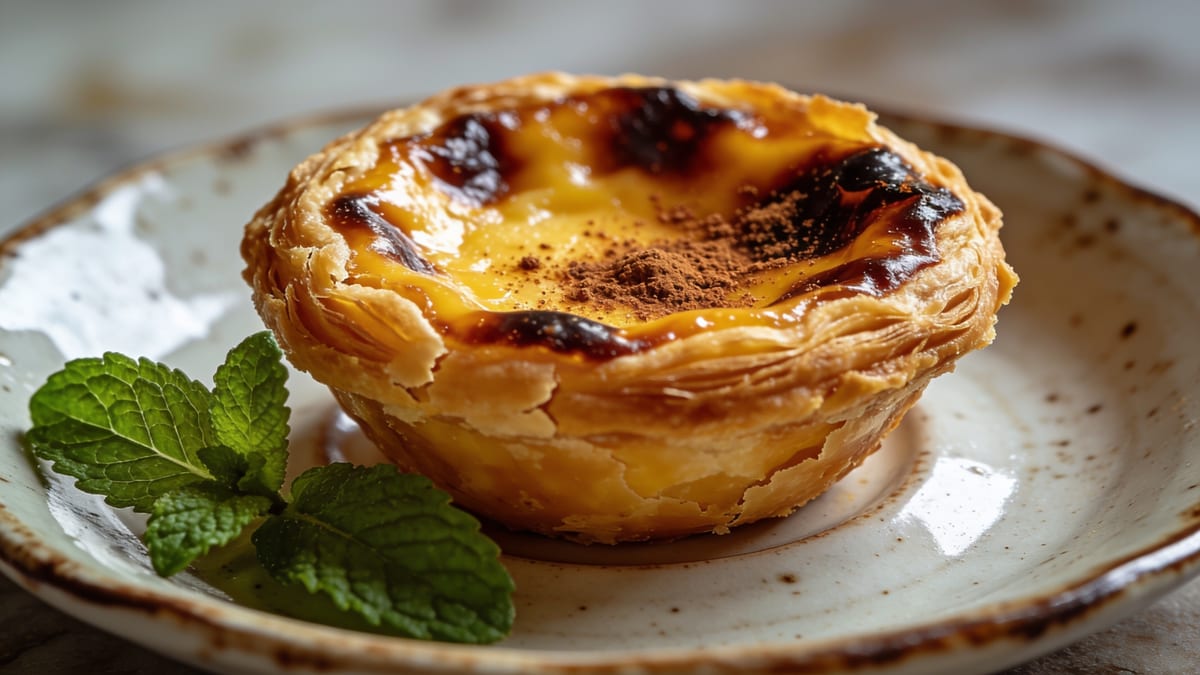
Roll puff pastry into a log, slice into rounds, and press each into a muffin tin to line the cups with a thin, spiraled crust. Make a custard by cooking a sugar syrup and whisking it into a milk-flour base with egg yolks, plus a strip of lemon and cinnamon for flavour, then strain. Fill the pastry cups about three-quarters full and bake in the hottest oven you have until the pastry is crisp and the custard tops are scorched with dark caramelised spots. Cool slightly and dust with cinnamon.
- Bake as hot as your oven goes (250°C+/500°F) — those blistered, almost-burnt tops are essential, not a mistake.
- Line the tins with a thin spiral of puff pastry and press it up the sides for the crisp, layered shell.
- Don't overfill or overbake the custard — it should just set with a wobble, not turn to scrambled egg.
Equipment
- 12-cup muffin tin
- Saucepan
- Whisk
Ingredienti
Pastry
- 1 sheet all-butter puff pastry
Custard
- 200 g sugar
- 150 ml water
- 1 cinnamon stick; strip of lemon peel
- 500 ml milk
- 50 g flour
- 6 egg yolks
Preparazione
- PASSO01
Roll the puff pastry into a tight log, then cut into 12 even rounds. Press each cut-side-down into a muffin cup and, with wet thumbs, work the pastry up the sides into a thin shell with a spiral pattern. Chill while you make the custard.
- PASSO02
Heat the sugar, water, cinnamon stick and lemon peel until it reaches a light syrup (about 100°C/boiling and slightly thickened). Set aside to infuse.
- PASSO03
Whisk the flour into a little of the cold milk until smooth, then whisk in the rest of the warmed milk and cook gently until thickened. Off the heat, whisk in the hot syrup (lumps strained out), then the egg yolks. Strain the custard until silky.
- PASSO04
Fill the chilled pastry shells about three-quarters full with the warm custard — don't overfill, as it puffs.
- PASSO05
Bake in the hottest oven you have (250°C/480°F or higher) until the pastry is deep golden and crisp and the custard tops are blistered with dark caramelised spots, about 12–18 minutes. Cool a few minutes, then dust with cinnamon and (optionally) icing sugar. Best warm.
Make ahead
Line the tins with pastry and make the custard ahead, then fill and bake fresh — the magic is in eating them warm and crisp. Baked tarts don't keep well, so it's better to bake close to serving. Unbaked filled tins can wait briefly in the fridge before going into the hot oven.
Storage
Unquestionably best the day they're baked, ideally still warm, when the pastry is crisp. They soften over time; refresh day-old tarts in a hot oven for a few minutes to re-crisp. Don't refrigerate if you can help it (it softens the pastry); keep at room temperature and eat within a day.
Variations
Homemade laminated pastry
Purists make their own butter-laminated dough for the flakiest, most authentic shell — a project, but worth it.
Citrus / vanilla
Some add a little vanilla or orange peel to the custard alongside the classic lemon and cinnamon.
Air-fryer finish
A very hot air fryer can give the blistered top if your oven won't get hot enough.
Serve with
Nutrition per serving
Nutrition values are estimates based on the metric measurements. Adjust as needed.
Domande frequenti
Why are the tops of pastéis de nata burnt?
Those dark, blistered caramelised spots on top are the signature of a proper pastel de nata — not a mistake. They come from baking in a ferociously hot oven, which scorches the custard surface while keeping the inside creamy and the pastry crisp. A pale, evenly-set tart hasn't had enough heat; aim for the hottest oven you can.
Can I use store-bought puff pastry?
Yes — good all-butter puff pastry makes excellent pastéis de nata and is the easy route. Roll it into a log and slice it so each shell has a spiral of layers when pressed into the tin. The truly authentic Belém version uses a special homemade laminated dough, but shop-bought puff gets you delicious results.
How do I get the custard right?
Cook a milk-and-flour base, whisk in a hot sugar syrup and then the egg yolks, and strain it until silky so it's lump-free. Fill the shells only about three-quarters full, and bake hot and fast so the custard just sets with a slight wobble and scorched top — don't overbake, or it turns to scrambled egg and loses its silkiness.
Why is my pastry soggy, not crisp?
Usually the oven wasn't hot enough, or the shells were overfilled so custard overflowed underneath. Bake as hot as possible (250°C+), press the pastry thin and up the sides, chill the shells before filling, and don't overfill. The intense heat crisps the layers fast before the custard can soak in.
When are pastéis de nata best eaten?
Warm, the same day they're baked — ideally within a couple of hours of coming out of the oven, when the pastry is at its crispest and the custard still has gentle warmth. They're traditionally enjoyed with a strong espresso and a dusting of cinnamon. Day-old tarts can be revived briefly in a hot oven.
Cooked this? Rate it.
Real ratings from real cooks. We only show a score once enough of you have weighed in — no fabricated stars.