Crêpes — Thin French Pancakes
Thin, lacy French pancakes that bend to any filling — sugar and lemon, Nutella, jam, or ham and cheese for the savoury galette. The batter takes five minutes and one bowl; the only secret is letting it rest so the crêpes turn out tender and supple rather than rubbery.
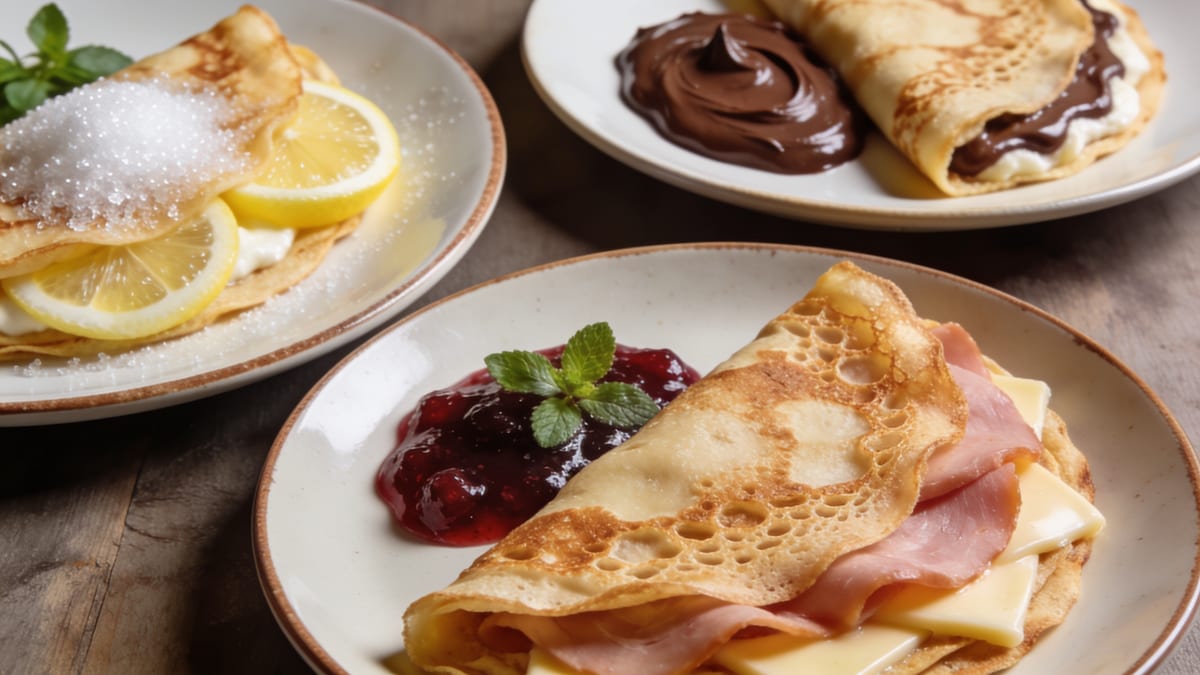
Whisk flour, eggs, milk, a pinch of salt, melted butter and (for sweet crêpes) a little sugar into a smooth, thin batter — about the consistency of single cream. Rest it at least an hour. Heat a lightly buttered pan, pour in a thin ladle, swirl to coat, and cook about a minute until the edges lift, then flip for 20 seconds. Stack and fill.
- Rest the batter at least an hour (or overnight) so the flour hydrates and the crêpes turn out tender.
- The batter should be thin — like single cream; thin with a splash of milk if it's too thick.
- Use a hot, lightly greased non-stick or crêpe pan and a thin layer of batter for lacy, delicate crêpes.
Equipment
- Whisk or blender
- Mixing bowl
- Non-stick or crêpe pan
- Ladle
재료
Batter
- 250 g plain (all-purpose) flour
- 4 eggs
- 500 ml milk
- 60 g butter, melted, plus more for the pan
- 25 g sugar, for sweet crêpes; omit for savoury
- Pinch of salt
- 1 tsp vanilla or 1 tbsp rum, optional
Classic fillings
- Sugar and lemon juice
- Jam, honey or chocolate-hazelnut spread
- Salted butter caramel
- Ham, cheese and egg, for savoury
조리법
- 단계01
Whisk the flour, sugar and salt in a bowl, make a well, and whisk in the eggs and a little of the milk to a smooth paste. Gradually whisk in the rest of the milk and the melted butter until smooth and lump-free. (A blender does this in seconds.)
- 단계02
Cover and rest the batter at least 1 hour at room temperature, or overnight in the fridge. This relaxes the gluten and hydrates the flour for tender crêpes. Stir before using and thin with a little milk if needed.
- 단계03
Heat a non-stick or crêpe pan over medium-high and wipe with a little butter. The pan is ready when a drop of batter sizzles.
- 단계04
Pour in a thin ladle of batter and immediately swirl the pan to coat in a thin, even layer. Cook about 1 minute until the edges lift and the underside is golden, then flip and cook 15–20 seconds more.
- 단계05
Slide onto a plate and stack as you go (they stay soft). Fill while warm — sprinkle with sugar and a squeeze of lemon, spread with jam or chocolate, and fold into quarters or roll up.
Make ahead
Both batter and cooked crêpes keep well. Make a stack ahead for a crowd and reheat, or refrigerate the batter overnight — resting only improves it.
Storage
Cooked crêpes keep 3 days refrigerated, stacked with parchment between them, or freeze up to 2 months. Reheat briefly in a warm pan or microwave. Batter keeps 2 days refrigerated.
Variations
Galette (savoury)
Use buckwheat flour and water, no sugar, for a Breton galette; fill with ham, grated cheese and an egg cooked in the centre.
Crêpes Suzette
Fold in an orange-butter sauce and flambé with Grand Marnier for the classic restaurant dessert.
Dairy-free
Use a plant milk and oil in place of butter — the crêpes are still tender thanks to the eggs.
Serve with
Nutrition per serving
Nutrition values are estimates based on the metric measurements. Adjust as needed.
자주 묻는 질문
Why do I need to rest crêpe batter?
Resting lets the flour fully hydrate and relaxes the gluten developed during mixing. The result is a smoother batter and noticeably more tender, supple crêpes that don't turn rubbery. An hour is good; overnight is even better.
My first crêpe always fails — why?
That's normal — the first crêpe seasons the pan and tells you if the heat and batter consistency are right. Adjust the temperature and thin the batter if needed; the rest will be perfect.
What's the difference between crêpes and pancakes?
Crêpes are thin and unleavened (no raising agent), so they're lacy and flexible. American-style pancakes use baking powder for a thick, fluffy result. Crêpe batter is much thinner and pourable.
How thin should the batter be?
About the consistency of single cream — thin enough to swirl into a delicate layer that coats the pan. If it's too thick the crêpes are heavy; thin with a splash of milk. If too thin they tear; whisk in a spoon of flour.
Sweet or savoury — same batter?
Nearly. For savoury crêpes, omit the sugar (and vanilla) from this batter, or go traditional with a buckwheat galette batter of buckwheat flour, water and salt.
Cooked this? Rate it.
Real ratings from real cooks. We only show a score once enough of you have weighed in — no fabricated stars.