Khinkali — Georgian Soup Dumplings
Georgia's mountain dumplings: a twist of pleated dough holding spiced minced meat and — the whole point — a mouthful of hot broth that forms as they boil. You eat them by hand, holding the topknot, biting a small window to sip the soup, then devouring the rest. The little dough knot (kუდი) is left on the plate to count how many you've eaten.
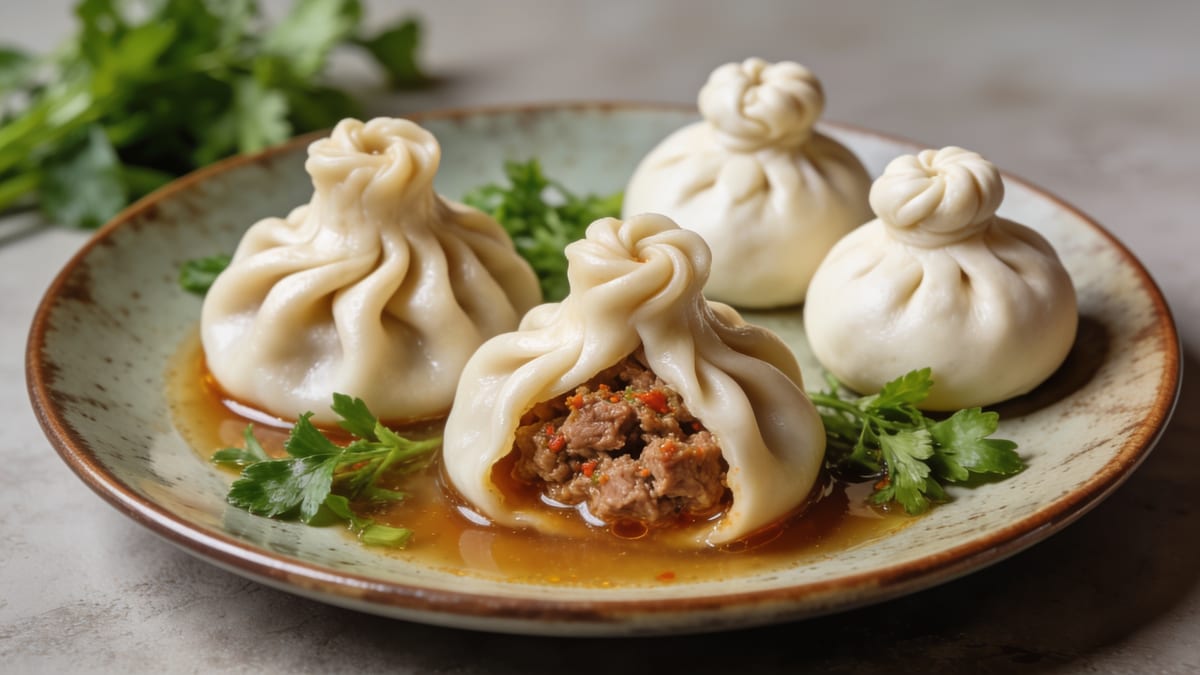
Make a firm dough of flour, water and salt and rest it. Mix minced beef and pork with grated onion, garlic, lots of black pepper, salt and a good amount of cold water (or broth) so the filling is loose and juicy. Roll thin rounds, spoon in filling, and pleat the edge into a tight purse with a topknot. Boil in salted water until they float and the dough is tender, about 8 minutes. Eat by hand, sipping the broth inside.
- Add plenty of cold water to the meat — that liquid becomes the signature broth inside.
- Roll the dough rounds thin at the edge but leave the centre a touch thicker to hold the soup.
- Pleat tightly and seal well so no broth escapes; a sturdy topknot is your handle.
Equipment
- Large pot
- Rolling pin
- Mixing bowls
- Slotted spoon
재료
Dough
- 400 g plain (all-purpose) flour
- 200 ml cold water
- 1 tsp salt
Filling
- 300 g minced beef
- 200 g minced pork, or all beef
- 1 large onion, very finely grated
- 2 garlic cloves, minced
- 150 ml cold water or beef broth
- 1½ tsp salt, 1 tsp black pepper
- ½ tsp ground caraway or cumin, optional
- Small handful coriander, chopped, optional
조리법
- 단계01
Mix the flour and salt, add the cold water gradually, and knead 8–10 minutes into a firm, smooth dough. Cover and rest at least 30 minutes.
- 단계02
Combine the minced meats, grated onion, garlic, salt, pepper and spices. Beat in the cold water or broth a little at a time until the filling is loose, wet and almost sloppy — this liquid makes the soup inside.
- 단계03
Roll the dough thin and cut rounds about 10–12 cm across (or roll individual balls), leaving the edges thinner than the centre so the base can hold the broth.
- 단계04
Put a heaped spoon of filling in the centre of each round. Gather the edge into pleats with your fingers, working around the circle, then pinch and twist the gathered top into a tight knot. Aim for many pleats — the more, the prouder the khinkali.
- 단계05
Salt a big pot of water and bring to a gentle boil. Stir to make a whirlpool and lower in the khinkali a few at a time. Cook until they float and the dough is tender, 7–9 minutes. Lift out, dust with coarse black pepper, and eat by hand — bite a window, sip the broth, then eat the rest, leaving the knot.
Make ahead
Make a big batch and freeze raw — the freezer is the khinkali maker's friend. Shape, freeze solid on a floured tray, then bag. Boil straight from frozen whenever you want them.
Storage
Best fresh. Uncooked khinkali freeze brilliantly — freeze on a tray, then bag, and boil from frozen (add a couple of minutes). Cooked leftovers keep 2 days and are traditionally pan-fried the next day until golden and crisp.
Variations
Kalakuri (city style)
Mixed beef and pork with fresh herbs (coriander) — the common restaurant version.
Mtiuluri (mountain style)
All meat, just onion, garlic and pepper, no herbs — the highland original.
Soko / vegetarian
Fill with sautéed mushrooms or potato and herbs for a meat-free khinkali.
Serve with
Nutrition per serving
Nutrition values are estimates based on the metric measurements. Adjust as needed.
자주 묻는 질문
How do you eat khinkali?
By hand, never with a fork. Hold the knotted top, turn the dumpling over, bite a small window in the side and sip out the hot broth, then eat the rest. Leave the chewy topknot (kudi) on your plate — Georgians count them to see who ate the most.
Why is there soup inside?
The broth isn't added — it forms as the khinkali cook. Beating plenty of cold water or broth into the raw meat filling means that liquid renders and steams inside the sealed dumpling, creating the signature mouthful of soup. Seal them well so it doesn't leak.
Should I eat the top knot?
Traditionally no — the gathered dough knot is thick and underdone, so it's left on the plate as a tally of how many you've eaten. You can eat it if you like, but most Georgians don't.
Can I freeze khinkali?
Yes, and it's the best way to keep them. Freeze the shaped raw dumplings on a floured tray until solid, then bag them. Boil straight from frozen, adding a couple of extra minutes — don't thaw, or they'll stick and tear.
My khinkali leak — what went wrong?
Either the seal wasn't tight or the dough was rolled too thin at the base. Pleat firmly, pinch the top into a solid knot, and keep the centre of each round slightly thicker. A gentle (not rolling) boil also helps them hold together.
Cooked this? Rate it.
Real ratings from real cooks. We only show a score once enough of you have weighed in — no fabricated stars.