Lasagne alla Bolognese — Classic Baked Lasagna
The great baked pasta of Emilia-Romagna: layers of fresh egg pasta with a long-simmered ragù alla bolognese, silky béchamel and Parmigiano, baked until the edges crisp and the centre is meltingly rich. A proper lasagne is a project — but the slow ragù and the béchamel-not-ricotta layering are what make it taste like Bologna rather than a casserole.
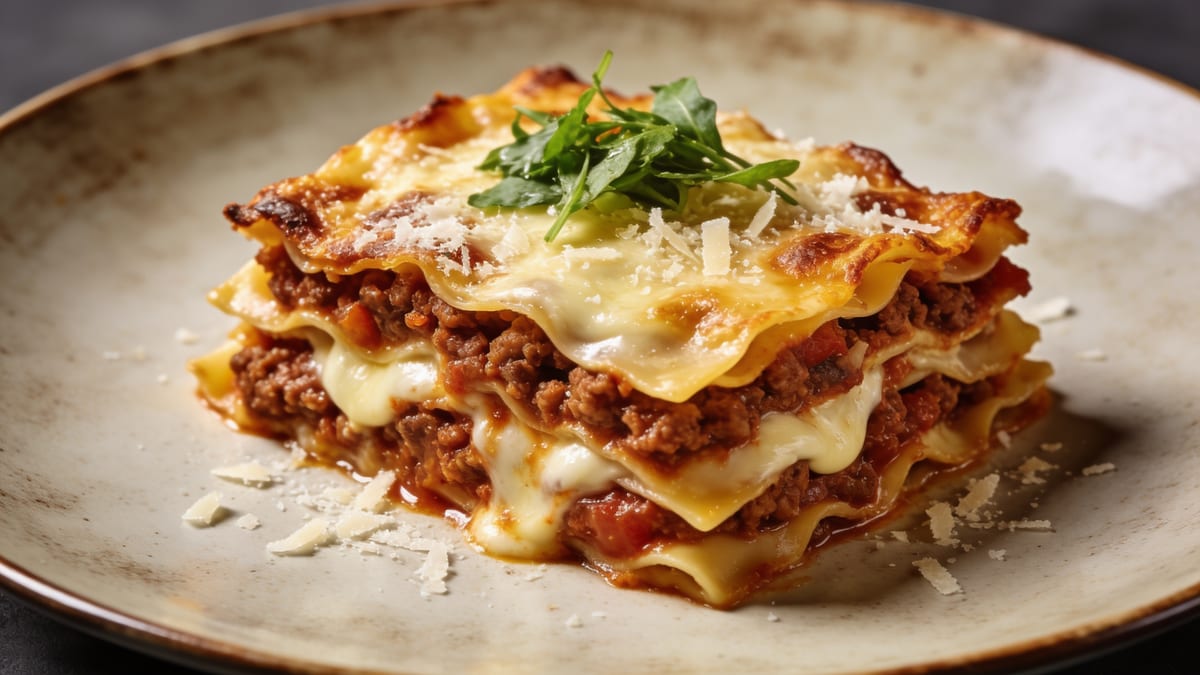
Simmer a ragù alla bolognese — soffritto, beef (and pork), a little tomato, milk and wine — gently for 2–3 hours until rich. Make a béchamel. Layer in a baking dish: a little ragù on the base, then sheets of pasta, ragù, béchamel and grated Parmigiano, repeating for 5–6 layers and finishing with béchamel and cheese. Bake at 180°C/350°F until bubbling and golden, about 35–40 minutes, then rest 15 minutes before cutting so the layers hold.
- Use béchamel, not ricotta — that's the Bolognese way, and it's what makes it silky.
- A long, gentle ragù (with milk and only a little tomato) is the soul of the dish — don't rush it.
- Rest the baked lasagne 15 minutes before slicing so the layers set instead of sliding.
Equipment
- Large heavy pot
- Saucepan (for béchamel)
- Deep baking dish
재료
Ragù alla bolognese
- 500 g minced beef (or beef + pork)
- Soffritto: 1 onion, 1 carrot, 1 celery stalk, finely diced
- 400 g passata or chopped tomatoes, modest amount
- 250 ml whole milk
- 150 ml white or red wine
Béchamel
- 60 g butter
- 60 g flour
- 750 ml milk, warm
- Nutmeg, salt
Assembly
- 250 g lasagne sheets (fresh egg pasta ideally)
- 100 g Parmigiano-Reggiano, grated
조리법
- 단계01
Soften the soffritto in oil/butter, raise the heat and brown the mince well. Add wine and let it evaporate, then the tomato and milk. Season and simmer very gently, partly covered, for 2–3 hours until rich and thick, adding water if it dries.
- 단계02
Melt butter, stir in flour and cook 1–2 minutes, then whisk in the warm milk gradually until smooth and thickened. Season with salt and a little nutmeg.
- 단계03
If using dried sheets that need it, parboil briefly per the packet; fresh egg sheets can usually go in as they are. Have everything ready to layer.
- 단계04
Spread a little ragù on the base of the dish. Add a layer of pasta, then ragù, a layer of béchamel and a scatter of Parmigiano. Repeat for 5–6 layers, finishing with béchamel and a generous layer of cheese.
- 단계05
Bake at 180°C/350°F for 35–40 minutes until bubbling and golden-brown on top. Rest 15 minutes before cutting so the layers hold their shape.
Make ahead
Ideal make-ahead dish. Make the ragù up to 3 days ahead (or freeze). Assemble the whole lasagne a day before and refrigerate, then bake to serve — many say it's even better for the rest. You can also freeze it assembled.
Storage
Keeps 3 days refrigerated and reheats beautifully — lasagne is famously good the next day. Reheat covered in the oven (or by the slice). It freezes well either baked or assembled-unbaked; bake from frozen with extra time, or thaw first.
Variations
Lasagne verdi
Use spinach (green) pasta sheets, as is traditional in Bologna.
Vegetarian
Swap the ragù for roasted vegetables or a mushroom-lentil ragù; keep the béchamel and Parmigiano.
No-boil shortcut
Use no-boil sheets and a slightly looser ragù/béchamel so the pasta cooks in the moisture as it bakes.
Serve with
Nutrition per serving
Nutrition values are estimates based on the metric measurements. Adjust as needed.
자주 묻는 질문
Should lasagne have ricotta or béchamel?
The classic lasagne alla Bolognese uses béchamel, not ricotta. Ricotta-layered lasagne is the popular Italian-American style. Both are delicious, but for an authentic Bologna-style lasagne, the creamy white sauce is béchamel, layered with ragù and Parmigiano.
Do I need to boil the lasagne sheets first?
It depends on the pasta. Fresh egg sheets usually go in as they are. Many dried sheets benefit from a quick parboil, while 'no-boil/oven-ready' sheets are made to cook in the sauce's moisture — just keep the ragù and béchamel a little looser so they soften fully. Check your packet.
Why does my lasagne fall apart when I cut it?
Almost always because it's cut too soon. Let the baked lasagne rest 15–20 minutes so the layers set and the sauces firm up; a piping-hot lasagne will slide. A well-rested one holds neat squares. Slightly thicker béchamel and not over-saucing also help.
Can I make lasagne ahead or freeze it?
Yes — it's one of the best dishes to make ahead. Assemble and refrigerate a day before, then bake (many find it even better rested). It also freezes well baked or unbaked; bake from frozen with extra time, or thaw in the fridge first. The ragù alone freezes brilliantly too.
What's the secret to a good ragù?
Time and restraint. Brown the meat well, use only a modest amount of tomato (bolognese is meat-led, not a tomato sauce), add milk for sweetness and silkiness, and simmer very gently for a couple of hours. That slow cook is what gives the deep, mellow flavour a quick sauce can't match.
Cooked this? Rate it.
Real ratings from real cooks. We only show a score once enough of you have weighed in — no fabricated stars.