Vatapá — Bahian Shrimp, Bread & Coconut Purée
A rich, velvety icon of Afro-Brazilian Bahian cuisine: a thick, savoury purée of bread soaked and blended with coconut milk, dried and fresh shrimp, ground peanuts and cashews, and dendê (red palm oil), seasoned with ginger and herbs. Vatapá is luxurious and creamy with a gentle warmth, served as a dish in its own right with rice, or — most famously — as the filling for acarajé and abará. Its African and Indigenous roots make it one of the soul dishes of Salvador.
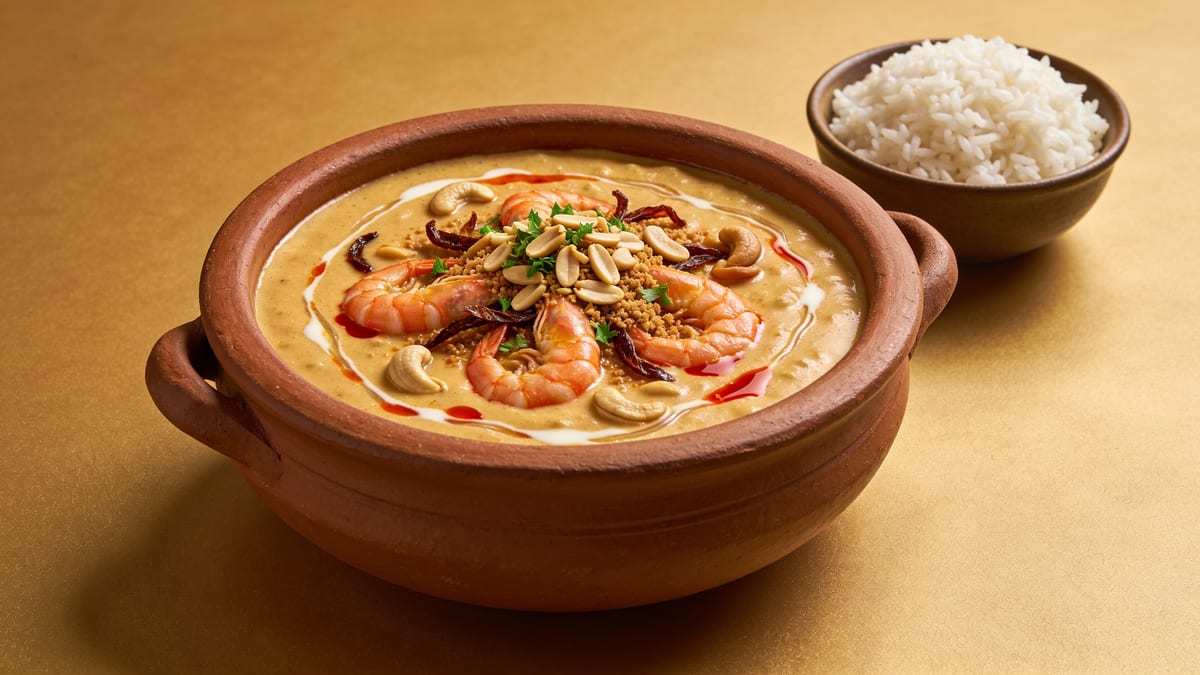
Soak stale bread in coconut milk until soft. Make a base by frying onion, garlic, ginger, tomato and herbs, then blend it with the soaked bread, ground toasted peanuts and cashews, dried shrimp and more coconut milk into a smooth purée. Cook this gently in a pot, stirring constantly (it's thick and catches easily), gradually adding dendê (red palm oil) and fresh shrimp, until it's rich, thick, creamy and glossy and the raw taste is gone. Season well and serve hot with white rice — or use it as the filling for acarajé.
- Soak the bread in coconut milk, then blend with the nuts and shrimp into a smooth base.
- Cook it gently and stir constantly — vatapá is thick and scorches easily.
- Dendê (red palm oil) gives the authentic colour and flavour; add it gradually as it cooks.
Equipment
- Blender
- Heavy pot
- Wooden spoon
재료
Base
- 200 g stale bread, crusts off
- 400 ml coconut milk (plus more as needed)
- 1 onion, 3 garlic cloves, 1 tbsp grated ginger, 1 tomato
- Cilantro, parsley, spring onion
Nuts & shrimp
- 100 g roasted peanuts, ground
- 60 g cashews, ground
- Dried shrimp (soaked) + fresh shrimp
To finish
- 4 tbsp dendê (red palm oil)
- Salt; white rice, to serve
조리법
- 단계01
Tear the stale bread and soak it in the coconut milk until completely soft and mushy.
- 단계02
Fry the chopped onion, garlic, ginger and tomato with the herbs in a little oil until soft and fragrant.
- 단계03
Blend the soaked bread, the fried base, the ground peanuts and cashews, the soaked dried shrimp and enough coconut milk into a smooth, thick purée.
- 단계04
Pour the purée into a heavy pot and cook over medium-low heat, stirring constantly with a wooden spoon (it's thick and catches easily). Gradually stir in the dendê and add the fresh shrimp, and keep cooking until it's thick, creamy, glossy and the raw flour/nut taste is gone, 15–20 minutes. Add coconut milk if too thick.
- 단계05
Season well with salt. Serve the vatapá hot with white rice (and acarajé/abará if you like) — or cool it to use as a filling. Scatter with extra cilantro.
Make ahead
Vatapá is great made ahead — the flavours meld and deepen, and it's frequently prepared in advance to fill acarajé and abará. Make it a day before, then reheat gently (loosening with coconut milk) to serve or fill. Toast and grind the nuts ahead too. It's a natural batch dish for a Bahian spread.
Storage
Keeps 3 days refrigerated and the flavour deepens — vatapá is often made ahead, especially as a filling for acarajé. It thickens a lot when cold, so loosen with a little coconut milk and warm gently, stirring, to bring it back to a creamy consistency. It freezes acceptably. Reheat slowly so it doesn't catch.
Variations
Vatapá de galinha
A chicken version (vatapá de frango/galinha) instead of, or with, the shrimp — popular in the north and northeast.
As acarajé filling
Use vatapá (with caruru and pepper sauce) to fill the fried acarajé and steamed abará.
Regional
Recipes vary across Bahia and the Northeast; some are thicker, some looser, with different nut ratios.
Serve with
Nutrition per serving
Nutrition values are estimates based on the metric measurements. Adjust as needed.
자주 묻는 질문
What is vatapá?
Vatapá is a rich, creamy Afro-Brazilian purée from Bahia, made from bread soaked in coconut milk and blended with ground peanuts and cashews, dried and fresh shrimp, ginger and herbs, then cooked with dendê (red palm oil) into a thick, savoury paste. It can be eaten as a dish with rice or used as the classic filling for acarajé and abará. It's one of the soul dishes of Salvador, with African and Indigenous roots.
What is dendê and can I substitute it?
Dendê is red palm oil — vivid orange and earthy-flavoured — central to Bahian cooking. It gives vatapá its characteristic colour and distinctive taste. There's really no true substitute for its flavour and hue; another oil will make the dish but it won't taste authentically Bahian. Look for dendê at Brazilian or African groceries. Use it in moderation — a little gives a lot of colour and flavour.
Why do I have to stir vatapá constantly?
Vatapá is a thick, starchy, nutty purée, and like polenta or a thick béchamel it catches and scorches on the bottom of the pot very easily. Cooking it over medium-low heat and stirring constantly with a wooden spoon, reaching the bottom and corners, keeps it smooth and stops it burning. If it gets too thick, loosen with a little more coconut milk as you go.
Is vatapá a dish or a filling?
Both. Vatapá is eaten as a dish in its own right, served hot with white rice (and often alongside other Bahian dishes like caruru and moqueca). It's also famously the creamy filling spooned into split acarajé (fried black-eyed pea fritters) and abará (steamed ones) by the baianas in Salvador. So you'll meet it both as a main and as the heart of Bahia's most iconic street snack.
Can I make vatapá without shrimp?
Yes — vatapá de galinha (or de frango), made with chicken instead of shrimp, is a popular version, especially in Brazil's north and northeast (and it's the style often found in the famous Bahian-influenced dishes elsewhere). You can also make a vegetarian version leaning on the bread, coconut, nuts and dendê for richness. The shrimp (especially dried shrimp) gives the classic Bahian depth, but it adapts well.
Cooked this? Rate it.
Real ratings from real cooks. We only show a score once enough of you have weighed in — no fabricated stars.