Gemista — Greek Baked Stuffed Vegetables
One of the great dishes of the Greek summer table: ripe tomatoes and peppers hollowed out and stuffed with a fragrant rice filling of onion, herbs (dill, mint, parsley) and the scooped-out tomato pulp, then baked slowly in plenty of olive oil with wedges of potato until soft, sweet and lightly caramelised. Gemista is a 'ladero' — cooked in olive oil — and most often vegan (nistisimo), eaten warm or at room temperature with feta and bread. It's humble, sunny, make-ahead food that tastes of a Greek garden.
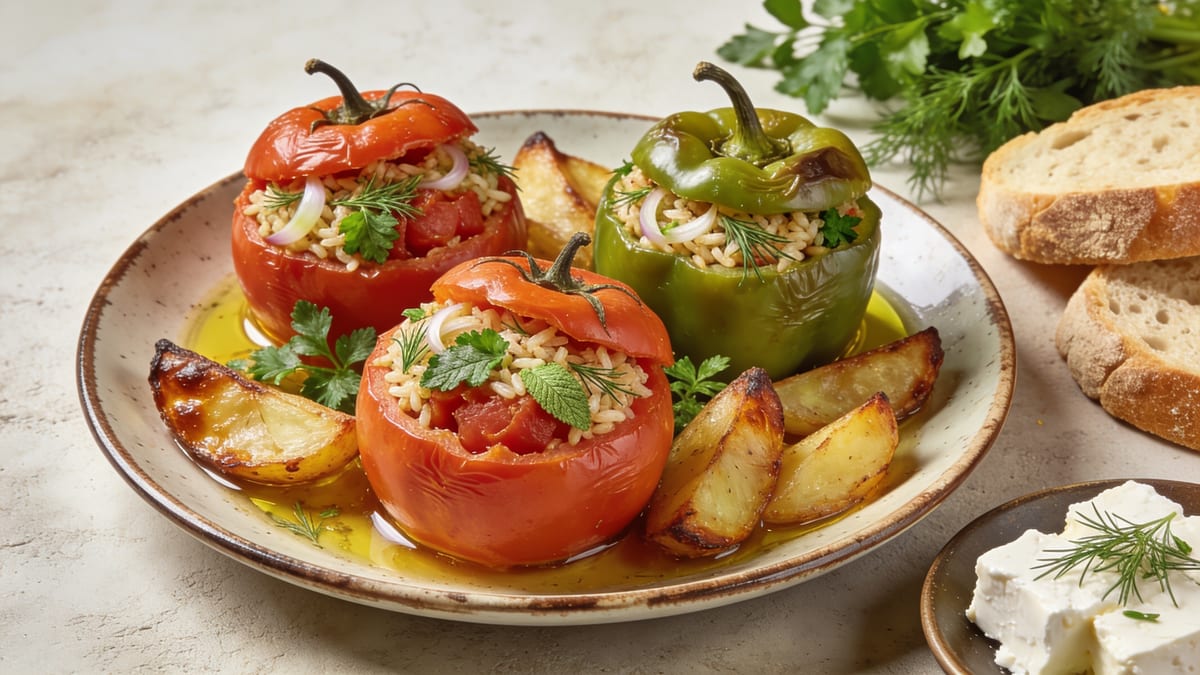
Slice the tops off tomatoes and peppers and keep them as lids. Scoop out the tomato pulp (don't throw it away — it flavours the filling) and deseed the peppers. Make a filling by softening lots of onion and garlic in olive oil, then mixing in raw short-grain rice, the chopped tomato pulp, herbs (dill, mint, parsley), salt and a good glug more oil — the rice only needs to be partly coated, as it cooks inside the vegetables. Loosely fill each vegetable (the rice swells), put the lids back, tuck potato wedges between them, pour in olive oil and a little water, and bake until everything is soft, the rice is cooked and the tops are caramelised.
- Save the scooped-out tomato pulp — blended into the filling it's where much of the flavour comes from.
- Fill only loosely: the raw rice swells as it cooks inside the vegetables, so leave room.
- Be generous with olive oil and bake slowly — gemista is a 'ladero' (olive-oil dish); add potato wedges in the gaps.
Equipment
- Large baking dish
- Spoon (for scooping)
- Frying pan
Ingrediënten
Vegetables
- 6 large tomatoes and/or bell peppers (mixed)
- 2 potatoes, cut into wedges
Filling
- 200 g short/medium-grain rice, raw
- 2 onions, finely chopped; 2 garlic cloves
- Reserved tomato pulp; chopped dill, mint and parsley
- Olive oil (generous); salt, pepper, pinch of sugar
Bereiding
- STAP01
Slice the tops off the tomatoes and peppers and keep them as lids. Scoop the pulp out of the tomatoes into a bowl (reserve it) and remove the pepper seeds. Lightly salt the insides and sit the vegetables in a baking dish.
- STAP02
Soften the onion and garlic in plenty of olive oil until sweet. Roughly chop or blend the reserved tomato pulp and add it, then stir in the raw rice, the chopped herbs, salt, pepper and a pinch of sugar, and let it cook a couple of minutes. It should be loose and well-oiled.
- STAP03
Spoon the filling into each tomato and pepper, filling only about three-quarters full as the rice will swell. Put the reserved lids back on top.
- STAP04
Tuck potato wedges into the gaps between the vegetables (they roast and stop the gemista toppling). Season the potatoes, drizzle everything generously with olive oil and pour a little water into the base of the dish.
- STAP05
Bake at 180°C, covered with foil for the first 45 minutes, then uncovered, until the rice is cooked through, the vegetables are completely soft and the tops are caramelised, about 1¼ hours total. Add a splash of water if it dries out. Rest 20 minutes and serve warm or at room temperature.
Make ahead
Gemista is ideal made ahead — Greeks often cook it in the morning (or the day before) to eat warm or at room temperature later, and it genuinely tastes better after resting. Make it fully a day ahead and keep refrigerated; bring back to room temperature or warm gently to serve. It's perfect for entertaining and picnics since it needs no last-minute work.
Storage
Gemista keeps beautifully for 3–4 days refrigerated and is famously even better the next day, once the flavours have settled — it's a classic make-ahead dish. Eat it cold, at room temperature, or gently reheated. It doesn't freeze especially well (the vegetables soften further), so it's best enjoyed within a few days. The olive oil it bakes in helps preserve and flavour it.
Variations
With mince
Add minced beef or lamb to the rice filling for a non-vegan version (gemista me kima).
Pine nuts & currants
Stir pine nuts and currants/raisins into the rice for sweetness and texture (note: adds tree-nut allergen).
More vegetables
Stuff zucchini, eggplant or onions too — any summer vegetable that can be hollowed works.
Serve with
Nutrition per serving
Nutrition values are estimates based on the metric measurements. Adjust as needed.
Veelgestelde vragen
What is gemista?
Gemista (γεμιστά, 'stuffed things') is a Greek dish of vegetables — most classically tomatoes and bell peppers, sometimes zucchini, eggplant or onions — hollowed out and stuffed with a herby rice filling, then baked in olive oil with potato wedges. It's a 'ladero' (olive-oil dish) and is usually vegan (nistisimo), eaten warm or at room temperature. A staple of the Greek summer, it's humble, flavourful and famously good the next day.
Why save the tomato pulp?
The pulp scooped out of the tomatoes is full of flavour and juice, and it's stirred (chopped or blended) back into the rice filling — it's a big part of what makes gemista taste so good, and it gives the rice the liquid it needs to cook. Throwing it away would waste the tomatoes' flavour and leave the filling dry. Some cooks even add extra grated tomato to the filling.
Why is my rice still hard / why did it overflow?
Two common issues. Hard rice usually means there wasn't enough liquid or oil, or it baked too fast/dry — keep it covered at first, be generous with olive oil, and add a little water to the dish. Overflowing means the vegetables were overfilled: the raw rice swells a lot as it cooks, so fill only about three-quarters full and leave room. Slow, moist baking is the key to evenly cooked rice.
Is gemista vegan?
Traditionally, yes — the classic version (gemista nistisima) is vegan, made only with vegetables, rice, herbs and olive oil, which is why it's a staple during Greek Orthodox fasting periods. It's naturally dairy-free and gluten-free too. There's also a popular non-vegan version with minced meat added to the rice (gemista me kima). The vegan version is the everyday summer classic, often served with feta on the side for those who want it.
Should I serve gemista hot or cold?
Either — and that flexibility is part of its charm. Gemista is most often eaten warm (not piping hot) or at room temperature, which lets the olive-oil-rich flavours come through. Many Greeks consider it best a few hours after cooking, or the next day, at room temperature. So make it ahead, let it rest, and serve it warm or cool with feta and bread — there's no need to serve it straight from the oven.
Cooked this? Rate it.
Real ratings from real cooks. We only show a score once enough of you have weighed in — no fabricated stars.