Paella — Spanish Saffron Rice
Spain's great communal rice, cooked in a wide shallow pan over a wide flame: short-grain rice simmered in saffron stock with chicken and rabbit (the Valencian original) or seafood, never stirred, until the grains are al dente and a prized caramelised crust — the socarrat — forms on the bottom. Paella is a Sunday ritual and a celebration dish, finished with a squeeze of lemon and eaten straight from the pan.
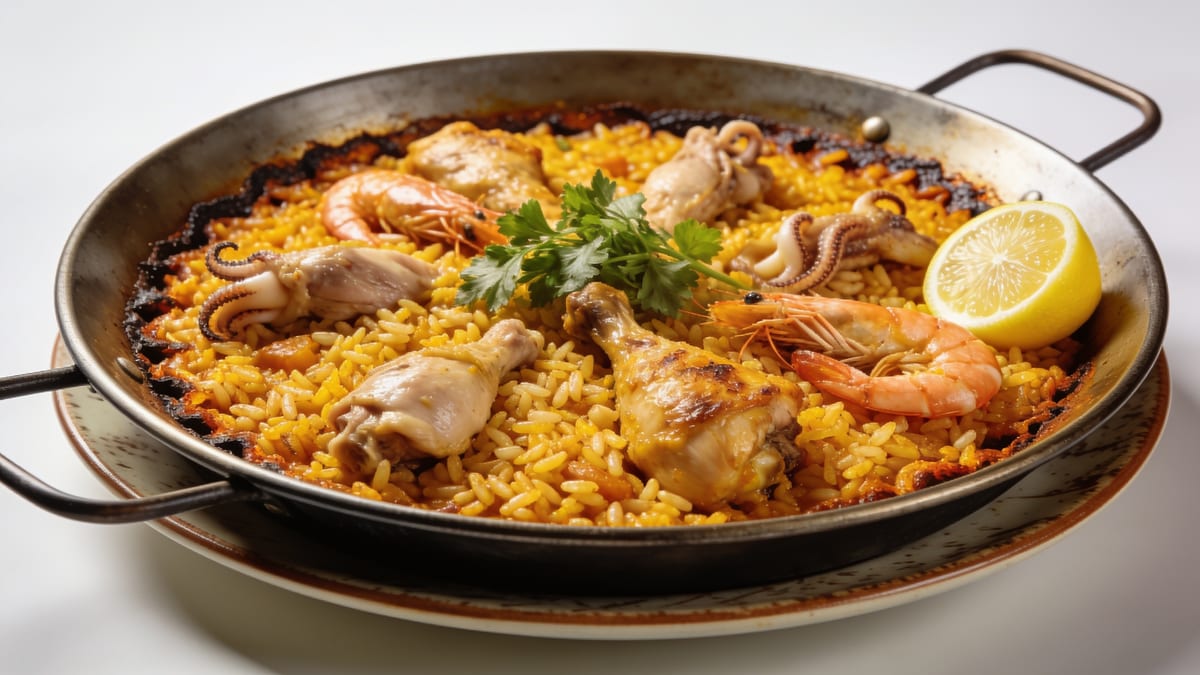
In a wide paella pan, brown your protein (chicken/rabbit, or sear seafood and set aside), then make a sofrito of onion, garlic, tomato and paprika. Add the rice and toast it briefly, then pour in hot saffron stock — roughly double the volume of rice — and spread everything evenly. Now do not stir: simmer on a wide flame, turning the pan for even cooking, until the rice absorbs the stock and is al dente, about 18–20 minutes. Listen for the crackle of the socarrat forming, rest 5 minutes, and serve with lemon.
- Use short-grain Spanish rice (Bomba or Calasparra) and don't stir once the stock goes in — that's what builds the socarrat.
- Bloom saffron in hot stock; the ratio of about 2:1 stock to rice and a wide, thin layer are key.
- Let the bottom catch into a toasted crust (socarrat) at the end — listen and smell for it, don't burn it.
Equipment
- Paella pan (or wide shallow pan)
- Small pan for stock
Ingrediënten
Base
- 400 g Spanish short-grain rice (Bomba/Calasparra)
- 1 L stock (chicken or seafood), hot
- Big pinch saffron threads, bloomed in the warm stock
- 1 onion + 3 garlic cloves; 2 grated tomatoes; 1 tsp smoked paprika
Valencian / mixed
- 500 g chicken (and/or rabbit), in pieces
- Green beans and butter beans (garrofó), or peas
Seafood (optional)
- Prawns, mussels, clams, squid
- Lemon wedges; olive oil; salt
Bereiding
- STAP01
Heat olive oil in the pan and brown the chicken/rabbit pieces well; push to the side. (For seafood, sear prawns/squid briefly and remove to add back later.)
- STAP02
In the same pan, soften the chopped onion and garlic, add the grated tomato and smoked paprika, and cook down to a jammy sofrito — the flavour base.
- STAP03
Add the rice and the green beans, and stir for a minute to coat and lightly toast the grains in the sofrito.
- STAP04
Pour in the hot saffron stock (about double the rice), season, and spread everything into an even layer. From here, do not stir. Simmer on a wide, even flame, rotating the pan, for about 18–20 minutes until the stock is absorbed and the rice al dente. Tuck in seafood partway so it cooks through.
- STAP05
In the last couple of minutes, raise the heat briefly until you hear a gentle crackle and smell toasting — the socarrat crust forming on the base (don't let it burn). Off the heat, cover loosely and rest 5 minutes. Serve with lemon, from the pan.
Make ahead
Make the sofrito and the saffron stock ahead — those are the flavour foundations. The rice itself should be cooked just before serving, as paella doesn't hold or reheat like a stew. Have everything prepped (mise en place) so the cook goes smoothly.
Storage
Best fresh, ideally straight from the pan, when the rice and socarrat are at their best. Leftovers keep 2 days refrigerated; reheat gently (a little stock helps) or enjoy at room temperature. Seafood paella is best eaten the day it's made.
Variations
Paella Valenciana
The original from Valencia: chicken, rabbit, green beans, garrofó (butter beans) and sometimes snails — no seafood.
Paella de marisco
An all-seafood version with prawns, mussels, clams and squid in a seafood stock.
Paella mixta
The popular mixed surf-and-turf with both meat and seafood (a crowd-pleaser, if not the purist's choice).
Serve with
Nutrition per serving
Nutrition values are estimates based on the metric measurements. Adjust as needed.
Veelgestelde vragen
What rice should I use for paella?
A Spanish short-grain rice — Bomba or Calasparra — which absorbs lots of flavourful stock while staying firm and separate. Bomba is especially forgiving. Avoid long-grain or risotto rice: long-grain won't absorb the same way, and risotto rice (and stirring) makes it creamy, which paella shouldn't be.
What is socarrat?
The prized layer of caramelised, toasted rice that forms on the bottom of the pan. You build it by not stirring and by raising the heat for a minute or two at the end until you hear it gently crackle. It's the most coveted part of a good paella — just stop before it burns; trust your nose and ears.
Why shouldn't I stir paella?
Stirring releases starch and makes the rice creamy like risotto, and it prevents the socarrat from forming. Paella rice should be separate and al dente with a toasted crust beneath. Spread everything evenly once, then leave it — only rotating the pan for even heat. This is the biggest difference from risotto technique.
Do I need a special paella pan?
A traditional paella pan is wide and shallow so the rice cooks in a thin layer with maximum surface for the socarrat. It helps a lot, but any wide, shallow pan (or large frying pan) works for home cooking. The key is a broad, even heat source — paella is traditionally cooked over a wide flame, not a single small burner.
Can I make authentic Valencian paella with seafood?
Authentic paella Valenciana is actually chicken, rabbit and beans — not seafood. Seafood paella (paella de marisco) and the mixed version (paella mixta) are also genuinely Spanish and delicious, but Valencians are protective of the original. Mixing meat and seafood (mixta) is popular abroad but frowned on by purists.
Cooked this? Rate it.
Real ratings from real cooks. We only show a score once enough of you have weighed in — no fabricated stars.