Batata-doce assada no forno
Whole sweet potatoes roasted hot and uncovered until the skins crisp and the centers collapse into a custardy, caramel-sweet mash. A 220°C (425°F) oven gives the potatoes enough time for their starches to convert to sugar, so the flesh tastes candied without a drop of added sweetener. All they need is a fork, a little oil and salt, and about an hour of hands-off oven time.
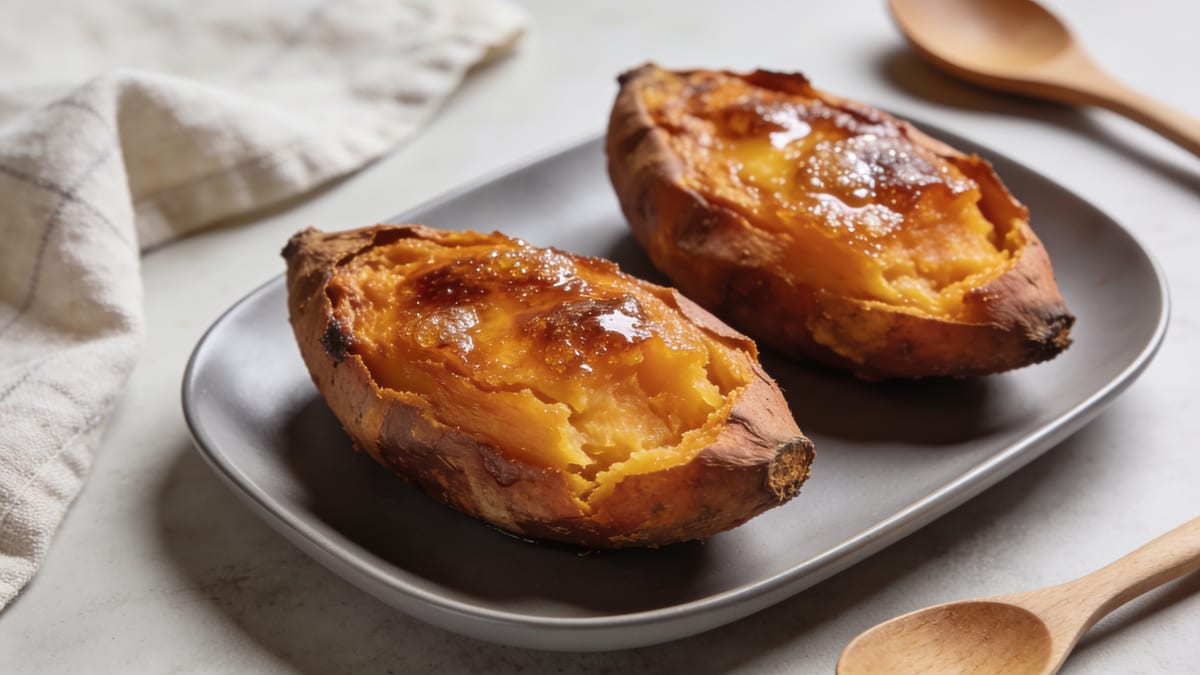
Heat the oven to 220°C (425°F) with a rack in the middle and line a rimmed baking sheet with parchment or foil. Scrub and dry 4 medium sweet potatoes, prick each one 8 to 10 times with a fork, then rub them all over with 1 tablespoon olive oil and 1 teaspoon kosher salt. Bake uncovered for 45 to 60 minutes, until a paring knife slides to the center with zero resistance and dark, syrupy juices bubble out of the fork holes. Rest 5 minutes, slit each potato lengthwise, push the ends toward the middle to open it, fluff the flesh with a fork, and finish with butter, flaky salt, and black pepper.
- Skip the foil wrap — an uncovered potato roasts and caramelizes, while a wrapped one just steams.
- Trust the drips, not the clock: bubbling caramelized syrup at the fork holes means the starches have turned sweet.
- Pick potatoes of similar size (230–280 g / 8–10 oz each) so every one finishes at the same time.
Equipment
- Rimmed baking sheet
- Parchment paper or aluminum foil (for lining the pan)
- Fork
- Vegetable scrub brush
- Paring knife
- Oven mitts
Ingredientes
Sweet potatoes
- medium sweet potatoes, 230–280 g (8–10 oz) each, similar in size, scrubbed
- 15 ml olive oil
- 6 g kosher salt
To serve (optional)
- 28 g salted butter, or vegan butter
- 2 g flaky sea salt
- 1 g freshly ground black pepper
- 6 g fresh chives, thinly sliced
Modo de preparo
- ETAPA01
Set a rack in the middle of the oven and heat it to 220°C (425°F). Line a rimmed baking sheet with parchment paper or foil — the potatoes will leak sticky syrup as they bake, and the liner saves you from scrubbing burnt sugar off the pan.
- ETAPA02
Scrub 4 medium sweet potatoes under cool running water with a vegetable brush to remove any grit, then dry them thoroughly with a kitchen towel. Dry skin crisps; wet skin steams and stays leathery.
- ETAPA03
Stab each potato 8 to 10 times with a fork, rotating so the holes are spread around the whole surface. The holes vent steam as the interior heats, which keeps pressure from building under the skin and gives the sugary juices a place to escape and caramelize.
- ETAPA04
Rub the potatoes all over with 15 ml (1 tablespoon) olive oil, then sprinkle them on all sides with 6 g (1 teaspoon) kosher salt. Space them out on the lined baking sheet so hot air can circulate around each one — do not wrap them in foil.
- ETAPA05
Bake for 45 to 60 minutes, depending on size. Start checking at 45 minutes: a paring knife or skewer should slide all the way to the center with no resistance, the potatoes should feel soft when squeezed with an oven mitt, and you should see dark, bubbling syrup at some of the fork holes. If the knife catches at the center, keep baking in 10-minute increments — an underbaked sweet potato is starchy instead of creamy.
- ETAPA06
Let the potatoes rest on the pan for 5 minutes so the flesh finishes softening and they are safe to handle. Slit each one lengthwise down the top, push the two ends toward the center to pop it open, and fluff the interior with a fork.
- ETAPA07
Tuck a knob of butter into each potato so it melts into the flesh, then finish with flaky salt, a few grinds of black pepper, and sliced chives. Serve immediately while the skins are still crisp.
Make ahead
Bake the potatoes up to 3 days ahead, cool, and refrigerate whole and unsplit. Before serving, reheat on a baking sheet at 175°C (350°F) for 15 to 20 minutes until hot in the center, then split, fluff, and add toppings. The flavor actually deepens after a day — chilled baked sweet potatoes taste noticeably sweeter once reheated.
Storage
Cool leftover potatoes completely, then refrigerate them whole in an airtight container for up to 4 days. Reheat in a 175°C (350°F) oven for 15 to 20 minutes to revive the skin, or microwave 2 to 3 minutes if you are in a hurry (the skin will soften). Baked and cooled sweet potatoes also freeze well, wrapped individually, for up to 3 months; thaw overnight in the fridge before reheating.
Variations
Vegan maple-tahini
Skip the butter and instead drizzle each split potato with 1 teaspoon tahini and 1 teaspoon maple syrup, then finish with flaky salt and toasted sesame seeds. The whole dish becomes vegan while keeping that rich, salty-sweet finish. (Note: tahini and sesame seeds add sesame as an allergen.)
Loaded southwest style
Turn the side into a light main: top each potato with warm seasoned black beans, salsa, diced avocado, a squeeze of lime, and cilantro. A spoonful of Greek yogurt or sour cream stands in nicely for butter.
Cinnamon-maple with pecans
Mash 28 g (2 tablespoons) softened butter with 1 tablespoon maple syrup and 1/2 teaspoon ground cinnamon, then swirl it into the hot flesh and scatter with chopped toasted pecans (tree nuts). This version leans holiday-table sweet without becoming a dessert.
Serve with
Nutrition per serving
Nutrition values are estimates based on the metric measurements. Adjust as needed.
Perguntas frequentes
What is the best temperature for baking sweet potatoes?
220°C (425°F) is the sweet spot. If you're learning how to bake sweet potatoes, the key idea is that their enzymes convert starch to maltose as the interior passes through roughly 57–75°C (135–170°F) — a moderately hot oven holds them in that zone long enough to get genuinely sweet, while still crisping the skin. A 200°C (400°F) oven also works with about 10 extra minutes; hotter than 230°C (450°F) risks scorched skins before the center softens.
Should I wrap sweet potatoes in foil before baking?
No. Foil traps steam, so you end up with a boiled texture, pale flavor, and soggy skin. Baking them uncovered on a lined sheet lets moisture evaporate, concentrates the sugars, and lets the escaping juices caramelize. Save the foil for lining the pan, not wrapping the potato.
How do I know when a baked sweet potato is done?
Use three signals: a paring knife or skewer slides to the very center with no resistance, the potato yields easily when squeezed with an oven mitt, and dark syrupy juice bubbles from the fork holes. Timing alone is unreliable because size varies so much — a slim 200 g potato can be done in 40 minutes while a fat 400 g one may need 75.
Do I really need to poke holes in sweet potatoes?
It takes ten seconds and is worth doing. The holes vent steam so pressure can't build under the skin (bursting is rare but messy when it happens), and they give the sugary juices an exit route so they caramelize on the surface instead of staying trapped. Anyone showing you how to bake sweet potatoes will start with a fork for good reason.
Can I bake sweet potatoes faster in the microwave?
You can microwave a pricked sweet potato for 8 to 10 minutes and it will be tender, but it won't taste the same — the interior races past the starch-conversion temperature range, so you lose most of the caramel sweetness and all of the crisp skin. A good compromise on a weeknight: microwave 4 to 5 minutes to jump-start the center, then finish in a 220°C (425°F) oven for 20 to 25 minutes.
Cooked this? Rate it.
Real ratings from real cooks. We only show a score once enough of you have weighed in — no fabricated stars.