Jambalaya
Esta é a jambalaya "vermelha" crioula da Louisiana: linguiça andouille, sobrecoxas de frango e camarões cozidos junto com arroz de grão longo, a santíssima trindade, tomates e uma mistura certeira de temperos cajun. Uma panela só, profundamente saborosa, com grãos soltos e macios e a cobiçada camada levemente crocante do fundo.
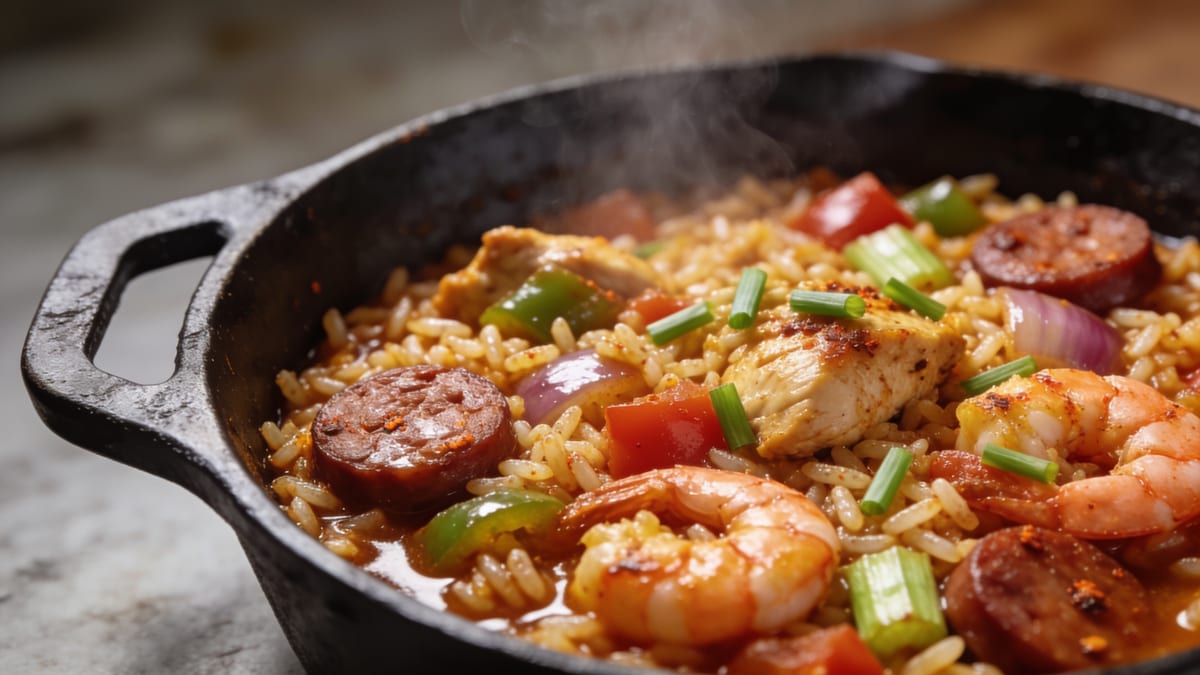
Doure a andouille e as sobrecoxas de frango temperadas para formar o fond, depois refogue a santíssima trindade na gordura que ficou na panela. Toste o arroz de grão longo nessa base temperada, junte os tomates, o caldo e o tempero cajun, então cozinhe tampado, em fogo baixo e sem mexer, até o arroz beber todo o líquido. Misture os camarões só no finalzinho, para que cozinhem delicadamente no vapor, deixe descansar 10 minutos fora do fogo e solte os grãos. A proporção de 1 parte de arroz para cerca de 1,75 parte de líquido e uma panela pesada com tampa são o que separa uma jambalaya soltinha de uma empapada.
- Use a proporção certa de arroz para líquido e não levante a tampa durante o cozimento, ou os grãos cozinham de forma desigual no vapor
- Adicione os camarões apenas nos últimos 5 a 7 minutos; o calor residual termina de cozinhá-los e os mantém suculentos
- Descansar 10 minutos fora do fogo firma os grãos e forma a cobiçada camada levemente crocante do fundo
Equipment
- Panela pesada tipo Dutch oven de 5 a 6 quarts com tampa bem justa
- Faca do chef afiada
- Tábua de corte
- Colher de pau
- Copo medidor para líquidos
- Peneira de malha fina
Ingredientes
Mistura de temperos cajun
- 8 g páprica defumada
- 3 g tomilho seco
- 2 g orégano seco
- 1 g pimenta-caiena, Até 1 colher de chá para mais picância
- 3 g alho em pó
- 3 g cebola em pó
- 6 g sal kosher, E mais a gosto
- 2 g pimenta-do-reino moída na hora
Modo de preparo
- ETAPA01
Misture a páprica defumada, o tomilho, o orégano, a caiena, o alho em pó, a cebola em pó, o sal e a pimenta-do-reino em uma tigela pequena. Envolva os pedaços de frango com cerca de um terço da mistura e reserve. Lave o arroz em uma peneira fina até a água sair quase transparente e escorra bem. Aqueça o caldo para que ele não interrompa a fervura mais adiante.
- ETAPA02
Aqueça o óleo em uma panela tipo Dutch oven de 5 a 6 quarts em fogo médio-alto. Junte as rodelas de andouille e cozinhe, mexendo de vez em quando, até dourarem nas bordas e soltarem a gordura, de 5 a 6 minutos. Retire com uma escumadeira, deixando a gordura na panela.
- ETAPA03
Coloque o frango temperado na gordura quente, em uma camada única, e sele sem mexer por 2 minutos; depois mexa e cozinhe por mais 2 minutos, até dourar levemente, mas sem cozinhar por completo. Retire e reserve junto com a linguiça. Os pedacinhos dourados grudados no fundo da panela são o fond, a espinha dorsal do sabor.
- ETAPA04
Abaixe o fogo para médio. Junte a cebola, o pimentão e o salsão e cozinhe, raspando o fond do fundo, até amolecerem, de 6 a 7 minutos. Acrescente o alho e o extrato de tomate e cozinhe por 1 minuto, até escurecer. Adicione o arroz escorrido e o restante da mistura de temperos; mexa para envolver e toste os grãos por 2 minutos.
- ETAPA05
Junte os tomates em cubos com o suco da lata, o caldo quente e as folhas de louro, raspando bem o fundo da panela. Volte a andouille e o frango (com os sucos que soltaram no descanso). Deixe levantar fervura suave, prove o líquido e ajuste o sal; ele deve ter um sabor levemente temperado.
- ETAPA06
Reduza para fogo baixo, tampe bem e cozinhe sem levantar a tampa nem mexer por 20 minutos. Abrir a tampa libera o vapor e deixa os grãos cozidos de forma desigual, então resista à tentação.
- ETAPA07
Espalhe os camarões por cima, pressionando-os levemente contra o arroz. Tampe de novo e cozinhe até os camarões ficarem opacos e o arroz macio, de 6 a 7 minutos. Se sobrar líquido, cozinhe destampado por mais 2 a 3 minutos.
- ETAPA08
Retire do fogo e deixe descansar, tampado, por 10 minutos; isso firma os grãos e forma a cobiçada crosta do fundo. Descarte as folhas de louro, solte o arroz delicadamente com um garfo e misture a cebolinha e a salsinha. Prove, acrescente mais uma pitada de sal ou de caiena se precisar e sirva bem quente.
Make ahead
A jambalaya é melhor no dia em que é feita, mas todo o preparo pode ser adiantado: pique a trindade, fatie a linguiça, corte e tempere o frango e misture os temperos com até um dia de antecedência, guardando tudo na geladeira. Para uma versão quase pronta, cozinhe até o fim da etapa de cozimento sem os camarões, deixe esfriar e refrigere; reaqueça com um pouco de caldo e adicione os camarões nos últimos 6 a 7 minutos, para que fiquem suculentos.
Storage
Deixe chegar à temperatura ambiente em até 2 horas e refrigere em um pote hermético por até 4 dias. Reaqueça delicadamente em uma panela tampada com um pouco de caldo ou água para soltar os grãos, ou no micro-ondas em intervalos de 60 segundos, mexendo entre eles. Congele por até 2 meses, lembrando que a textura do camarão amolece; descongele de um dia para o outro na geladeira antes de reaquecer.
Variations
Jambalaya cajun (sem tomate)
Para o estilo cajun marrom das pradarias da Louisiana, elimine os tomates em cubos e o extrato de tomate e aumente o caldo para 750 ml (3 1/4 xícaras). Doure as carnes um pouco mais para dar cor e aposte ainda mais no fond da andouille. O resultado é mais defumado e mais carnudo, sem a acidez viva do tomate.
Jambalaya vegetariana defumada
Troque as carnes por 400 g (14 oz) de tofu firme e 200 g (7 oz) de cogumelos fatiados, dourados no azeite, mais uma lata de feijão vermelho escorrido, adicionada com o caldo. Use caldo de legumes e mais 1/2 colher de chá de páprica defumada para imitar a fumaça da andouille.
Jambalaya de frutos do mar
Versão litorânea: substitua o frango por mais 225 g (8 oz) de camarão e 225 g (8 oz) de carne de caranguejo ou caudas de lagostim limpas, tudo adicionado nos últimos 6 a 7 minutos. Mantenha a andouille como base de sabor e finalize com umas gotas de limão.
Serve with
Nutrition per serving
Nutrition values are estimates based on the metric measurements. Adjust as needed.
Perguntas frequentes
Qual é a diferença entre a jambalaya crioula e a cajun?
A jambalaya crioula, o estilo urbano de Nova Orleans, leva tomates, que dão a cor avermelhada e o sabor mais vivo; esta receita é crioula. A jambalaya cajun, das pradarias rurais, dispensa o tomate e ganha a cor amarronzada e a profundidade defumada das carnes bem douradas. As duas partem da santíssima trindade de cebola, pimentão e salsão.
Por que minha jambalaya ficou empapada ou grudenta?
Jambalaya empapada quase sempre é resultado de líquido demais, arroz não lavado ou de mexer durante o cozimento. Lave o arroz para remover o amido da superfície, respeite a proporção de aproximadamente 1 parte de arroz para 1,75 parte de líquido e mantenha a tampa fechada, sem mexer, para os grãos cozinharem por igual no vapor. O descanso fora do fogo, no final, firma tudo.
Qual é o melhor arroz para jambalaya?
Use arroz branco de grão longo; ele fica soltinho e absorve o caldo temperado sem empapar. Evite arroz de grão curto, arbóreo ou instantâneo. O arroz parboilizado de grão longo também é excelente e muito tolerante para jambalaya, porque resiste ao cozimento excessivo.
Quando devo adicionar os camarões?
Adicione os camarões apenas nos últimos 6 a 7 minutos de cozimento. Camarão cozinha rápido e fica borrachudo se ferver o tempo todo; colocá-lo sobre o arroz quase pronto permite que cozinhe delicadamente no vapor preso na panela e continue suculento.
Posso fazer a jambalaya com antecedência e reaquecer?
Sim. A jambalaya reaquece bem em até 4 dias; aqueça tampada com um pouco de caldo para reviver os grãos. Se for preparar com bastante antecedência, pare antes de adicionar os camarões, refrigere e, na hora, reaqueça e junte os camarões frescos para a textura ficar perfeita.
Cooked this? Rate it.
Real ratings from real cooks. We only show a score once enough of you have weighed in — no fabricated stars.