Khoresh-e Fesenjan — Persian Walnut & Pomegranate Stew
One of Persia's most regal stews: chicken (or duck, or meatballs) simmered slowly in a thick, dark sauce of finely ground toasted walnuts and tart-sweet pomegranate molasses until the oil rises and the flavour turns deep, nutty and luxuriously sour-sweet. Fesenjan is a dish for celebrations and Yalda nights — patient cooking that transforms humble walnuts into something velvety and unforgettable, served over saffron rice.
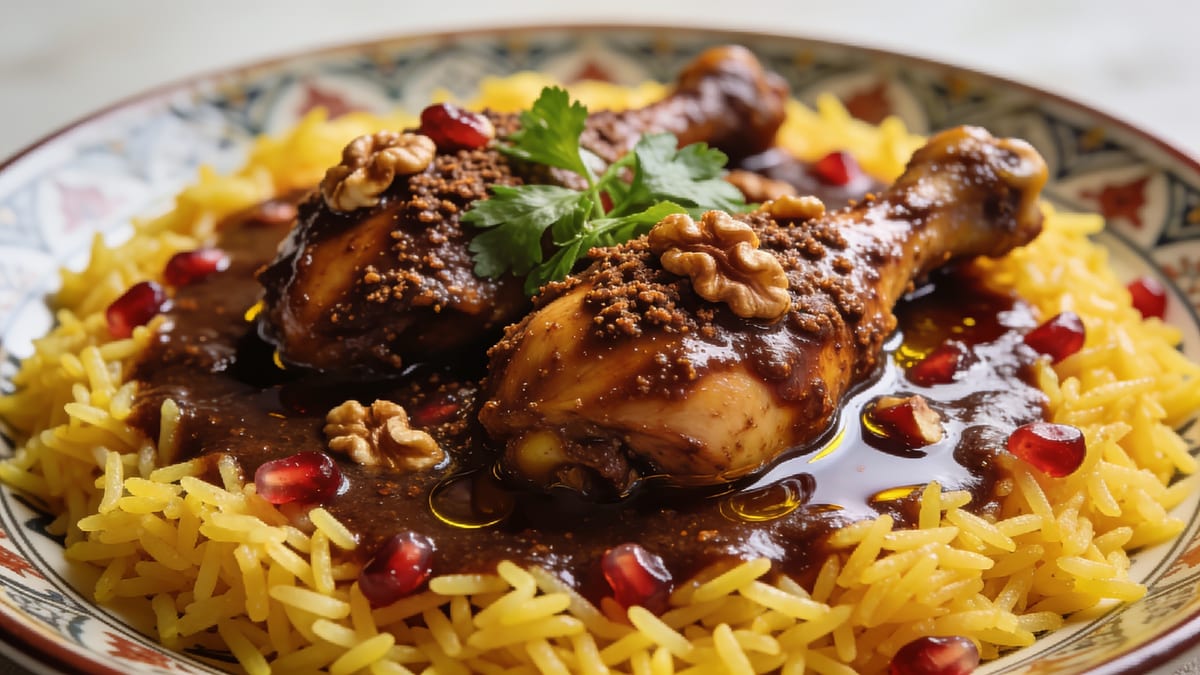
Toast walnuts and grind them very finely, then simmer them in water until they release their oil and the sauce thickens and darkens — this slow cook is what makes fesenjan. Brown chicken pieces and add them in, along with pomegranate molasses (and a little sugar to balance the tartness). Simmer gently for 1.5–2 hours, stirring so the walnut sauce doesn't catch, until thick, glossy and oil-streaked. Balance the sweet-sour to taste and serve over Persian saffron rice.
- Grind the toasted walnuts finely and cook them low and slow until the oil separates — that's the soul of the sauce.
- Pomegranate molasses gives the signature tart-sweet depth; balance with a little sugar to taste.
- Stir often and keep the heat gentle so the rich walnut sauce doesn't scorch.
Equipment
- Heavy pot
- Food processor or grinder
- Frying pan
Ingredientes
Walnut sauce
- 300 g walnuts, toasted and finely ground
- 750 ml water (plus more as needed)
- 120 ml pomegranate molasses
- 1–2 tbsp sugar (to balance), to taste
Stew
- 1 kg chicken pieces (thighs/legs), or duck
- 1 onion, grated or finely chopped
- ½ tsp turmeric; salt, pepper; oil
Preparação
- PASSO01
Toast the walnuts lightly, then grind them very finely. Simmer them in the water over low heat, stirring often, until they release their oil and the sauce thickens and darkens to a rich brown, 45–60 minutes. Add water if it gets too thick.
- PASSO02
Soften the grated onion with the turmeric in oil, then brown the chicken pieces. Season.
- PASSO03
Add the browned chicken (and onions) to the walnut sauce. Stir in the pomegranate molasses and a little sugar.
- PASSO04
Cover and simmer gently for another 45–60 minutes, stirring regularly so the walnut sauce doesn't catch, until the chicken is tender and the sauce is thick, dark, glossy and streaked with walnut oil.
- PASSO05
Taste and balance the sweet-sour — more pomegranate molasses for tang, a little sugar to round it. The sauce should be luscious and tangy-sweet. Serve over Persian saffron rice (chelo).
Make ahead
An excellent make-ahead dish — the walnut-pomegranate flavours meld and deepen with time. Make it a day or two before and reheat gently to serve. The labour-intensive walnut sauce can be cooked ahead, with the chicken added later. Freezes well.
Storage
Keeps 3–4 days refrigerated and deepens in flavour overnight — like most Persian khoresh, it's even better the next day. Reheat gently, stirring, adding a splash of water if thick. It freezes well. Serve with freshly cooked rice.
Variations
Duck fesenjan
Duck (fesenjan-e ordak) is a luxurious, traditional version, especially in northern Iran.
Meatball (koofteh)
Use small meatballs instead of chicken pieces for fesenjan with koofteh.
Vegetarian
Make it with squash, mushrooms or just the walnut-pomegranate sauce over rice.
Serve with
Nutrition per serving
Nutrition values are estimates based on the metric measurements. Adjust as needed.
Perguntas frequentes
What is fesenjan made of?
The two defining ingredients are finely ground toasted walnuts and pomegranate molasses, simmered into a thick, dark, tangy-sweet sauce, usually with chicken (or duck, or meatballs). The walnuts are cooked slowly until they release their oil and the sauce turns rich brown. Pomegranate molasses provides the signature sour-sweet depth.
Why is my fesenjan sauce not thickening or turning dark?
It needs time and low heat. The finely ground walnuts must simmer gently, stirred often, until they break down and release their oil — that's what thickens and darkens the sauce. Rushing it on high heat risks scorching without developing the colour. Give it the slow cook (often 1.5–2 hours total) and it transforms.
How do I balance the sweet and sour?
Pomegranate molasses ranges from quite tart to fairly sweet by brand, so taste as you go. Add a little sugar to balance the tartness — fesenjan should be tangy-sweet and rich, not mouth-puckering or cloying. Adjust near the end with more molasses for sourness or sugar to round it out, to your taste.
Can I make fesenjan with duck or vegetarian?
Yes. Duck fesenjan is a prized traditional version, especially in the Caspian region, and meatballs (koofteh) are also classic. For a vegetarian fesenjan, use squash, mushrooms, or simply serve the walnut-pomegranate sauce over rice — the sauce itself is the star, so it adapts well.
What do you serve with fesenjan?
Fluffy Persian saffron rice (chelo), ideally with a golden tahdig crust, is the classic partner — the plain rice balances the rich, tangy sauce. A scatter of fresh pomegranate seeds on top adds brightness, and pickles (torshi) and a herb plate (sabzi khordan) round out the meal.
Cooked this? Rate it.
Real ratings from real cooks. We only show a score once enough of you have weighed in — no fabricated stars.