Pierogi Ruskie — Polish Potato & Cheese Dumplings
O dumpling mais adorado da Polónia: massa tenra fechada à mão em volta de um recheio de puré de batata e queijo fresco twaróg, cozida em água e depois salteada em manteiga, coroada com cebola caramelizada e dourada. Comida de conforto que vale a tarde inteira.
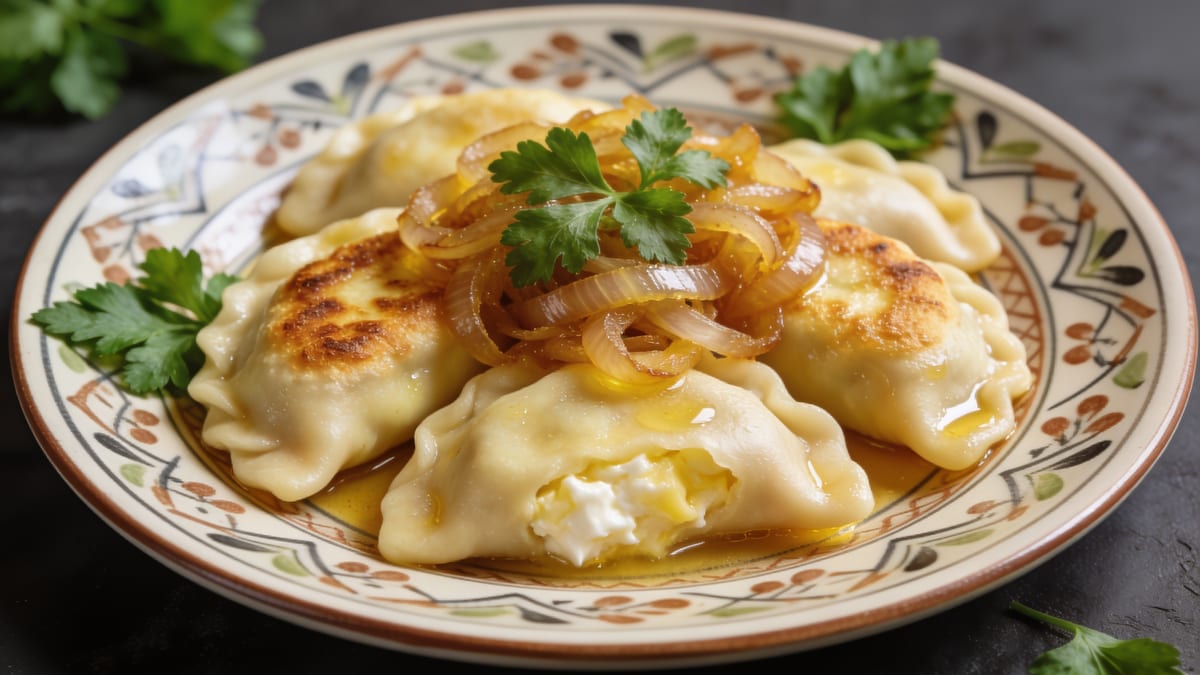
Faça uma massa macia de farinha, água morna, ovo e um pouco de óleo; deixe-a repousar. Misture puré de batata com queijo twaróg, sal e cebola salteada para o recheio. Estenda a massa fina, corte círculos, recheie e aperte bem para selar. Coza em água, por levas, até flutuarem mais 2 minutos e depois, se quiser, salteie em manteiga. Sirva com cebola caramelizada.
- Deixe a massa repousar — o glúten relaxa, a massa estende-se fina e fica tenra, não borrachuda.
- Sele as bordas com firmeza, com a massa seca (não molhada); qualquer recheio na união fá-los rebentar.
- Coza até flutuarem, e depois mais 2 minutos. Saltear em manteiga a seguir é opcional, mas transforma-os.
Equipment
- Taça grande
- Rolo da massa
- Cortador redondo ou copo (8–9 cm)
- Tacho grande
- Frigideira
Ingredientes
Massa
- 400 g farinha de trigo sem fermento, e mais para estender
- 1 ovo
- 240 ml água morna, aproximadamente
- 15 ml óleo neutro
- 3 g sal
Recheio (ruskie)
- 500 g batatas farinhentas, cozidas e esmagadas em puré
- 250 g twaróg (queijo fresco seco), ou ricotta seca/quark
- 1 cebola, picada finamente e salteada
- Sal e bastante pimenta preta
Para servir
- 60 g manteiga
- 2 cebolas, fatiadas e caramelizadas
- Natas azedas (opcional)
Preparação
- PASSO01
Faça um monte com a farinha, abra uma cova no centro e junte o ovo, o óleo, o sal e quase toda a água morna. Misture e depois amasse 8–10 minutos, até obter uma massa lisa, macia e elástica, juntando água conforme for preciso. Tape e deixe repousar 30 minutos.
- PASSO02
Esmague as batatas ainda quentes até obter um puré liso. Misture o twaróg e a cebola picada salteada. Tempere generosamente com sal e pimenta — recheio insosso dá pierogi insossos. Deixe arrefecer até à temperatura ambiente.
- PASSO03
Numa superfície enfarinhada, estenda a massa fina (2–3 mm), por partes, mantendo o resto tapado. Corte círculos com um cortador de 8–9 cm. Volte a estender as aparas.
- PASSO04
Ponha uma colherzinha de recheio em cada círculo. Dobre em meia-lua e aperte as bordas com firmeza para selar — mantenha o rebordo limpo e seco, senão abrem. Se quiser, faça um debrum decorativo.
- PASSO05
Leve um tacho grande de água salgada a uma fervura suave (não em cachão forte, que os rasga). Deite os pierogi em levas. Quando flutuarem, deixe cozer mais 2 minutos e retire com uma escumadeira.
- PASSO06
Opcional mas recomendado: salteie os pierogi cozidos em manteiga até dourarem dos dois lados. Sirva cobertos com a cebola caramelizada e a manteiga, com natas azedas ao lado.
Make ahead
Os pierogi foram feitos para cozinhar em grande quantidade. Molde uma fornada grande e congele-os crus em tabuleiros, depois passe-os para sacos. Coza-os diretamente do congelador sempre que apetecer — sem descongelar.
Storage
Os pierogi cozidos aguentam 3 dias no frigorífico; reaqueça-os salteando-os em manteiga. Os pierogi crus congelam lindamente — congele-os num tabuleiro e depois passe-os para sacos, e coza-os ainda congelados (junte 2 minutos).
Variations
Pierogi z mięsem (de carne)
Recheie com carne cozinhada picada e bem temperada (sobras de um estufado são ideais) em vez de batata e queijo.
Doces (z owocami)
Recheie com mirtilos frescos ou queijo doce; sirva com natas azedas e açúcar — a versão de verão.
Chucrute e cogumelos
O recheio clássico da véspera de Natal — chucrute salteado e cogumelos secos.
Serve with
Nutrition per serving
Nutrition values are estimates based on the metric measurements. Adjust as needed.
Perguntas frequentes
O que é o twaróg e o que posso usar em substituição?
O twaróg é o queijo fresco polaco — um queijo de coalhada fresco, seco e ligeiramente ácido. É central nos pierogi ruskie. Ricotta seca prensada, quark ou um queijo cottage seco (bem escorrido) são os substitutos mais próximos. Evite queijos húmidos e cremosos.
Porque é que os meus pierogi rebentaram?
Quase sempre é a selagem. Mantenha o rebordo da massa completamente livre de recheio e de humidade, e aperte com firmeza — as cozinheiras polacas selam com a massa seca, não molhada (bordas molhadas selam pior e prendem o vapor). E coza em fervura suave, não num cachão violento.
Tenho mesmo de os fritar?
Não — pierogi cozidos, servidos com manteiga e cebola, são tradicionais e deliciosos. Mas saltear os pierogi cozidos em manteiga até dourarem acrescenta uma borda estaladiça, com sabor a manteiga tostada, que muitos consideram a melhor forma de os comer, sobretudo as sobras.
Posso congelá-los?
Sim, e deve fazer a mais de propósito. Congele-os crus, numa camada única, num tabuleiro e depois passe-os para sacos. Coza-os diretamente do congelador, juntando cerca de 2 minutos — não precisam de descongelar.
Porquê «ruskie» — são russos?
Não. «Pierogi ruskie» refere-se à Ruténia (a Ruténia Vermelha, uma região histórica que hoje abrange partes da Polónia e da Ucrânia), não à Rússia. São um clássico profundamente polaco — o recheio de batata e queijo é o mais popular de todos.
Cooked this? Rate it.
Real ratings from real cooks. We only show a score once enough of you have weighed in — no fabricated stars.