Chicken Biryani — Spiced Layered Rice
The jewel of the Indian feast: fragrant basmati rice and marinated chicken layered together and cooked sealed on 'dum' (low steam) until the grains are long, separate and perfumed with saffron, whole spices and fried onions. Hyderabadi-style biryani is a celebration in a pot — each forkful a mix of spiced meat, golden rice and sweet caramelised onion, served with a cooling raita.
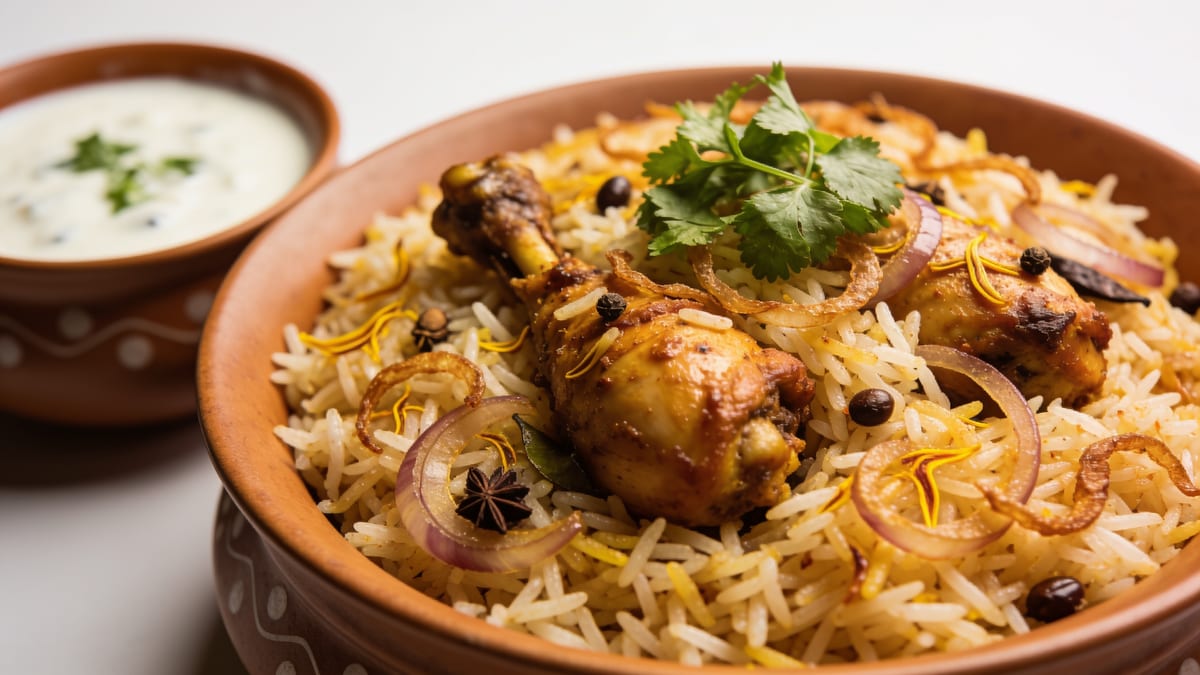
Marinate chicken in yogurt with ginger-garlic, chilli and warm spices. Fry sliced onions until deep golden (birista). Parboil soaked basmati with whole spices and salt until about 70% cooked, then drain. In a heavy pot, layer the marinated chicken, the par-cooked rice, fried onions, mint, cilantro and saffron milk. Seal the lid tightly and cook on 'dum' — very low heat — until the chicken is done and the rice is fluffy and perfumed, about 25–30 minutes. Rest, then fluff gently and serve with raita.
- Par-cook the basmati to ~70% before layering — it finishes steaming on dum, staying long and separate.
- Deeply fried onions (birista), saffron and whole spices are non-negotiable for real biryani flavour.
- Seal the pot and cook on the lowest heat (dum) — don't stir; layers are the whole point.
Equipment
- Heavy-bottomed pot with tight lid
- Large pot for rice
- Frying pan
วัตถุดิบ
Chicken marinade
- 800 g chicken, bone-in pieces
- 200 g plain yogurt
- 2 tbsp ginger-garlic paste; 1 tsp chilli powder; 1 tsp turmeric
- 2 tsp garam masala; juice of ½ lemon; salt
Rice
- 500 g basmati rice, soaked 30 min
- Whole spices: bay, cardamom, cloves, cinnamon, star anise
- Salt (rice water should taste seasoned)
Layering
- 3 onions, thinly sliced and fried golden (birista)
- Handful each mint & cilantro, chopped
- Pinch saffron soaked in 3 tbsp warm milk; 2 tbsp ghee
วิธีทำ
- ขั้น01
Mix the chicken with the yogurt, ginger-garlic paste, chilli, turmeric, garam masala, lemon and salt. Marinate at least 1 hour (or overnight).
- ขั้น02
Fry the thinly sliced onions slowly in oil until deep golden brown and crisp (birista). Drain on paper — these add sweetness and colour. Reserve some for the top.
- ขั้น03
In a heavy pot, cook the marinated chicken with some fried onions until the chicken is partly cooked and you have a thick masala, 12–15 minutes.
- ขั้น04
Boil plenty of well-salted water with the whole spices, add the drained soaked rice, and cook until about 70% done (still firm at the core). Drain well.
- ขั้น05
Spread the par-cooked rice over the chicken. Scatter fried onions, mint, cilantro, the saffron milk and ghee on top. Seal the pot with a tight lid (or foil), and cook on the lowest heat (place on a tawa/heat diffuser) for 25–30 minutes. Rest 10 minutes, then fluff gently and serve with raita.
Make ahead
Components can all be made ahead: marinate the chicken overnight, fry the onions (they keep well), and soak the rice. You can even assemble the layers and do the final dum closer to serving. Leftover biryani reheats beautifully, so making it ahead is no compromise.
Storage
Keeps 3 days refrigerated and reheats well — biryani is famously good the next day. Reheat gently, sprinkling a little water and covering so it steams rather than dries. It freezes well too. Always fluff gently with a fork to keep the grains intact.
Variations
Hyderabadi kacchi
Layer raw marinated meat directly with par-cooked rice and dum-cook it all together (advanced but classic).
Vegetable / paneer biryani
Swap the chicken for mixed vegetables and paneer, keeping the same layering and dum.
Egg biryani
A simpler everyday version layered with boiled eggs instead of meat.
Serve with
Nutrition per serving
Nutrition values are estimates based on the metric measurements. Adjust as needed.
คำถามพบบ่อย
What rice is best for biryani?
Aged, long-grain basmati — it cooks up long, fluffy and separate and carries the aromatics beautifully. Soak it for about 30 minutes and par-cook it to roughly 70% before layering, so it finishes on the steam without turning mushy. Other rices won't give the same elegant, separate grains.
What does 'dum' mean?
Dum is the technique of cooking the layered biryani sealed under a tight lid (traditionally with a dough seal) on very low heat, so it cooks gently in its own trapped steam. This melds the flavours and finishes the rice and meat together. A heat diffuser (or placing the pot on a flat tawa) helps stop the bottom burning.
How do I keep the rice from going mushy?
Two keys: par-cook the basmati to only about 70% (it should still have a firm core when you drain it), and don't over-soak or over-boil it. Then it finishes steaming on dum without overcooking. Also fluff gently with a fork, never stir hard, so the grains stay long and intact.
Why are fried onions so important?
Birista — onions fried slowly to a deep golden brown — add sweetness, colour and a caramelised depth that's central to biryani's flavour. They go into the chicken, between the layers and on top. Fry them patiently until properly browned and crisp (not burnt); it's worth the effort and they can be made ahead.
What's the difference between kacchi and pakki biryani?
In kacchi biryani, raw marinated meat is layered with par-cooked rice and everything dum-cooks together — traditional and prized but trickier to time. In pakki biryani, the meat is cooked first, then layered with rice for the final dum. The pakki method (used here) is more forgiving and reliable for home cooks.
Cooked this? Rate it.
Real ratings from real cooks. We only show a score once enough of you have weighed in — no fabricated stars.