Cassoulet — French White Bean & Meat Casserole
The great slow-cooked casserole of southwest France: creamy white beans baked for hours with sausage, pork and confit duck until rich and unctuous, under a golden, repeatedly-pressed-down breadcrumb crust. Named after the cassole dish it's cooked in, cassoulet is rustic, deeply savoury winter food — a labour of love that rewards patience.
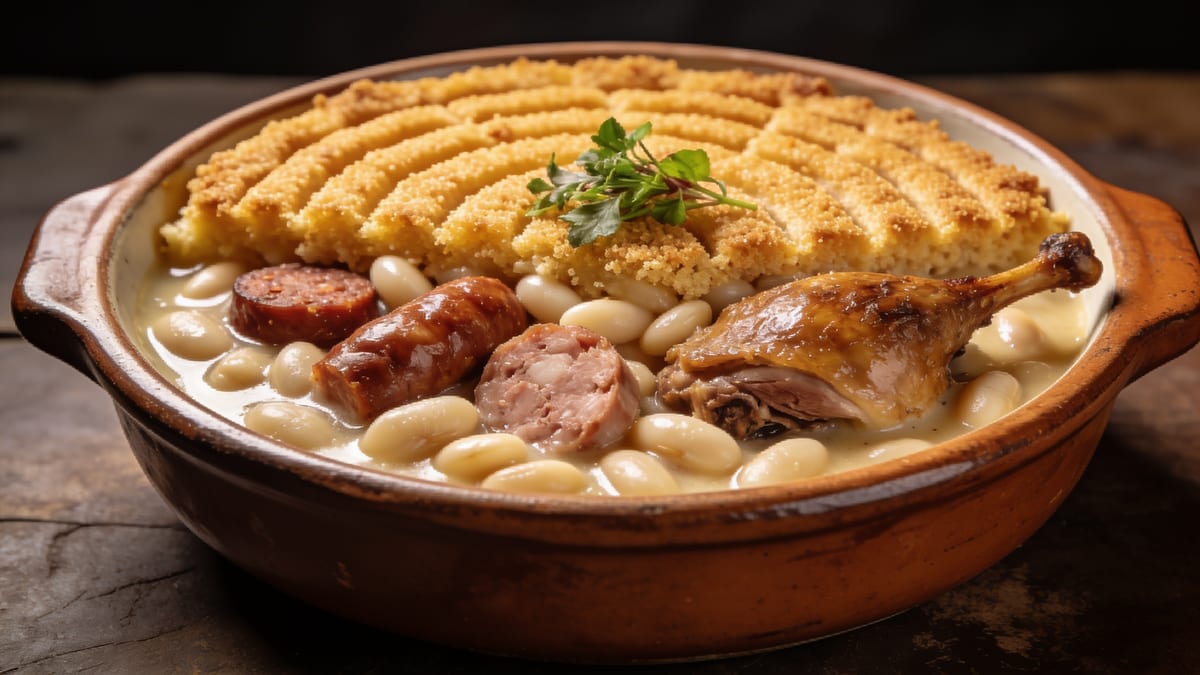
Soak dried white beans overnight, then simmer them gently with aromatics and pork skin/stock until just tender. Brown Toulouse sausages and pork, and ready some duck confit. Layer the beans and meats in a deep dish, ladle in enough of the bean cooking liquid to almost cover, and bake low for a few hours — pressing the crust that forms back down into the beans several times so it keeps building a golden top while the inside stays creamy. Rest before serving.
- Use dried white beans (Tarbais are ideal), soaked and gently simmered — they must stay intact and creamy.
- Brown the meats and use a rich, porky cooking liquid; cassoulet should be deeply savoury, not watery.
- Press the breadcrumb/bean crust back down several times during baking to build a golden top.
Equipment
- Large pot
- Deep ovenproof dish (cassole) or Dutch oven
- Frying pan
วัตถุดิบ
Beans
- 500 g dried white beans (Tarbais or cannellini), soaked overnight
- 1 onion studded with cloves, 1 carrot, bouquet garni
- A piece of pork skin/rind and/or a ham hock; garlic
Meats
- 4 Toulouse sausages (or coarse pork sausages)
- 400 g pork shoulder, in chunks
- 4 pieces duck confit legs (or confit)
Crust & finish
- Breadcrumbs, for the top
- Salt, pepper; reserved bean cooking liquid
วิธีทำ
- ขั้น01
Drain the soaked beans and simmer gently with the studded onion, carrot, bouquet garni, pork skin/hock and garlic in fresh water until just tender (not mushy), about 1–1½ hours. Season and keep the beans in their liquid.
- ขั้น02
Brown the Toulouse sausages and pork shoulder until well coloured. Warm the duck confit just enough to remove the legs from their fat.
- ขั้น03
Discard the aromatics. Spoon a layer of beans into a deep dish, add the meats (sausage, pork, duck), then the rest of the beans, tucking the meats in. Ladle in enough bean cooking liquid to almost cover.
- ขั้น04
Bake at 150°C/300°F for 2½–3 hours. As a skin forms on top, press it back down into the beans with the back of a spoon, several times — each time a new golden crust forms. Add a little bean liquid if it looks dry. Scatter breadcrumbs on top for the final crust.
- ขั้น05
Let it rest 15–20 minutes (it's even better made a day ahead and reheated). Serve straight from the dish with crusty bread and a green salad.
Make ahead
Cassoulet is the definition of make-ahead — many cooks insist it's best cooked a day or two before and reheated, which deepens the flavour. Cook fully, refrigerate, then reheat in the oven (re-forming the crust) to serve.
Storage
Keeps 3 days refrigerated and is famously better the next day, as the flavours meld. Reheat gently in the oven, adding a splash of stock or bean liquid if dry, and re-crisp the crust. It freezes well too.
Variations
Toulouse vs Castelnaudary
Regional versions vary — Castelnaudary is the bean-and-pork heartland; Toulouse adds its sausage; Carcassonne sometimes adds mutton.
Simplified
Use good tinned white beans and skip the confit, browning sausage and pork for a quicker (if less traditional) version.
Duck confit at home
Make your own duck confit ahead, or buy it — it adds the signature richness.
Serve with
Nutrition per serving
Nutrition values are estimates based on the metric measurements. Adjust as needed.
คำถามพบบ่อย
What beans should I use for cassoulet?
Dried white beans — the prized choice is the large, creamy Tarbais bean from southwest France, but cannellini or other dried white beans work. Soak them overnight and simmer gently until just tender; they need to stay intact and creamy, not collapse, since they're the heart of the dish. Avoid tinned beans for the traditional version.
Why press the crust down?
As cassoulet bakes, a skin forms on top. Traditionally you break and press this crust back down into the beans several times during cooking — each time, a fresh golden crust forms, building layers of flavour and texture while keeping the inside creamy. It's a defining ritual of the dish (some count seven times).
Do I need duck confit?
It's traditional and adds a deep, rich savouriness, especially in the Toulouse style. You can buy duck confit or make your own ahead. For a simpler cassoulet you can leave it out and rely on sausage and pork, but the confit is part of what makes it special.
Can I make cassoulet ahead?
Absolutely — it's arguably better for it. Cooking it a day or two ahead and reheating lets the flavours meld and deepen. Reheat gently in the oven with a little extra bean liquid or stock if it's dry, and re-form the crust. It also freezes well.
What's the difference between the regional versions?
Cassoulet comes from the Languedoc, and three towns claim it: Castelnaudary (the 'original', pork and beans), Toulouse (adds Toulouse sausage), and Carcassonne (sometimes adds mutton or partridge). All share the white-bean-and-meat base baked under a crust; the meats vary by region.
Cooked this? Rate it.
Real ratings from real cooks. We only show a score once enough of you have weighed in — no fabricated stars.